The Gaza ceasefire deal could be a ‘strangle contract’, with Israel holding all the cards
- Written by: Marika Sosnowski, Senior research fellow, The University of Melbourne
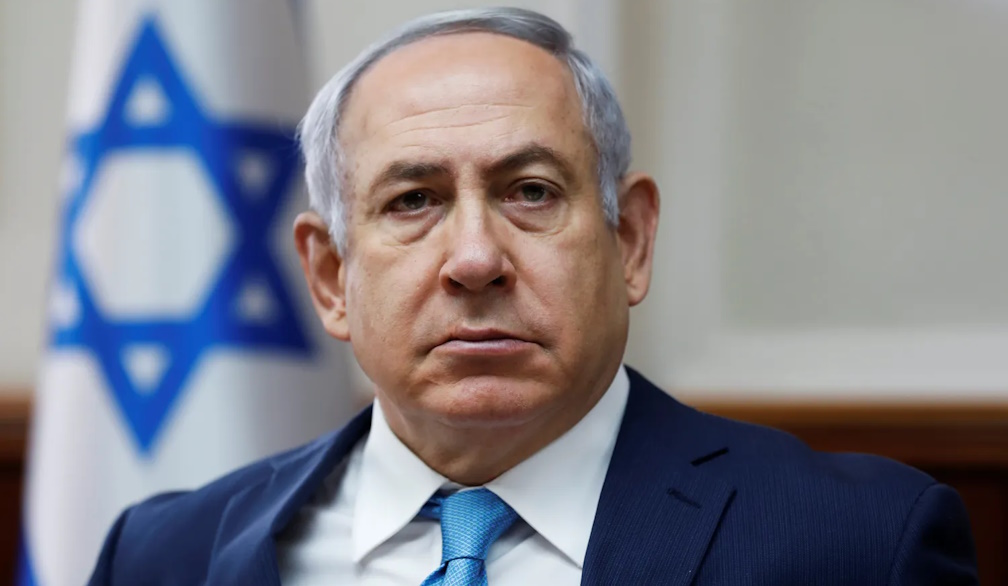
There are jubilant scenes in both Gaza and Israel after both sides in the war have agreed to another ceasefire. If all goes well, this will be only the third ceasefire to be implemented by Israel and Hamas, despite there being numerous other agreements to try to stop the violence.
There is a lot to be happy about here. Most notably, this ceasefire will bring a halt to what has now been established as a genocidal campaign[1] of violence against Palestinians in Gaza, the release of all hostages held by Hamas, and the resumption of aid into Gaza to alleviate the famine[2] conditions there.
However, a lot of unknowns remain. While the terms of the “first phase” of this ceasefire have been rehearsed in previous ceasefires in November 2023 and January 2025, many other terms remain vague. This makes their implementation difficult and likely contested.
After this phase is complete, a lot will depend on domestic Israeli politics and the Trump administration’s willingness to follow through on its guarantor responsibilities.
Immediate positives for both sides
The ceasefire agreement appears to be based on the 20-point plan[3] US President Donald Trump unveiled in the White House alongside Israeli Prime Minister Benjamin Netanyahu on September 29.
What will be implemented in what is being called the “first phase” are the practical, more detailed and immediate terms of the ceasefire.
In the text of the peace plan[4] released to the public, these terms are stipulated in:
-
Point 3 – an “immediate” end to the war and Israeli troop withdrawal to an “agreed upon line”.
-
Points 4 and 5 – the release of all living and deceased hostages by Hamas in exchange for Palestinian prisoners.
-
Point 7 – full aid to flow into the strip, consistent with the January ceasefire agreement terms.
While these steps are positive, they are the bare minimum you would expect both sides to acquiesce to as part of a ceasefire deal.
Over the past two years, Gaza has been virtually demolished[5] by Israel’s military and the population of the strip is starving[6]. There is also great domestic pressure[7] on the Israeli government to bring the hostages home, while Hamas has no cards left to play besides their release.
The text of these particular terms has been drafted in a way that means both Israel and Hamas know what to do and when. This makes it more likely they will abide by the terms.
Both sides also have a vested interest in these terms happening. Further, both parties have taken these exact steps before during the November 2023 and January 2025 Gaza ceasefires.
Given this, I expect these terms will be implemented in the coming days. It is less clear what will happen after that.
What comes next: the great unknown
After the first phase of the ceasefire has been implemented, Hamas will find itself in a situation very similar to ceasefire agreements that occurred during the Syrian civil war that began in 2011 and only recently ended with the downfall of the Assad regime in late 2024. I call these strangle contracts[8].
These type of ceasefire agreements are not like bargains or contracts negotiated between two equal parties. Instead, they are highly coercive agreements that enable the more powerful party to force the weaker party into agreeing to anything in order for them to survive.
Once the hostages are released, Hamas will go back to having negligible bargaining power of its own. And the group, along with the people of Gaza themselves, will once again be at the mercy of Israeli military might and domestic and international politics.
Other terms of the Trump peace plan[9] relating to Hamas’ demilitarisation (Points 1 and 13), the future governance of Gaza (Points 9 and 13) and Gaza’s redevelopment (Points 2, 10 and 11) are also extremely vague and offer little guidance on what exactly should occur, when or how.
Under such a strangle contract, Hamas will have no leverage after it releases the hostages. This, together with the vague terms of the ceasefire agreement, will offer Israel a great deal of manoeuvrability and political cover.
For example, the Israeli government could claim Hamas is not abiding by the terms of the agreement and then recommence bombardment, curtail aid or further displace the Palestinians in Gaza.
While Point 12 rightly stipulates that “no one will be forced to leave Gaza”, Israel could make conditions there so inhospitable and offer enough incentives to Gazans, they might have little choice other than to leave if they want to survive.
Points 15 and 16 stipulate that the United States (along with Arab and other international partners) will develop a temporary International Stabilisation Force to deploy to Gaza to act as guarantors for the agreement. The Israel Defence Force (IDF) will also withdraw “based on standards, milestones, and timeframes linked to demilitarization”.
But these “standards, milestones and timeframes” have been left unspecified and will be hard for the parties to agree on.
It is also possible Israel could use the vagueness of these terms to its advantage by arguing Hamas has failed to meet certain conditions in order to justify restarting the war.
Knowing it has no leverage after the first phase, Hamas has explicitly said[10] it is expecting the US to fulfil its guarantor role. It is certainly a good sign the US has pledged 200 troops[11] to help support and monitor the ceasefire, but at this stage, Hamas has little choice other than to pray the US’ deeds reflect its words.
While the ceasefire has now been passed by a majority of the Knesset (Israel’s parliament), five far-right ministers voted against the deal. These include Israel’s National Security Minister Itamar Ben-Gvir, who said the ceasefire is akin to[12] “a deal with Adolf Hitler”.
This opposition bloc will no doubt be making more threats – and could potentially act – to bring down Netanyahu’s government after the first phase is implemented.
The problem with ceasefires
The first phase of this ceasefire will offer Hamas and Israel key items – a hostage-prisoner swap, a halt to violence and humanitarian aid.
After that, rather than a bargaining process with trade-offs between negotiating partners operating on a relatively even playing field, without US opprobrium, the ceasefire could easily devolve into an excuse for further Israeli domination of Gaza.
A ceasefire was always going to be a very small step forward in a long road towards peace between Israelis and Palestinians. Without meaningful engagement[13] with Palestinians in their self-determination, we can only hope the future for Gazans will not get any worse.
As a Palestinian leader from Yarmouk camp in Syria told me back in 2018: “If there is a ceasefire, people know the devil is coming.”
References
- ^ genocidal campaign (theconversation.com)
- ^ famine (www.youtube.com)
- ^ 20-point plan (www.bbc.com)
- ^ text of the peace plan (www.bbc.com)
- ^ demolished (www.bbc.com)
- ^ starving (www.theguardian.com)
- ^ domestic pressure (www.nytimes.com)
- ^ strangle contracts (www.middleeasteye.net)
- ^ Trump peace plan (www.bbc.com)
- ^ explicitly said (www.aljazeera.com)
- ^ pledged 200 troops (www.newarab.com)
- ^ is akin to (www.haaretz.com)
- ^ meaningful engagement (theconversation.com)