What is Benjamin Netanyahu’s end game in the Iran war?
- Written by: Martin Kear, Sessional Lecturer, Department of Government and International Relations, University of Sydney
The war between the United States, Israel, and Iran is now into its second month. Despite spectacular early successes, the resilience of Iran’s government and military has meant the US and Israel have lost the strategic initiative. This means they are being more reactive than proactive in determining the outcome of the war.One of the main reasons for this: the contradictory strategic objectives of the US and Israel. Since the war began, the Trump administration has struggled to justify its attack on Iran.
One of the reasons it is flailing is that the war runs contrary to the US’ long-held strategy in the Persian Gulf. The strategy is based on the 1980 Carter Doctrine[1], which was issued in response to the 1979 Iranian Revolution and the USSR’s invasion of Afghanistan.
In his 1980 State of the Union Address[2], then-President Jimmy Carter declared any attempt to gain control of the Persian Gulf was contrary to the US’ vital interests and would be repelled by any means, including the use of military force.
To this end, the US Fifth Fleet was stationed permanently in the Persian Gulf and economic sanctions were imposed on Iran and the USSR. Since 2001, there has been an exponential growth[3] in US military bases in the Gulf, with approximately 50,000 US military personnel now stationed there.
Despite this military dominance, successive administrations accepted the tentative status quo with Iran. They understood that while it was still considered a threat, any military action to remove that threat would be counter-productive.
This is primarily because it risked the very thing the doctrine sought to prevent – control of the Persian Gulf – in this case through Iran’s denial of access through the Strait of Hormuz.
How Israel’s objectives differ
For Israel, the strategic calculations for war with Iran are vastly different. Iran is a key member of the Axis of Resistance. This is a loosely aligned coalition[4] consisting of Iran, Syria, Hezbollah, the Houthis, and Hamas.
The main objectives[5] of the axis are to resist US regional domination, destroy Israel and support Palestinian resistance to Israeli occupation. The axis could not hope to challenge US dominance or destroy Israel. But Iran did provide support to Hezbollah and Hamas to resist Israel and its occupation of the Palestinian territories.
Despite the constant threat to Israeli security posed by the axis, the US had successfully restrained Israel from taking sustained military action[6] against axis members. This maintained the Gulf’s status quo and kept the oil flowing.
But since October 2023, this restraint has been lifted. In retaliation for the Hamas-led attacks on Israel, the Netanyahu government implemented its “mowing the grass[7]” strategy. This is where Israel seeks to manage a conflict with an enemy by trying to eliminate its immediate leadership and destroy or significantly degrade its economic, political and military capabilities to establish a level of deterrence.
Israel is using this strategy against Hamas and Hezbollah with devastating effect. Israeli troops are advancing[8] into southern Lebanon, with the aim of occupying Lebanese territory to act a buffer zone between Lebanon and northern Israel. This would rob Hezbollah of most of its traditional stronghold in Lebanon.
However, this has led to the deaths of hundreds of Lebanese civilians[9]. It has also meant the systematic destruction[10] of civilian infrastructure.
Israel is now using the same strategy of destruction against Iran – assassinating key political and military leaders and destroying political and civilian infrastructure throughout the country.
Netanyahu as war leader in an election year
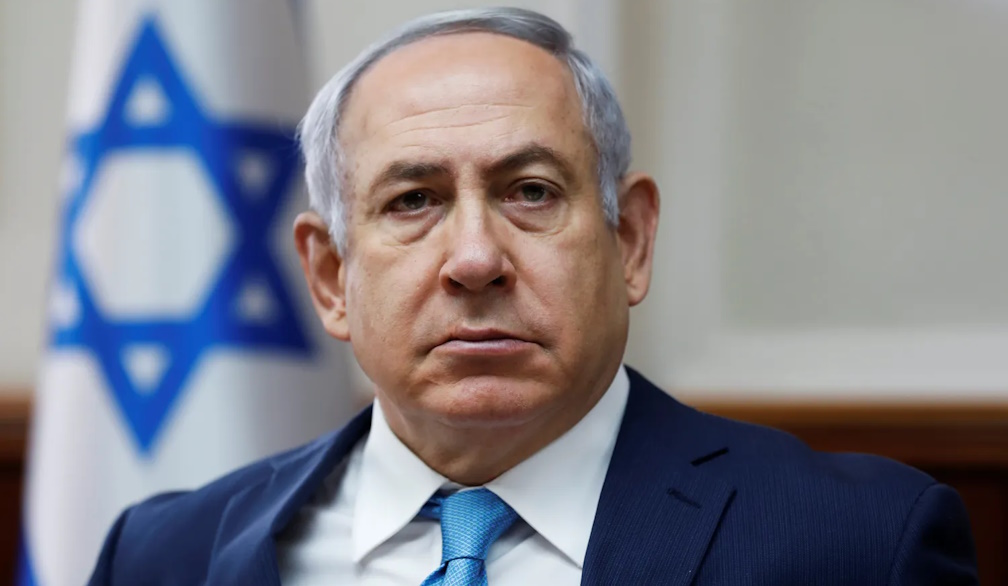
Not only is this war seriously degrading Iran’s military and political power, it also represents a huge boon for Prime Minister Benjamin Netanyahu in an election year. Hamas’ 2023 attacks on Israel were an enormous embarrassment to the prime minister, who staked his reputation on being seen as the “protector of Israel[11]”.
Now in the lead-up to the next election, due by October 27, Netanyahu can argue his government has crushed Hamas and Hezbollah, and humbled Iran. Netanyahu is desperate to win the election and will likely use the Iran war as a springboard to retaining the prime ministership[12].
This would place him in a stronger position to have President Isaac Herzog pardon him and cancel his years-long corruption trial[13]. In short, Netanyahu has plenty of incentives to continue attacking both Iran and Hezbollah.
But the problem is there are costs to this apparent political windfall.
First, support for his government wavers, despite overwhelming backing for his war on Iran and Hezbollah. While recent polling indicates Netanyahu’s Likud Party riding high in the polls[14], it appears contingent on Netanyahu achieving his long-stated goals – the destruction of Hamas, Hezbollah, and the collapse of the current Iranian regime.
Polling in early 2025 also showed[15] Likud’s support plummeting on news of an impending ceasefire with Hamas. This fickleness must surely worry Netanyahu, should the Trump administration negotiate a ceasefire that Iran says needs to include Hezbollah.
Second, support for Israel in the US has plummeted post-2023, with 65% of Democrats and 41% of independents now sympathising with Palestinians. While support for Israel remains strong among Republicans, the poll[16] also noted it is at its lowest levels since 2004.
The same can be said of support for Israel in Europe, with polling taken in 2025 revealing it to be[17] at historic lows.
This does not bode well for Israel because it desperately needs the US$3.8 billion (A$5.5 billion) it receives annually from the US alongside unfettered access to US military hardware and munitions. Without this aid, Israel could no longer act[18] against external threats with impunity, and would face a severe economic recession. Given US President Donald Trump’s historic capriciousness, this support cannot be taken for granted.
Third, senior ministers in Netanyahu’s government, including Netanyahu himself, are under investigation[19] by the International Criminal Court (ICC) for genocide, war crimes, and crimes against humanity concerning their conduct during Israel’s war on Gaza. While Netanyahu’s government continues to protest its innocence, any adverse findings would likely further decrease international support for Israel, leaving it more isolated than ever.
Finally, while Israel and the US have seriously weakened Iran, Hamas, and Hezbollah, simply surviving the onslaught is considered a victory by these actors, given the vast differences in military capability.
It has also led to the installation of a younger, emboldened, and more hardline leadership, especially in Iran, making the revitalisation of a more militant Axis of Resistance intent of exacting revenge more likely.
So instead of enhancing Israel’s security, Netanyahu may have paradoxically made Israel’s future security environment increasingly complicated and hazardous. Such an outcome would leave Israel more vulnerable to attack at a time when backing from traditional supporters is uncertain.
References
- ^ 1980 Carter Doctrine (history.state.gov)
- ^ State of the Union Address (www.presidency.ucsb.edu)
- ^ exponential growth (www.nytimes.com)
- ^ loosely aligned coalition (warontherocks.com)
- ^ main objectives (mei.edu)
- ^ taking sustained military action (www.smh.com.au)
- ^ mowing the grass (doi.org)
- ^ are advancing (www.theguardian.com)
- ^ hundreds of Lebanese civilians (www.bbc.com)
- ^ systematic destruction (www.aljazeera.com)
- ^ protector of Israel (www.theguardian.com)
- ^ retaining the prime ministership (www.smh.com.au)
- ^ cancel his years-long corruption trial (thejewishindependent.com.au)
- ^ riding high in the polls (edition.cnn.com)
- ^ Polling in early 2025 also showed (www.jns.org)
- ^ the poll (www.aljazeera.com)
- ^ polling taken in 2025 revealing it to be (www.theguardian.com)
- ^ could no longer act (www.aljazeera.com)
- ^ under investigation (www.icc-cpi.int)
Read more https://theconversation.com/what-is-benjamin-netanyahus-end-game-in-the-iran-war-279101