What will it take to get ships going through the Strait of Hormuz again?
- Written by: Jennifer Parker, Adjunct Professor, Defence and Security Institute, The University of Western Australia; UNSW Sydney
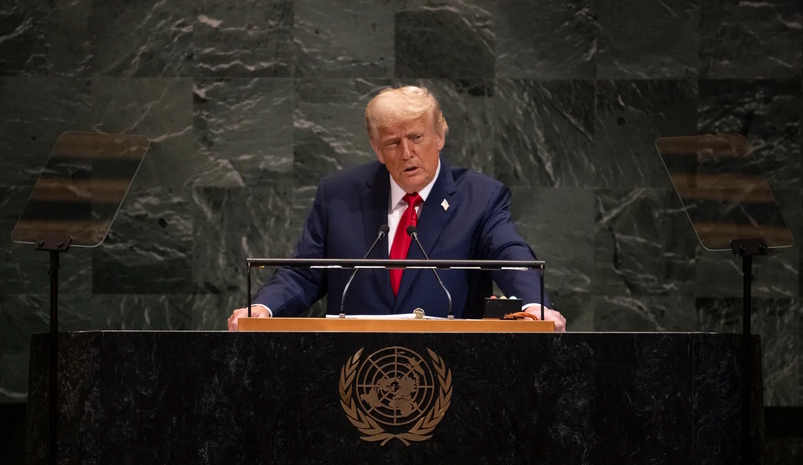
Wednesday’s ceasefire[1] announcement by President Donald Trump, linked to Iran reopening the Strait of Hormuz, prompted immediate optimism[2] shipping would quickly resume. It didn’t.
The following morning, traffic remained minimal[3]. A handful of vessels, largely linked to Iran, made the transit. But most of the ships waiting in the Gulf stayed put. Iran announced shortly afterwards[4] that it would effectively close the strait because of Israel’s attacks on Lebanon.
The reality is the strait was never closed[5]. Framing the issue as “open” or “closed” misses the point.
Ships are not being physically blocked. They are being deterred[6].
Over recent weeks, Iran has demonstrated both the capability and intent to target commercial shipping. Attacks and credible threats against vessels have driven daily transits down from around 130[7] to just a handful. Until that risk changes, ships will not return in meaningful numbers.
So what can be done to turn this around?
Both walking and talking
The ceasefire declarations have added to the uncertainty rather than resolved it.
Washington has asserted that the strait is open[8].
Tehran’s messaging[9] has been more ambiguous, including references to requiring vessels to inform Iranian authorities before transiting.
Some interpret this as a precursor to attempts to exert control over the waterway through a toll[10].
This ambiguity matters. Shipping is a commercial activity driven by risk calculations. Operators and crews will not move on the basis of political statements, particularly when recent experience suggests those statements may not hold.
Read more: Will the conflict in Lebanon destroy the US-Iran ceasefire? Maybe, but it was already shaky[11]
The importance of reassurance
In practice, restoring traffic through the strait will likely occur in two phases.
The first is reducing the threat. That can occur through military means, diplomacy, or a combination of both, but it must materially degrade Iran’s ability and willingness to target shipping.
The second is reassurance.
Even if Iran’s attacks on civilian shipping stop as a result of the ceasefire, shipping will not immediately return. Confidence has been shaken and will take time to rebuild.
A credible reassurance effort would include limited naval escorts, at least initially. It’s notable the US did not move immediately to demonstrate confidence in the ceasefire by escorting US flagged and crewed[12] commercial vessels out of the Gulf.
That would have sent a clear signal to industry, helped restore confidence in transits and undercut subsequent Iranian claims that ships require approval from its armed forces.
Given Iran’s interest in maintaining the ceasefire, it would have been unlikely to challenge ships under US naval protection. The US hesitation has instead created space for Iran to entrench its position, pushing vessels closer to its coastline and reinforcing its ability to shape how the strait is used.
An effective reassurance campaign would also involve a broader international presence to provide surveillance, information-sharing and rapid response capability. The international community should move quickly to establish this. Its very establishment would help restore confidence in transits.
We have seen this model before. The International Maritime Security Construct[13], established in 2019 following Iranian attacks in the Gulf of Oman, focused on transparency, coordination and reassurance rather than large-scale convoy operations.
I served as the construct’s Director of Plans in 2020. A similar, but more effective, approach is likely to be required again. It is not a silver bullet, but reassurance is layered, and this would at least provide the clarity and communication shippers need.
Diplomacy will also matter. Clear, coordinated messaging from the international community, backed by explicit economic consequences for any renewed attacks on merchant shipping, will be essential to rebuilding confidence.
The question of tolls
There has also been speculation[14] about whether Iran might seek to impose a toll on vessels transiting the strait.
The legal position here is clear. The Strait of Hormuz is an international strait[15] under the United Nations Convention on the Law of the Sea. Ships enjoy the right of transit passage[16] through the strait. Charging vessels for passage would cut directly against that principle and set a dangerous precedent for other strategic waterways.
There are early signs Iran is testing the boundaries. Reports of radio[17] calls warning vessels they require approval to transit, and suggestions that ships should notify Iranian authorities before transiting, point to an attempt to exert greater control over the strait.
That should be resisted.
Allowing a toll, or even limited restrictions, to take hold in the Strait of Hormuz would have far-reaching consequences, undermining the central principle of maritime trade: freedom of navigation. Regardless of Donald Trump’s flippant comments[18], the international community is unlikely to accept any enduring Iranian toll system.
If Iran attempts to pursue one, it should face clear economic consequences, including sanctions.
Questions remain about whether mines[19] have been laid in or near the strait. Even the suggestion adds to uncertainty and reinforces the need for a coordinated international response, including transparent assessments of the threat environment.
A clear, public assessment from the international community on whether the strait has in fact been mined would go a long way. It should be an early priority for any coalition effort.
The bottom line
Ultimately, shipping will return to the Strait of Hormuz not when it is declared open, but when it is assessed to be safe enough.
That will require a sustained period without attacks, a visible international effort to secure the waterway, and clear signalling that the rules governing international straits will be upheld.
Until then, the ships will wait.
References
- ^ ceasefire (truthsocial.com)
- ^ optimism (www.bbc.com)
- ^ minimal (www.abc.net.au)
- ^ shortly afterwards (www.smh.com.au)
- ^ closed (x.com)
- ^ deterred (7news.com.au)
- ^ around 130 (www.ukmto.org)
- ^ open (www.usatoday.com)
- ^ messaging (x.com)
- ^ toll (www.aljazeera.com)
- ^ Will the conflict in Lebanon destroy the US-Iran ceasefire? Maybe, but it was already shaky (theconversation.com)
- ^ US flagged and crewed (www.facebook.com)
- ^ International Maritime Security Construct (www.foreignminister.gov.au)
- ^ speculation (www.cnbc.com)
- ^ international strait (www.un.org)
- ^ transit passage (www.asil.org)
- ^ radio (windward.ai)
- ^ comments (thehill.com)
- ^ mines (www.yahoo.com)