Here's what I tell teachers about how to teach young students about slavery
- Written by: Raphael E. Rogers, Associate Professor of Practice, Clark University
Nervous. Concerned. Worried. Wary. Unprepared.
This is how middle and high school teachers have told me they have felt over the past few years when it comes to teaching the troublesome topic of slavery.
Although I work with teachers in Massachusetts, their reaction to teaching about slavery is common among teachers[1] throughout the U.S.
Fortunately, in recent years there have been a growing number of individuals who have weighed in with useful advice.
Some, such as history professors Hasan Kwame Jeffries[2] and Kenneth Greenberg[3], have advocated for helping students see the ways in which enslaved people fought back against the brutality of slavery. Whether through a focus on the fight to maintain family and culture, resistance at work, running away, physical confrontation or revolt, students get a deeper understanding of slavery when the lessons include the various ways that enslaved people courageously fought against their bondage.
Others, like James W. Loewen, the author of the popular book “Lies My Teacher Told Me[4],” have argued for a focus on how slavery has deeply influenced our popular culture through movies[5], television series[6], historical fiction[7] and music[8].
There are also those who recommend the use of specific resources and curriculum materials[9], like the Harriet Jacobs Papers Project[10], the four-part documentary series “Africans in America[11]” and the Freedom on the Move database[12], which features thousands of runaway slave advertisements.
Heeding some of these recommendations, in my work with teachers we have sought to come up with lessons that students like Ailany Rivas, a junior at Claremont Academy[13] in Worcester, Massachusetts, say have helped them to become “more informed and educated about the brutal history of slavery and its legacy.” These lessons that I have developed take a variety of approaches but are all rooted in taking a look at the realities of slavery using historical evidence.
Many students have echoed Ailany in feedback that I have collected from nine different classes where I have helped design lessons about slavery.
And the teachers whom I have worked with have all shared informally that they are now confident in taking on the challenge of teaching the complex history of slavery.
Much of this confidence, in my opinion, is due to four things that I believe are mandatory for any teacher who plans to deal with slavery.
1. Explore actual records
Few things shine the light on the harsh realities of slavery like historical documents. I’m talking about things such as plantation records, slave diaries and letters penned by plantation owners and their mistresses.
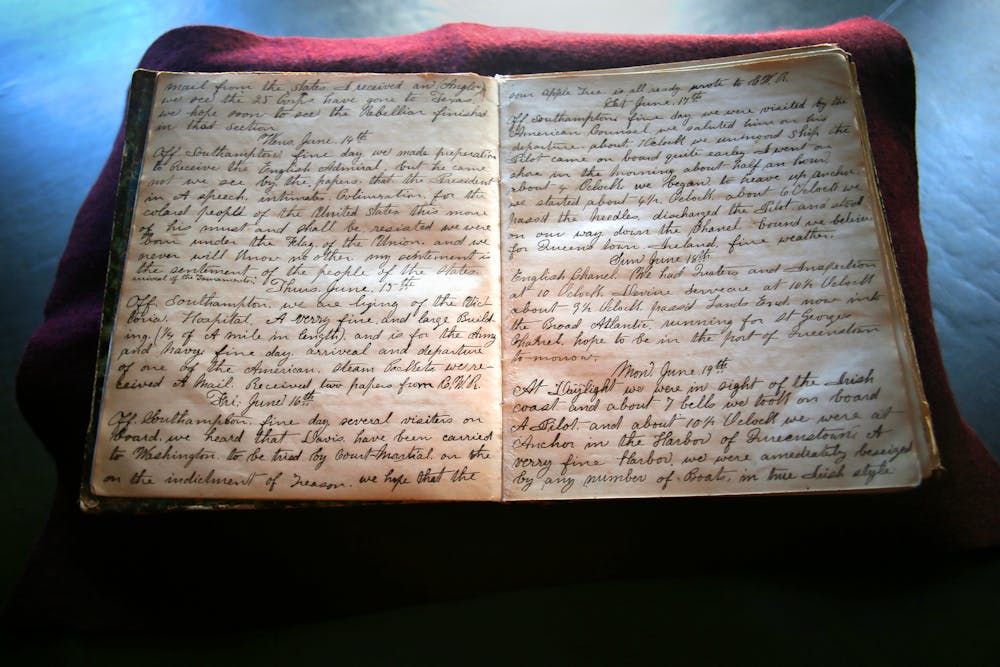 A former enslaved Black person, W. B. Gould, escaped the South during the Civil War and began writing in a diary.
Lane Turner/The Boston Globe via Getty Images[14]
A former enslaved Black person, W. B. Gould, escaped the South during the Civil War and began writing in a diary.
Lane Turner/The Boston Globe via Getty Images[14]
It also pays to examine wanted advertisements for runaway slaves. These ads provided details about those who managed to escape slavery. In some cases, the ads contain drawings of slaves.
These materials can help teachers guide students to better understand the historical context in which slavery existed. Educators may also wish to look at how people such as historian Cynthia Lynn Lyerly, who wrote a chapter in “Understanding and Teaching American Slavery[15],” have used historical documents to teach about slavery.
2. Examine historical arguments
In order to better understand different perspectives on slavery, it pays to examine historical arguments about how slavery developed, expanded and ended.
Students can read texts that were written by abolitionists like Frederick Douglass and pro-slavery advocates like George Fitzhugh[16].
They should wade through the newspaper advertisements that provided details about those who managed to escape slavery.
Looking at these different arguments will show students that history is filled with disagreement, debate and interpretations based on different goals.
For instance, in examining arguments about slavery, teachers can show students how early 20th-century historians like Ulrich Bonnell Phillips[17] sought to put forth ideas about kind masters and contented slaves, while others from the 1990s, such as John Hope Franklin, co-author of “Runaway Slaves: Rebels on the Plantation[18],” focused on how Black people resisted slavery.
Seeing these starkly different portrayals of slavery gives students a chance to examine how things such as choice, context, racism and bias might affect the way slavery is seen or viewed.
3. Highlight lived experiences
In my 11 years of teaching history, many students entered my classes with a great deal of misinformation about what life was like for those who lived under slavery. In pre-unit surveys, some stated that the enslaved worked only in the cotton fields and were not treated that badly. We know the historical records tell a different story. While many worked as field hands, there were others who were put into service as blacksmiths, carpenters, gunsmiths, maids and tailors.[19]
To combat misconceptions like this, I advise teachers to use historical sources that feature details about the lived experiences of enslaved people.
For instance, teachers should have students read Harriet Jacobs’ memoir – “Incidents in the Life of a Slave Girl[20]” – alongside diaries written by white plantation owners.
Scrutinize photographs of slave quarters and excerpts from the Born in Slavery: Slave Narratives from the Federal Writers’ Project[21], which contains more than 2,300 first-person accounts of slavery.
Ask students to examine various historical sources to gain a better understanding of how people lived through their bondage over time.
4. Consider the relevance
It is also crucial for teachers to consider the various ways in which slavery is relevant to the present with their students. I advise them to ask questions like: How has the history of slavery influenced the status[22] of Black people in the United States today? Why are there so many movies[23] about slavery?
In Ailany’s class, we ended our unit by providing students with a chance to read and think about the relevance of recent picture books about slavery like Patricia Polacco’s “January’s Sparrow[24],” Ann Turner and James Ransome’s “My Name Is Truth: The Life of Sojourner Truth[25]” and Frye Gallard, Marti Rosner and Jordana Haggard’s “The Slave Who Went to Congress[26].”
We asked students to draw on what they had learned about slavery to consider and then share their perspectives about the historical accuracy, classroom appropriateness and relevance of a selected picture book. Students always have much to say about all three.
[Over 100,000 readers rely on The Conversation’s newsletter to understand the world. Sign up today[27].]
Teaching slavery has been and will continue to be challenging. To teachers who are asked or required to take on this challenge, the four things discussed above can serve as strong guideposts for creating lessons that should make the challenge easier to navigate.
References
- ^ common among teachers (www.washingtonpost.com)
- ^ Hasan Kwame Jeffries (www.splcenter.org)
- ^ Kenneth Greenberg (www.learningforjustice.org)
- ^ Lies My Teacher Told Me (thenewpress.com)
- ^ movies (www.imdb.com)
- ^ television series (www.imdb.com)
- ^ historical fiction (www.simonandschuster.com)
- ^ music (www.loc.gov)
- ^ specific resources and curriculum materials (glc.yale.edu)
- ^ the Harriet Jacobs Papers Project (dev.glc.yale.edu)
- ^ Africans in America (www.pbs.org)
- ^ Freedom on the Move database (freedomonthemove.org)
- ^ Ailany Rivas, a junior at Claremont Academy (clarknow.clarku.edu)
- ^ Lane Turner/The Boston Globe via Getty Images (www.gettyimages.com)
- ^ Understanding and Teaching American Slavery (uwpress.wisc.edu)
- ^ George Fitzhugh (www.pbs.org)
- ^ Ulrich Bonnell Phillips (historynewsnetwork.org)
- ^ Runaway Slaves: Rebels on the Plantation (global.oup.com)
- ^ blacksmiths, carpenters, gunsmiths, maids and tailors. (www.digitalhistory.uh.edu)
- ^ Incidents in the Life of a Slave Girl (docsouth.unc.edu)
- ^ Born in Slavery: Slave Narratives from the Federal Writers’ Project (www.loc.gov)
- ^ influenced the status (www.pewresearch.org)
- ^ so many movies (www.imdb.com)
- ^ January’s Sparrow (www.penguinrandomhouse.com)
- ^ My Name Is Truth: The Life of Sojourner Truth (www.harpercollins.com)
- ^ The Slave Who Went to Congress (www.newsouthbooks.com)
- ^ Sign up today (theconversation.com)