Thinking of getting a minor cosmetic procedure like botox or fillers? Here's what to consider first
- Written by: Simone Buzwell, Senior Lecturer in Psychology, Swinburne University of Technology
At a dinner party recently, my friend Kaity whispered, “I’ve been staring at my face in Zoom meetings and I look tired. I’m considering Botox. What are the risks?”
I shouldn’t have been surprised; Kaity isn’t alone in thinking cosmetic procedures could fix Zoom-face-fatigue. Our new research shows[1] one in three Australians have new concerns about their appearance since the pandemic began.
What’s more, Kaity is in the primary demographic: 35-50 year old women[2]. And she lives in Australia, where we have the highest cosmetic procedure rates per capita[3]. We spend A$350 million to A$1 billion[4] on cosmetic procedures per year – a figure expected to increase.
For most people, cosmetic procedures lead to[5] improved self-esteem, confidence and body image[6]. I never thought Kaity was shy, or had self-esteem issues, but she told me she’s different at work and after the last year she craves some self-care.
However, for a significant minority, there are negative outcomes. So before deciding if it was right for Kaity, she needed to consider a few things:
1. What type of cosmetic procedure?
First, the type of cosmetic procedure is important. There are two forms: major and minor[7].
Major cosmetic procedures (“cosmetic surgery”) involve cutting the skin, such as for facelifts or breast augmentation. These are conducted under anaesthetic by medical doctors bound by Medical Board of Australia guidelines[8].
Minor cosmetic procedures, such as fillers and botox, are different. There is no anaesthetic, or cutting the skin, although they may involve piercing the skin[9]. Fillers involve injecting subtances under the surface of the skin to add volume, while botox is a drug that relaxes the muscle to reduce wrinkles.
The category of minor cosmetic procedures also includes microdermabrasion, which removes superficial layers of dead skin cells to “polish” the skin.
Read more: Will microdermabrasion or skin needling give me better skin?[10]
2. What provider do you choose?
Minor cosmetic procedures aren’t regulated in Australia and can be administered by doctors, nurses, dentists or beauticians. They aren’t funded by Medicare, so the outcomes are not monitored.
Concern about shonky operators prompted a warning from NSW Health Commission about unsafe and illegal practices[11], with a number of women experiencing significant harm.
So it’s essential to choose a reputable practitioner. But how do you find one?
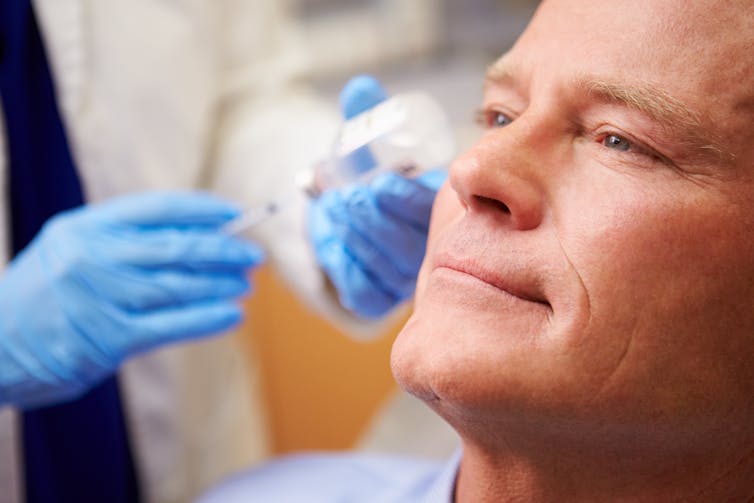 A range of registered and unregistered providers offer minor cosmetic procedures.
Shutterstock[12]
A range of registered and unregistered providers offer minor cosmetic procedures.
Shutterstock[12]
Providers of minor cosmetic procedures don’t require registration. But if you choose someone registered with the Australian Health Practitioner Regulation Agency (AHPRA[13]), you know you’re being treated by a practitioner who is bound to minimum professional standards of safety and patient care.
If you’re unsure, you can always ask your GP and check for verified reviews of your preferred cosmetic practitioner.
3. How much does it cost?
The cost of minor cosmetic procedures range up to thousands of dollars per session. One session lasts for about four months so must be repeated, making them an ongoing cost.
Luckily Kaity could afford it, but there are reports[14] of cosmetic customers going without food to pay for procedures, and feeling the need to go back for more and more.
Minor cosmetic procedures shouldn’t cause financial strain. If it would cause Kaity financial pressure, she should not go ahead.
4. What are the side effects?
The possible side effects vary depending on the procedure and may include:
- pain
- swelling or bruising at the injection site
- infections
- dry eyes or throat
- headaches or flu-like symptoms
- muscle stiffness.
They’re usually not long-lasting.
Read more: Cosmetic facial procedures are not risk free – here are some of the most popular[15]
5. What could go wrong?
Botox and dermal fillers can be administered incorrectly, resulting in “droopy eyelid”, “cockeyed eyebrows”, odd lumps or scarring.
Rashes or bleeding are possible, as is necrosis, where skin cells die. There are also reports of blurred vision and even blindness.
It’s assumed these are rare, but given the lack of data, rates are unknown.
6. Could it cause psychological distress?
The psychological consequences of minor cosmetic procedures are often ignored. For most people[16], they are positive[17].
However, some people rely[18] on cosmetic treatments to self-manage[19] psychological disorders or stress.
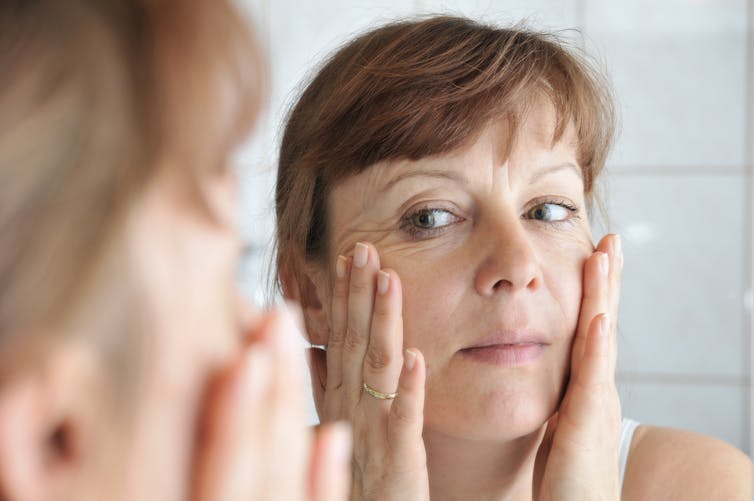 For some people, cosmetic treatments can cause psychological distress.
Shutterstock[20]
For some people, cosmetic treatments can cause psychological distress.
Shutterstock[20]
Minor cosmetic procedures don’t solve psychological problems and may exacerbate underlying emotional difficulties and relationship strain. Indeed for some patients, cosmetic procedures have contributed to self-harm[21], even suicide[22].
Importantly, some psychological factors predispose people to negative outcomes and in turn are exacerbated by cosmetic procedures. These include body dysmorphic disorder (BDD) – which has long been[23] a contraindication for cosmetic work[24], meaning people with BDD shouldn’t have cosmetic procedures.
BDD involves preoccupation with appearance flaws[25], with some spending hours checking their appearance, with negative impacts on employment and relationships.
BDD symptoms usually worsen after cosmetic procedures, or concern shifts to a new body part. Other psychological and social factors, as well as identity concerns, are also linked[26] to negative outcomes.
Read more: Body dysmorphic disorder and cosmetic surgery: are surgeons too quick to nip and tuck?[27]
Customers of minor cosmetic procedures are more likely than average to have psychological disorders. We found[28] more than 25% of minor cosmetic procedure customers had potential BDD and high numbers reported psychological distress, including anxiety, stress and/or depression. But some providers fail to adequately screen for these conditions, putting their customers at risk.
During lockdowns and COVID restrictions, people with BDD struggled[29] because they couldn’t access beauty treatments, which fuelled their desire for future therapies.
7. Are your expectations realistic?
A final risk factor involves the motivations for procedures. Previously, only external motivations were considered unhealthy: having minor cosmetic procedures to please others, or believing the procedures would lead to friends and career success.
We did find this in our research, but in addition, we discovered unrealistic internal motivations[30] – such as believing minor cosmetic procedures would change your personality – are similarly problematic.
Read more: New year, new you? Why we think a better body will be a better self[31]
Essentially, your expectations must be realistic because if they’re not, it’s likely the procedures will result in distress.
These red flags[32] can indicate if cosmetic procedures are a safe choice – and ethical cosmetic providers will screen customers for these before proceeding.
References
- ^ new research shows (academic.oup.com)
- ^ 35-50 year old women (www.psychology.org.au)
- ^ highest cosmetic procedure rates per capita (www.sbs.com.au)
- ^ A$350 million to A$1 billion (cpca.net.au)
- ^ lead to (www.psychology.org.au)
- ^ body image (www.mja.com.au)
- ^ minor (www.psychology.org.au)
- ^ Medical Board of Australia guidelines (www.medicalboard.gov.au)
- ^ piercing the skin (www.medicalboard.gov.au)
- ^ Will microdermabrasion or skin needling give me better skin? (theconversation.com)
- ^ about unsafe and illegal practices (www.hccc.nsw.gov.au)
- ^ Shutterstock (www.shutterstock.com)
- ^ AHPRA (www.ahpra.gov.au)
- ^ reports (www.abc.net.au)
- ^ Cosmetic facial procedures are not risk free – here are some of the most popular (theconversation.com)
- ^ most people (www.psychology.org.au)
- ^ positive (www.mja.com.au)
- ^ some people rely (www.psychology.org.au)
- ^ self-manage (doi.org)
- ^ Shutterstock (www.shutterstock.com)
- ^ contributed to self-harm (pubmed.ncbi.nlm.nih.gov)
- ^ suicide (pubmed.ncbi.nlm.nih.gov)
- ^ long been (www.psychology.org.au)
- ^ cosmetic work (www.mja.com.au)
- ^ preoccupation with appearance flaws (doi.org)
- ^ also linked (www.psychology.org.au)
- ^ Body dysmorphic disorder and cosmetic surgery: are surgeons too quick to nip and tuck? (theconversation.com)
- ^ We found (www.liebertpub.com)
- ^ struggled (onlinelibrary.wiley.com)
- ^ unrealistic internal motivations (doi.org)
- ^ New year, new you? Why we think a better body will be a better self (theconversation.com)
- ^ red flags (www.health.nsw.gov.au)