Albanese government announces $1.2 billion plan to purchase critical minerals
- Written by: Michelle Grattan, Professorial Fellow, University of Canberra
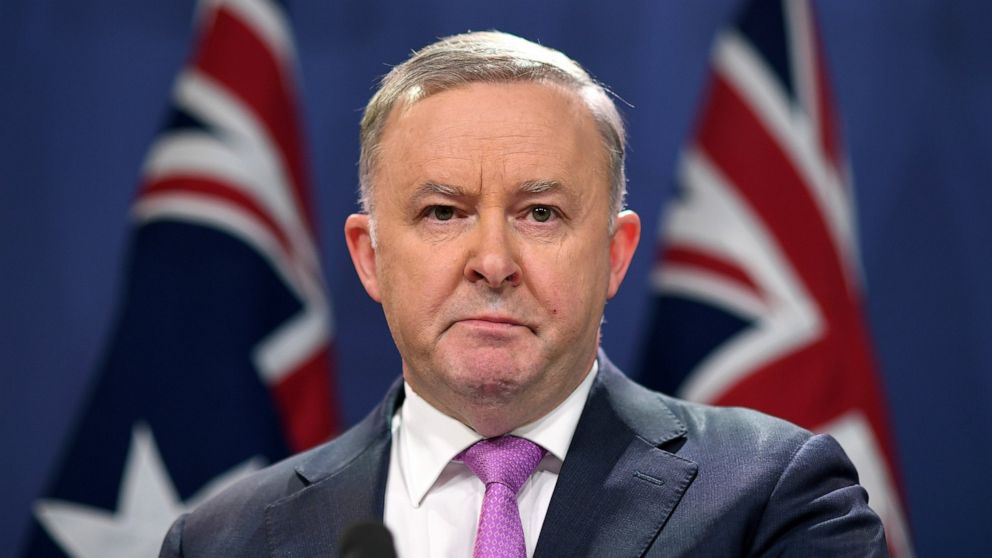
A re-elected Albanese government will take the unprecedented step of buying or obtaining options over key critical minerals to protect Australia’s national interest and boost its economic resilience.
The move follows US President Donald Trump’s ordering a review into American reliance on imported processed critical minerals and Australia’s discussions with the United States about a possible agreement on these minerals as part of negotiations to get a better deal on US tariffs.
Australia has major deposits of critical minerals and rare earths. But almost all the processing of critical minerals is done by China, which uses this as leverage in disputes with other countries. As part of its tariff dispute with the US, China this month suspended exports of a wide range of critical minerals and magnets.
Critical minerals are vital in the production of many items, including defence equipment, batteries, electronics, fibre optic cables, electric vehicles, magnets and wind turbines.
Prime Minister Anthony Albanese flagged recently that Australia would establish a critical minerals reserve and the government has now released details of its plan.
The government investment in critical minerals would come through two new mechanisms:
The government would acquire, through voluntary contracts, agreed volumes of critical minerals from commercial projects, or establish an option to purchase them at a given price.
It would also establish a government stockpile of key minerals produced under offtake agreements.
“The primary consideration for entering into offtake agreements will be securing priority critical minerals for strategic reasons,” the government said in a statement.
Minerals held by the reserve would be made available to domestic industry and key international partners.
This would cover a deal with the US, if that can be reached.
“The Reserve will be focused on a subset of critical minerals that are most important for Australia’s national security and the security of our key partners, including rare earths,” the statement said.
As its holdings matured, the reserve would generate cash-flow from sales of offtake on global markets and to key partners, the statement said.
“The Strategic Reserve will also accumulate stockpiles of priority minerals when warranted by market conditions and strategic considerations, but it is anticipated that these will be modest and time-limited in most cases.”
The government would make an initial investment of $1.2 billion in the reserve, including through a $1 billion increase in the existing Critical Minerals Facility. This would take the government’s investment in the facility to $5 billion.
The facility, established in 2021, provides financing to selected projects that are aligned with the government’s critical minerals strategy.
The government plans to consult with states and companies on the scope and design on the Strategic Reserve, which it would aim to have operating in the second half of next year.
ALbanese said: “In a time of global uncertainty, Australia will be stronger and safer by developing our critical national assets to create economic opportunity and resilience.
"The Strategic Reserve will mean the government has the power to purchase, own and sell critical minerals found here in Australia.
"It will mean we can deal with trade and market disruptions from a position of strength. Because Australia will be able to call on an internationally-significant quantity of resources in global demand.”
Resources Minister Madeleine King said: “Critical minerals and rare earths and essential not only to reducing emissions but also for our security and the security of our key partners.
"While we will continue to supply the world with critical minerals, it’s also important that Australia has access to the critical minerals and rare earths we need for a Future Made in Australia.”