Trump is interested in joining the Commonwealth. It’s not up to him – or even the king
- Written by: Dennis Altman, Vice Chancellor's Fellow and Professorial Fellow, Institute for Human Security and Social Change, La Trobe University
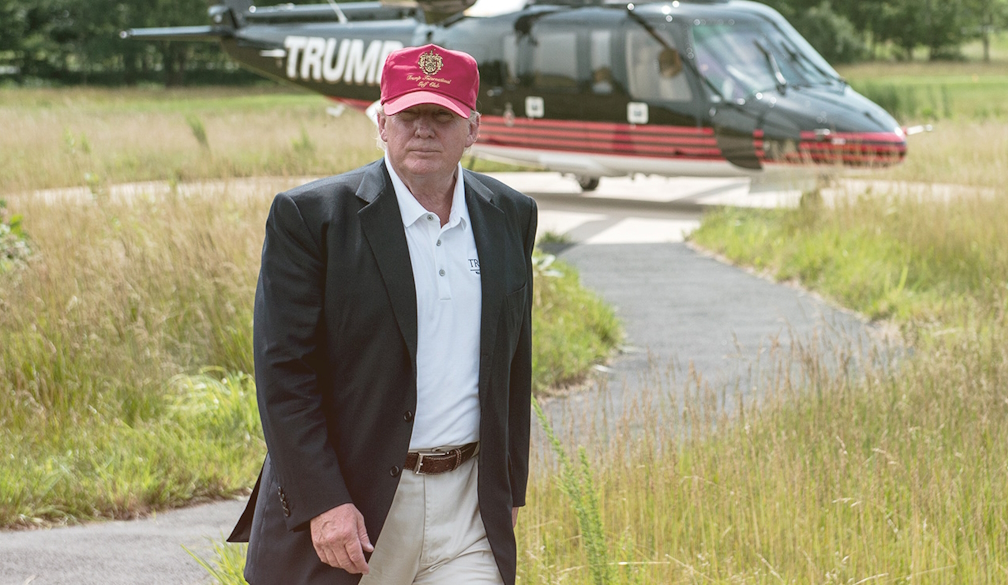
It seems Britain has one key inducement to offer US President Donald Trump: a state visit hosted by King Charles.
One can only imagine what the king thinks of this, but he will undoubtedly maintain a stiff upper lip and preside over several lavish dinners.
Following reports of this offer[1], which would make Trump the only US president to be twice hosted by a British monarch, stories surfaced that the US might become an associate member of the Commonwealth.
Read more: The king has a tricky diplomatic role to play in inviting Trump for a state visit[2]
There has been no official confirmation of this, but the story has been floated in several British newspapers[3].
What is the Commonwealth?
The Commonwealth came into existence as a means of retaining links with former British colonies, so there is a certain historical justification for the idea.
Almost all of Britain’s former colonies are now members of the Commonwealth of Nations[4], with Ireland and the US notable exceptions.
The Commonwealth is an organisation that ties together 56 countries, including a few in Africa that have been admitted despite not having been British colonies.
Of the 56, only a minority recognise the British king as their head of state, a point local monarchists are reluctant to acknowledge.
Indeed, some members of the Commonwealth, such as Malaysia, Brunei and Tonga, have their own hereditary monarchs.
In theory, all members are democratic, and several, such as Fiji, have at times been suspended from membership[5] for failing on this count.
Whatever doubts we might have about the state of US democracy[6], it is hard to argue the US would fail to meet a bar that allows continued membership to states such as Pakistan and Zimbabwe.
The Commonwealth is largely seen as less important than other international groupings, and its heads of government meetings are often skipped by leaders of the most significant members.
Other than turning up to the Commonwealth Games, few recent Australian prime ministers have paid it much attention, compared to our membership of the G20[7] or the Asia-Pacific Economic Cooperation (APEC).
Nonetheless, the Commonwealth does include a remarkable range of countries ranging from significant states such as India, Canada and South Africa to the many island states of the Pacific and the Caribbean.
While its work is largely unreported, it does provide a range of international assistance and linkages that otherwise would be out of reach for its smaller and poorer members.
Why is Trump interested in joining?
Trump, it can be assumed, has no interest in the Commonwealth as a means of better working with states such as Namibia and Belize.
The attraction seems to be linked to his strange reverence for royalty[8] and a fundamental misunderstanding of the role of the British sovereign.
King Charles is head of the Commonwealth through agreement of its members, probably in recognition of the extraordinary commitment his mother showed as the Commonwealth developed out of the old British Empire. Indeed, she clashed several times[9] with her British ministers because of her loyalty to the Commonwealth.
But unlike the king’s British – and Australian – crown, this is not a position that belongs automatically to the British monarch.
So, while inviting Trump to Windsor Castle may be the gift of UK Prime Minister Keir Starmer, admission to the Commonwealth would require the agreement of all its members.
Given Trump’s demands to acquire Canada[10] and to punish South Africa[11] for recent land expropriation law, it is hard to imagine unanimous enthusiasm.
Read more: Donald Trump is picking fights with leaders around the world. What exactly is his foreign policy approach?[12]
Most member states are cautious about being too closely linked to either the US or China, although Australia might end up the last true believer in US alliances. Others, such as Ghana and Pakistan, depend considerably on Chinese aid[13].
In a world dominated by increasingly autocratic leaders, a middle power like Australia needs as wide a range of friends as possible. Most of us have only a vague sense of what the Commonwealth entails.
Like all international institutions, the Commonwealth often seems more concerned with grand statements than actual commitment.
But there is value in a global organisation whose members claim to be committed to[14]:
democracy and democratic processes, including free and fair elections and representative legislatures; the rule of law and independence of the judiciary; good governance, including a well-trained public service and transparent public accounts; and protection of human rights, freedom of expression, and equality of opportunity.
Would Trump’s America meet those demands?
References
- ^ this offer (www.bbc.co.uk)
- ^ The king has a tricky diplomatic role to play in inviting Trump for a state visit (theconversation.com)
- ^ several British newspapers (www.msn.com)
- ^ Commonwealth of Nations (thecommonwealth.org)
- ^ suspended from membership (fiji.highcommission.gov.au)
- ^ the state of US democracy (theconversation.com)
- ^ the G20 (www.dfat.gov.au)
- ^ reverence for royalty (edition.cnn.com)
- ^ clashed several times (scribepublications.com.au)
- ^ acquire Canada (www.nytimes.com)
- ^ punish South Africa (www.aljazeera.com)
- ^ Donald Trump is picking fights with leaders around the world. What exactly is his foreign policy approach? (theconversation.com)
- ^ considerably on Chinese aid (africa.businessinsider.com)
- ^ claim to be committed to (thecommonwealth.org)