


A bitter rivalry is emerging in the Middle East between two old adversaries over the future of Syria
- Written by: Amin Saikal, Emeritus Professor of Middle Eastern and Central Asian Studies, Australian National University
The fall of Bashar al-Assad’s regime in Syria has opened a new front for geopolitical competition in the Middle East.
Now, however, instead of Iran and Russia playing the most influential roles in Syria, Israel and Turkey see an opportunity to advance their conflicting national and regional security interests.
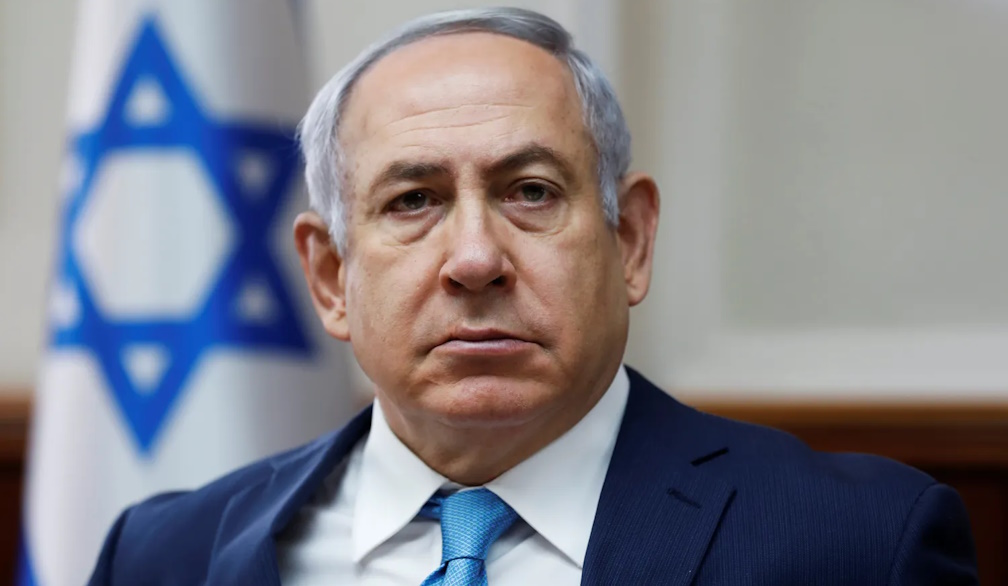
Under their respective leaders, Prime Minister Benjamin Netanyahu and President Recep Tayyip Erdoğan, relations between the two countries have deteriorated sharply in recent years. This sets the stage for a bitter showdown over Syria.
A new rivalry is emerging
Turkey is widely reported to have backed the offensive led by the Sunni rebel group, Hayat Tahrir al-Sham (HTS), to drive Assad from power, thus backstabbing Syria’s traditional allies, Iran and Russia.
Tehran has intimated that without Turkey’s support, HTS would have been unable to achieve[1] its blistering takeover.
Now, with Assad gone, Erdoğan is believed[2] to be positioning himself as de facto leader of the Sunni Muslim world. He also wants Turkey to be one of the dominant powers in the region.
Erdoğan has said if the Ottoman Empire[3] had been divided in a different way following its defeat in the First World war, several Syrian cities, including Aleppo and Damascus, would have likely been part[4] of modern-day Turkey.
Turkey immediately reopened[5] its embassy in Damascus after Assad’s fall and offered help to HTS in shaping the country’s new Islamist order.
As part of this, Erdoğan has opposed any concession by HTS to the US-backed Kurdish minority in Syria’s northeast, which he regards as supporters of the Kurdish separatists in Turkey.
Meanwhile, Israel has taken advantage of the power vacuum in Syria to advance its territorial and security ambitions. It has launched a land incursion[6] into the Syrian side of the strategic Golan Heights and has executed[7] a massive bombardment of Syria’s military assets across the country.
Israel’s foreign minister said destroying these assets – which included ammunition depots, fighter jets, missiles and chemical weapons storage facilities – was necessary to ensure they didn’t fall into the “hands of extremists[8]” that could pose a threat to the Jewish state.
Turkey sees Israel’s recent actions in Syria and the occupied Golan Heights as a land grab[9]. Israel’s actions have also been denounced[10] by Arab countries, who demand Syria’s sovereignty and territorial integrity be respected.
Israel is clearly concerned about the rise to power of an Islamist group and the transformation of Syria into a jihadist state.
This is despite the fact that HTS leader Ahmad al-Sharaa (also known as Abu Mohammad al-Jolani) has signalled he does not want conflict[11] with Israel. He’s also pledged not to allow[12] any groups to use Syria for attacks on Israel.
At the same time, al-Sharaa has called for the withdrawal of Israel[13] from Syrian territory according to a 1974 agreement that followed the 1973 Yom Kippur war.
Bitter foes
Erdoğan, Turkey’s moderate Islamist president, has long been a supporter of the Palestinian cause and a fierce critic of Israel[14]. But tensions have significantly escalated between the two sides since the start of the Gaza war.
Erdoğan has called[15] for an Arab-Islamic front to stop what he’s called Israel’s “genocide” in Gaza. He has equally berated Israel’s invasion of Lebanon earlier this year.
Prime Minister Benjamin Netanyahu, meanwhile, has lashed out at Erdoğan over the years. He has called him[16] a “joke” and “dictator” whose jails are full journalists and political prisoners. He has also accused[17] of Erdoğan of committing a “genocide” of the Kurdish people.
Washington, which is allied to both Turkey and Israel, has launched intense diplomatic efforts to ensure that HTS moves Syria in a favourable direction[18]. It is keen to see a post-Assad system of governance aligned with America’s interests.
These interests include HTS’ support for America’s Kurdish allies in northeast Syria and the continued presence of 1,000 American troops[19] in the country. The US also wants HTS to continue to prevent the Islamic State terror group from regaining strength.
The US will also have to manage the emerging geopolitical rivalry between Israel and Turkey in Syria.
Some observers have not ruled out the possibility[20] of an Israeli-Turkish military showdown, should Israel turn what it calls its temporary occupation of the demilitarised zone on the Syrian side of the Golan Heights into a permanent territorial acquisition.
This is not to say a war between them is imminent. But their clashing interests and the breadth of mutual hostility has certainly reached a new level.
Iran’s loss could be costly
For Iran, Assad’s ouster means the loss of a critical ally in its predominantly Shia “axis of resistance[21]” against Israel and the United States.
The Iranian regime had worked hard to build this network over the last 45 years as a fundamental part of its national and wider security. It had propped up[22] Assad’s minority Alawite dictatorship over the Sunni majority population in Syria at the cost[23] of some US$30 billion (A$47 billion) since the popular uprising against Assad began in 2011.
And with Assad now gone, Iran is deprived of a vital land and air bridge to one of its key proxies – Hezbollah in Lebanon.
The Assad regime’s sudden demise is now causing soul searching in Tehran about the wisdom of its regional strategy – and whether it will have any significant role at all in the new Syria. This seems unlikely, as al-Sharaa (the leader of HTS) has declared his disdain for both Iran and Hezbollah.
Al-Sharaa has prioritised the establishment of a publicly mandated Islamist government and Syria’s reconstruction and national unity over a conflict with Israel, Iran’s arch enemy. This will no doubt lead to contention with the hardliners and reformists in Iran.
Only time will tell how all of this will play out. At this stage, the future of Syria and the region hangs in the balance. And much depends on whether HTS leaders will move to set up an all-inclusive political system and unite a Balkanised Syria.
References
- ^ unable to achieve (www.tehrantimes.com)
- ^ believed (foreignpolicy.com)
- ^ Ottoman Empire (www.britannica.com)
- ^ likely been part (x.com)
- ^ reopened (www.voanews.com)
- ^ launched a land incursion (edition.cnn.com)
- ^ executed (www.aljazeera.com)
- ^ hands of extremists (www.timesofisrael.com)
- ^ land grab (www.theguardian.com)
- ^ denounced (www.aa.com.tr)
- ^ he does not want conflict (www.ft.com)
- ^ not to allow (english.almayadeen.net)
- ^ withdrawal of Israel (www.nbcnews.com)
- ^ fierce critic of Israel (www.aljazeera.com)
- ^ called (www.aa.com.tr)
- ^ called him (www.timesofisrael.com)
- ^ accused (x.com)
- ^ favourable direction (abcnews.go.com)
- ^ presence of 1,000 American troops (theconversation.com)
- ^ possibility (www.youtube.com)
- ^ axis of resistance (www.understandingwar.org)
- ^ propped up (www.dw.com)
- ^ cost (theconversation.com)









