


Dams have taken half the water from Australia’s second biggest river – and climate change will make it even worse
- Written by: Jan Kreibich, PhD Candidate, Centre for Ecosystem Science & Water Research Laboratory, UNSW Sydney
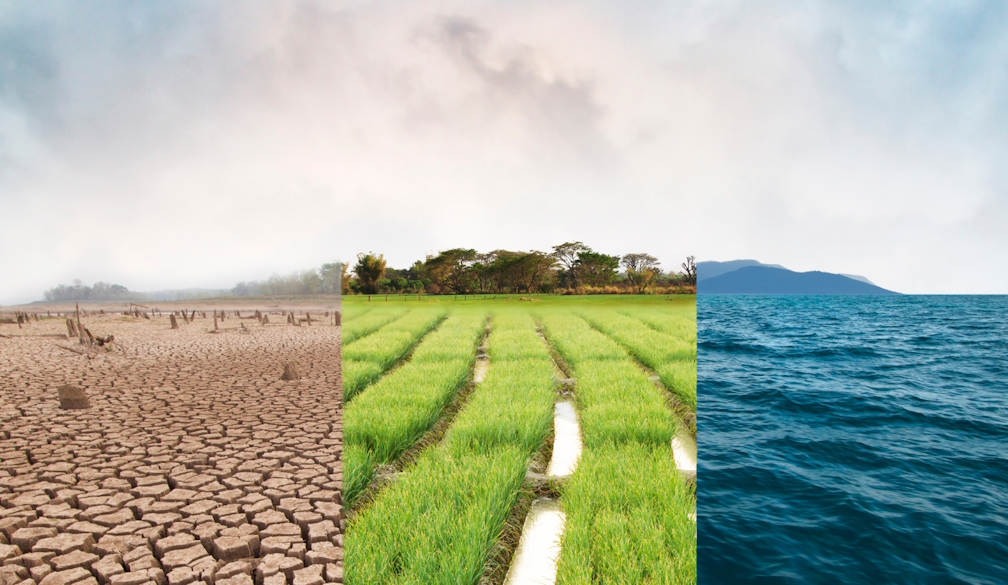
The largest wetland on Australia’s second longest river, the Murrumbidgee in the southern Murray-Darling Basin, is drying up. This is bad news for the plants, animals and people who rely on the vast Lowbidgee Floodplain. So it’s important to understand what is going on, and whether we can do anything about it.
Our new research[1] used computer modelling to study past and future river flows. We examined natural flows in the lower Murrumbidgee River between 1890 and 1927, before humans started changing the river. We compared these flows to what happened after big dams went in and more water was taken out for irrigation. Then, we modelled how climate change is likely to influence flows in future.
We found river regulation such as dams and reservoirs cut flows in half over the past three decades. It means periods between life-giving floods on the wetlands are now more than twice as long. With climate change, drying of these vital freshwater ecosystems is likely to accelerate.
Altogether, we predict the annual duration of flood events sustaining these wetlands will drop by as much as 85% by 2075 compared to natural levels, if nothing is done. But there are plenty of things we can do to turn this around, because our research shows the main reason for the decline is river regulation and overextraction.

Floods are essential for wetlands
The Lowbidgee Floodplain, in southwestern New South Wales, supports expansive river red gum and black box forests as well as one of the state’s largest lignum shrublands. Lignum’s thick mass of stems forms bushes that make great nesting platforms for waterbirds, attracting thousands of glossy ibis, straw-necked ibis and royal spoonbills. The area is also a breeding ground for Australian pelicans.
The endangered Southern bell frog and threatened native fish such as Murray cod also live here.
Floods bring wetlands to life. But human activities have disrupted the natural cycle of flood and drought. In the Murrumbidgee, 26 big dams and reservoirs now store and divert water, mainly for irrigation. These interventions have more than doubled the time between floods, causing large sections of the wetlands to dry up.
The lack of floods has devastated the floodplain, causing black box and river red gum forests to die. Waterbird numbers also plummeted.
A clip from the aerial waterbird survey of Pollen Creek on the Lowbidgee (Centre for Ecosystem Science)The Lowbidgee’s cultural significance
The Nari Nari people have lived on the Lowbidgee Floodplain for tens of thousands of years. The land and water has deep cultural and spiritual value.
Evidence of Nari Nari connection to this place is seen in the scar trees cut for canoes and other wooden items, middens of discarded shell and bone, earth mounds and burial sites scattered across the landscape.
After 180 years[2] of dispossession, 880 square kilometres of the floodplain was returned[3] to the Nari Nari Tribal Council[4] in 2019. This allows the original peoples of this land to repair it, reinstating cultural burning for example. But there’s a limit to how much they can do without more water.
 Nari Nari Elders Kerrie Parker (left) and Mabel Fitzpatrick (right) in the Gayini Wetlands of the Lowbidgee Floodplain. Annette Ruzicka
River regulation and climate change
Few studies have effectively reconstructed such a long history of a river to see where we have come from, and just as importantly, assessed what lies ahead.
We modelled natural flows in the Murrumbidgee River, using data for rainfall and runoff upstream. The rainfall data covers more than a century, from 1890 to 2018, which allowed us to model natural flows back to 1890.
First we established a baseline for natural flows. Then we were able to work out how dams, reservoirs and and water diversions have disrupted these flows over time.
We also considered how climate change might influence river flows in the future under different greenhouse gas emission scenarios.
We found most of the decline (55%) in the Murrumbidgee River’s flows was due to river regulation. But climate change will probably make matters worse, shaving another 7–10% off river flows by 2075, based on average projections.
The average annual duration of floods reaching the floodplain wetlands has dropped from 11.3 days under natural flows to just 4.5 days currently. This could decline further to around 1.7 days as the climate becomes warmer and drier.
 An aerial view of the Gayini Wetlands. Annette Ruzicka
Now is the time to act
Australia’s rivers are at risk, but it’s not too late to act. By reducing over-allocation and returning water to the environment we can protect threatened and endangered species, reduce the impacts of climate change, and honour the cultural heritage of First Nations Peoples.
Managing water releases to mimic natural seasonal flows can also help reinstate the natural cues for native plants, animals and other organisms.
Our research underscores the urgent need to understand our past in order to explore future water management options. It’s clear much of the damage has been done by damming the river and taking out so much water. Now it’s important to restore the balance in favour of the environment, to prepare for future climate change.
The Murrumbidgee River and its major floodplain wetlands are also a warning – a canary in the coal mine so to speak – of what could happen to other river systems worldwide as water demand rises along with projected income and population growth. This is especially concerning for many arid and semi-arid regions, where climate change is increasing temperatures while reducing rainfall.
We wish to acknowledge the contribution of Nari Nari Tribal man and General Manager of Gayini wetlands, Jamie Woods, to this article and the research paper it was based on.
References
- ^ Our new research (www.sciencedirect.com)
- ^ 180 years (doi.org)
- ^ returned (www.unsw.edu.au)
- ^ Nari Nari Tribal Council (www.narinari.org)









