


Shigeru Ishiba will be Japan’s next prime minister. What should we expect?
- Written by: Sebastian Maslow, Associate professor, University of Tokyo
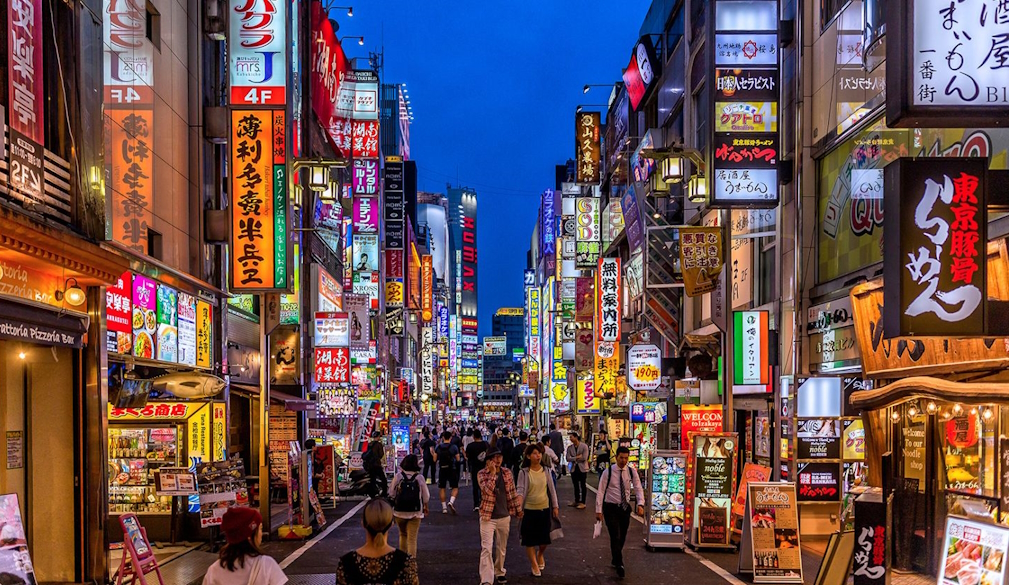
In a vote to replace Fumio Kishia as head of Japan’s ruling Liberal Democratic Party (LDP), party members have elected[1] Shigeru Ishiba as their new leader. Given the LDP’s majority in parliament, the party leader will become prime minister by default.
Ishiba, aged 67, joined the parliament in 1986 and held key cabinet posts throughout his career, including director of then Defence Agency (now Ministry of Defence).
Amid growing public opposition to the LDP, in 1993 he left the party, only to return four years later. The move cost him the trust of many of his LDP colleagues, many of whom still consider him a traitor[2].
Ishiba has run five times for the LDP’s top position and frequently opposed former prime minister Shinzo Abe’s policies. Though unpopular among the LDP’s top members, Ishiba has nourished broad support among the LDP’s base. In today’s race, he won over Sanae Takaichi, a close ally of Abe and the face of the LDP’s revisionist brand of conservatism.
Ishiba, who has his constituency in rural Tottori, has pledged to revitalise economic growth through supporting local regions. A defence expert, he is an outspoken advocate of stronger security relations with the United States and a more robust military.
What does this tell us about Japanese politics?
The election was one of the most contentious in recent political history and came after Kishida announced he would not seek re-election as LDP leader when his three-year term ends this month.
Kishida’s tenure as prime minister has been marred by political scandals[3], leading to a sharp decline in public support for the cabinet.
In particular, the revelation of the LDP’s links to the Unification Church[4] following the assassination of Abe in 2022 and recent reports of LDP slush funds[5] have undermined voter confidence in the party.

In an effort to restore public confidence, Kishida promoted the dissolution[7] of the LDP’s factions, which had served as the party’s main internal mechanisms for mobilising support and financial resources and allocating government portfolios since its founding in 1955.
At the same time, the factions were seen as the main source of the LDP’s scandals.
In a logic of “numbers are power”, the factions mobilised internal support for either their own leader or the faction’s ally to become prime minister.
By challenging the LDP’s old power structures, Kishida’s re-election prospects diminished. However, with the disappearance of most of the LDP’s factions, internal power politics has become competitive.
As a result, an unprecedented nine candidates vied for the party’s leadership.
Will politics change much?
The LDP’s constitution stipulates that in the first round of voting, the votes of each of the 368 members of parliament are added to the 368 votes allocated proportionally to rank-and-file members.
The top two candidates then go through to a second round, where the 368 National Diet[8] members cast their votes, while each of the 47 prefectural branches gets one vote.
This means candidates who are popular with the LDP’s base have a good chance of surviving the first round, while only those who are popular with the party’s Diet members will ultimately win the race.
The exception to this pattern is when the party’s national elite is so unpopular that its Diet members make a strategic move to support a locally popular candidate in an appeal to the public to reform the LDP and thus avoid punishment at the polls.
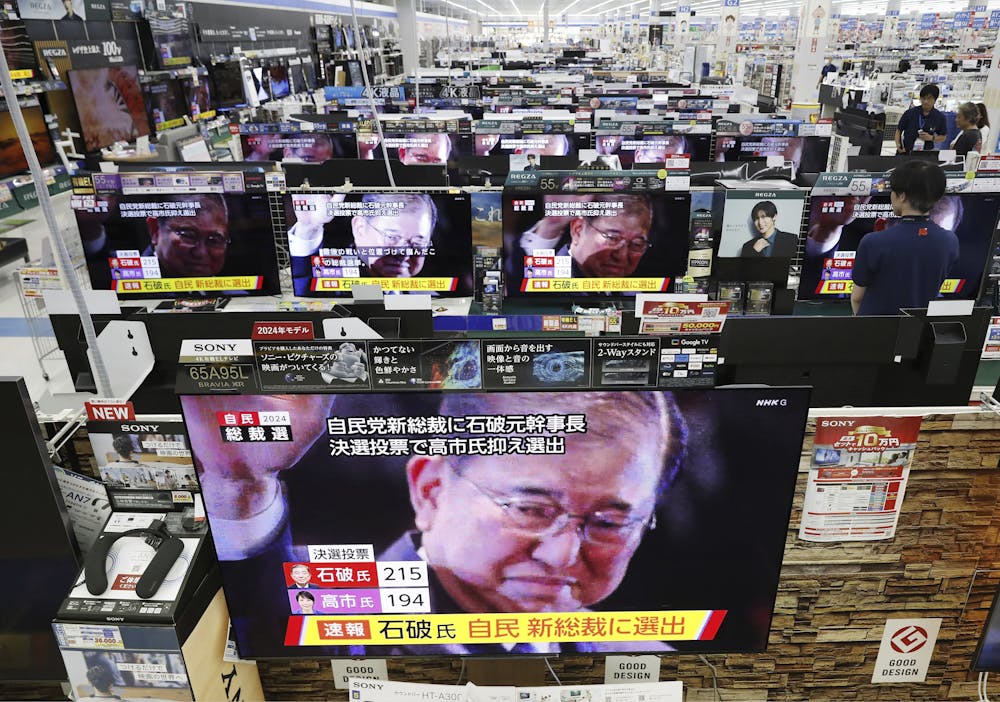 Ishiba tried for the leadership five times before suceeding. 熊谷政宣/AP[9]
This was the case when Junichiro Koizumi[10] was elected LDP leader in 2001 after campaigning against his own party, which was embroiled in a series of scandals, while securing the support of the grassroots.
With a runoff between the top two contenders seen as the most likely scenario early on, the candidates have been courting the support of the LDP’s old guard and faction leaders, hoping for their influence in mobilising the votes of LDP Diet members.
Ishiba has remained highly unpopular among LDP Diet members. LDP Vice-President Taro Aso and others have pledged to support his rival Sanae Takaichi.
Takakichi herself has promised not to further[11] investigate the party’s slush funds or to punish members linked to them. While Ishiba has been critical of the LDP’s initial response, he has remained silent on the issue during his campaign in order to avoid further alienating the party’s Diet members.
The LDP’s internal politics have come under intense public scrutiny. With the LDP’s internal power structures destabilised, fears of a return to revolving-door governments have resurfaced. The party operates in crisis mode.
Selecting Ishiba has increased its chances to compete in the next general election and thus keep the LDP in power. How Ishiba can secure enough support from within the LDP to implement his policies while responding to the public’s expectations[12] to hold the party accountable for its past scandals, however, remains to been.
If he fails to deliver on the latter, his tenure may be short-lived too.
What happens now?
The Diet will convene on Tuesday and LDP members will elect Ishiba as the new prime minister, who will then announce her new cabinet and LDP leadership.
If the past serves as lesson, Ishiba will dissolve the lower house soon after the supplementary budget is passed. This would set Japan on track for general elections later this year.
Faced with a fragmented opposition, it remains to be seen whether his policies alone will be enough to secure public support. A critique of “Abenomics” (Shinzo Abe’s economic approach), Ishiba is considered being in favour of fiscal discipline.
Meanwhile, he has also called for more public works spending to reduce Japan’s growing inequality while revitalising the depopulated regions.
Ishiba has also been critical[13] about Kishida’s return to nuclear power, calling for more investment in regenerative energy.
In addition, he has expressed support for legalising same-sex marriage and separate surnames – though broadly supported by the public, both issues are controversial among the LDP’s conservative base.
Promoting a more active and equal role of Japan in its alliance with the US, Ishiba most recently advocated for expanding security cooperation to an Asian version of NATO. Moreover, he has called for more diplomatic efforts to engage China and Russia instead of relying on military pressure.
At the same time he has repeatedly called for a robust military posture to counter China’s rise and North Korea’s military actions.
What Ishiba means for relations with South Korea – a key legacy of Kishida – or for handling a potential Donald Trump White House, however, remains to be seen. His pledge for a more active Japan certainly resonates well with Trump.
What is clear is that the LDP, operating in crisis mode, has voted for a leader who is willing to change the party and to restore the public’s trust in government.
References
- ^ have elected (www.reuters.com)
- ^ a traitor (www.japantimes.co.jp)
- ^ political scandals (www.bbc.com)
- ^ Unification Church (apnews.com)
- ^ slush funds (www.japantimes.co.jp)
- ^ Bryan R Smith/AP (photos.aap.com.au)
- ^ dissolution (www.japantimes.co.jp)
- ^ National Diet (www.shugiin.go.jp)
- ^ 熊谷政宣/AP (photos.aap.com.au)
- ^ Junichiro Koizumi (www.britannica.com)
- ^ not to further (www.asahi.com)
- ^ public’s expectations (digital.asahi.com)
- ^ been critical (www.reuters.com)









