New health campaign highlights a common source of anxiety
- Written by: Simon Robert Knowles, Associate Professor and Clinical Psychologist, Swinburne University of Technology
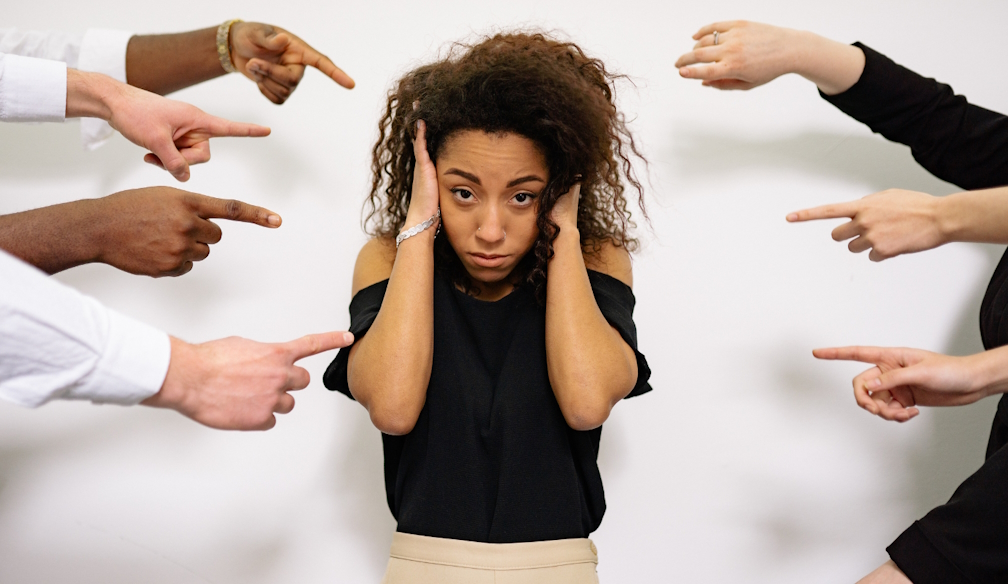
For most people, the daily or near-daily ritual of having a bowel motion is not something we give a great deal of thought to. But for some people, the need to do a “number two” in a public toilet or at work can be beset with significant stress and anxiety[1].
In recognition of the discomfort people may feel around passing a bowel motion at work, the Queensland Department of Health recently launched a social media campaign with the message “It’s okay to poo at work”.
The campaign has gained significant traction on Instagram[2] and Facebook[3]. It has been praised[4] by health and marketing experts for its humorous handling of a taboo topic.
A colourful Instagram post is accompanied by a caption warning of the health risks of “holding it in”, including haemorrhoids and other gastrointestinal problems. The caption also notes:
If you find it extremely difficult to poo around other people, you might have parcopresis.
What is parcopresis?
Parcopresis, sometimes called “shy bowel”, occurs when people experience a difficulty or inability to poo in public toilets due to fear of perceived scrutiny by others[5].
People with parcopresis may find it difficult[6] to go to the toilet in public places such as shopping centres, restaurants, at work or at school, or even at home when friends or family are around.
They may fear being judged by others about unpleasant smells or sounds when they have a bowel motion, or how long they take to go, for example.
Living with a gastrointestinal condition (at least four in ten Australians[7] do) may contribute to parcopresis due to anxiety about the need to use a toilet frequently, and perceived judgment from others when doing so. Other factors, such as past negative experiences or accessibility challenges, may also play a role.
For sufferers, anxiety can present in the form of a faster heart rate, rapid breathing, sweating, muscle tension, blushing, nausea, trembling, or a combination of these symptoms. They may experience ongoing worry about situations where they may need to use a public toilet.
Living with parcopresis can affect multiple domains of life and quality of life overall. For example, sufferers may have difficulties relating to employment, relationships and social life. They might avoid travelling or attending certain events because of their symptoms.
How common is parcopresis?
We don’t really know how common parcopresis is, partly due to the difficulty of evaluating this behaviour. It’s not necessarily easy or appropriate to follow people around to track whether they use or avoid public toilets (and their reasons if they do). Also, observing individual bathroom activities may alter the person’s behaviour.
I conducted a study[9] to try to better understand how common parcopresis is. The study involved 714 university students. I asked participants to respond to a series of vignettes, or scenarios.
In each vignette participants were advised they were at a local shopping centre and they needed to have a bowel motion. In the vignettes, the bathrooms (which had been recently cleaned) had configurations of either two or three toilet stalls. Each vignette differed by the configuration of stalls available.
The rate of avoidance was just over 14% overall. But participants were more likely to avoid using the toilet when the other stalls were occupied.
Around 10% avoided going when all toilets were available. This rose to around 25% when only the middle of three toilets was available. Men were significantly less likely to avoid going than women across all vignettes.
For those who avoided the toilet, many either said they would go home to poo, use an available disabled toilet, or come back when the bathroom was empty.
Parcopresis at work
In occupational settings, the rates of anxiety about using shared bathrooms may well be higher for a few reasons.
For example, people may feel more self-conscious about their bodily functions being heard or noticed by colleagues, compared to strangers in a public toilet.
People may also experience guilt, shame and fear about being judged by colleagues or supervisors if they need to make extended or frequent visits to the bathroom. This may particularly apply to people with a gastrointestinal condition.
Reducing restroom anxiety
Using a public toilet can understandably cause some anxiety or be unpleasant. But for a small minority of people it can be a real problem, causing severe distress and affecting their ability to engage in activities of daily living.
If doing a poo in a toilet at work or another public setting causes you anxiety, be kind to yourself. A number of strategies might help:
-
identify and challenge negative thoughts[11] about using public toilets and remind yourself that using the bathroom is normal, and that most people are not paying attention to others in the toilets
-
try to manage stress through relaxation techniques such as deep breathing and progressive muscle relaxation[12], which involves tensing and relaxing different muscles around the body
-
engaging in gradual exposure[13] can be helpful, which means visiting public toilets at different times and locations, so you can develop greater confidence in using them
-
use grounding or distraction techniques while going to the toilet. These might include listening to music[14], watching something on your phone, or focusing on your breathing.
If you feel parcopresis is having a significant impact[15] on your life, talk to your GP or a psychologist who can help identify appropriate approaches to treatment. This might include cognitive behavioural therapy.
References
- ^ significant stress and anxiety (theconversation.com)
- ^ Instagram (www.instagram.com)
- ^ Facebook (www.facebook.com)
- ^ has been praised (www.theguardian.com)
- ^ perceived scrutiny by others (www1.racgp.org.au)
- ^ find it difficult (www.bba.mindovergut.com)
- ^ four in ten Australians (doi.org)
- ^ Motortion Films/Shutterstock (www.shutterstock.com)
- ^ conducted a study (doi.org)
- ^ First published in Current Psychology, Volume 42, pages 1762–1772, 2023, by Springer Nature (link.springer.com)
- ^ challenge negative thoughts (www.healthdirect.gov.au)
- ^ progressive muscle relaxation (www.beyondblue.org.au)
- ^ gradual exposure (www.beyondblue.org.au)
- ^ listening to music (www.healthline.com)
- ^ a significant impact (www.bba.mindovergut.com)