‘Doing nothing is not an option’ – top economists back planning reform and public housing as fixes for Australia’s housing crisis
- Written by: Peter Martin, Visiting Fellow, Crawford School of Public Policy, Australian National University
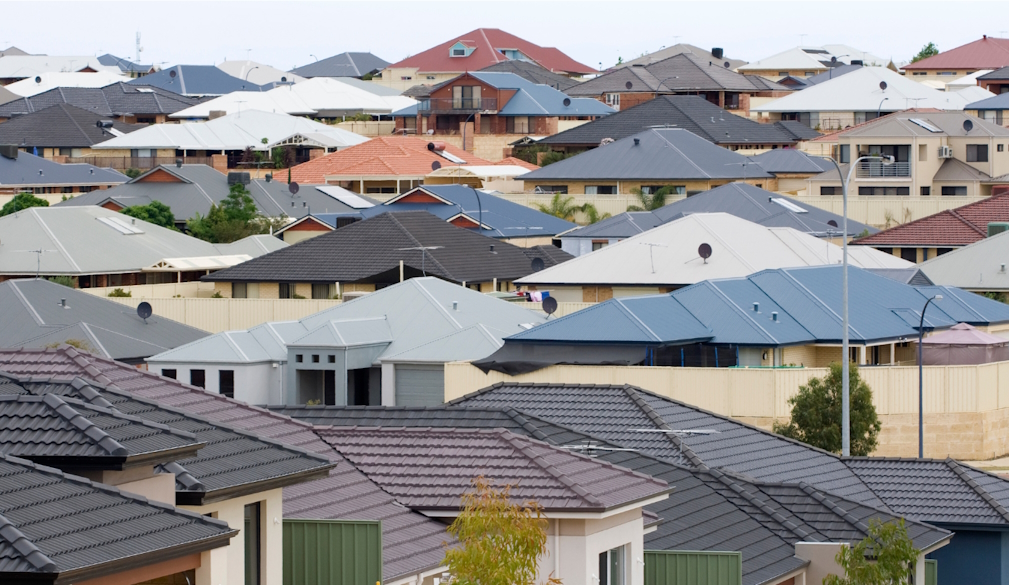
Top economists are unanimous in believing Australia’s housing market is in crisis.
Offered a choice of 14 measures identified by the Economic Society of Australia as likely to restrain prices for buyers and renters, none of the 49 leading economists polled picked: “do nothing, the market will determine appropriate prices”.
The economists chosen for the poll are from a panel of about 70 experts in fields including macroeconomics, economic modelling, housing and labour markets, maintained by the society since 2015[1].
Among them are former heads of government agencies, a former Reserve Bank board member, and former Treasury, International Monetary Fund and Organisation for Economic Co-operation and Development officials.
Two-thirds back public housing, planning reform
About two-thirds of the experts polled picked “ease planning restrictions” as one of the most important fixes. Almost as many picked “provide more public housing”.
About one-third wanted to “tighten negative gearing and capital gains tax concessions”, which was a policy Labor took to the 2019 election[2]. Another third wanted to “replace stamp duty with land tax applying to family homes”.
Also popular were removing barriers to building prefabricated homes (31%), fast-tracking the training of home builders (18%) and fast-tracking the immigration of home builders (14%).
Ten per cent of those surveyed wanted to include the family home in the age pension assets test, 8% wanted to remove first homeowner grants and concessions, and 6% wanted to apply capital gains tax to family homes, the same proportion that wanted to restrain immigration.
Only one of the panellists surveyed wanted to provide more direct assistance to first homebuyers, and only one wanted to allow first homebuyers to access their superannuation savings.
Australia’s median house-price-to-income ratio has soared in the past two decades, climbing from about five years of gross household income to eight[3].
At the same time, the median time taken to save for a deposit has climbed from about seven years to ten[4].
Rents have also been soaring, although only in the past few years[5]. Rental vacancy rates have fallen to all-time lows[6].
Asked whether it was more important to restrain rents or home prices, a majority of those surveyed (58%) backed action to restrain rents, although several said action to restrain prices would flow through to rents.
Tax empty homes to boost supply
Thirty-two of the 48 experts wanted planning restrictions relaxed in order to make it easier to build more new homes where people needed them, some mentioning the “excessive power” of NIMBYs – residents who say “not in my backyard” when confronted with plans to build in their neighbourhoods.
Several acknowledged this wouldn’t be enough without the ability to build homes quickly. The Australian National University’s Alison Booth said the building industry was old-fashioned and resistant to prefabricated construction.
Others wanted to boost supply by making more existing homes available. University of Canberra economist Uwe Dulleck suggested taxing empty homes.
He said several European cities more heavily taxed apartments and apartments that were not used as permanent residences. The tax could boost supply and affordability.
Former Productivity Commission economist Jenny Gordon said a tax on the unimproved value of land could have a similar effect, and would also encourage downsizers to sell and subdivide large blocks.
Former OECD official Adrian Blundell-Wignall proposed severe limits on the letting out of homes through Airbnb-style arrangements, although he doubted governments would have the courage.
More to it than supply?
Housing specialist Peter Abelson sounded a note of caution about the prevailing wisdom that houses haven’t been built quickly enough, noting that between 2003 and 2022 Australia’s housing stock climbed by 4% more than its population.
Julie Toth, chief economist at the online property settlement firm PEXA, said while 11 million homes for 27 million Australians sounded enough, there had been a long-term decline in average household size even as the homes themselves grew bigger.
One hundred years ago, the average Australian home housed 4.5 people; 30 years ago it housed 2.8, and in 2024 just 2.45.
Reserve Bank calculations suggested that if we reverted to 2.8 Australians per home we would require 1.2 million fewer homes.
No grants, no concessions for buyers
With the exception of measures to help low-income renters, the panel was overwhelmingly against subsidies for Australians trying to get into housing.
John Freebairn from The University of Melbourne said accommodation was “just one of life’s necessities, along with food and clothing”.
Sensibly, there were no or minimal subsidies for food and clothing, and that should be the case for housing. The best way to help Australians who needed help was by boosting their income.
Selective support for home buyers helped those who got it, but pushed up prices for everyone else.
Reboot public housing
Macquarie University economist Lisa Magnani says the proportion of households forced to rent rather than buy has climbed from 26% to 31% over the past 30 years, with many unable to easily afford the rent.
Whereas global cities – including Seattle, New York and Singapore – were attempting to aggressively lift the supply of low-income housing, Australia’s supply of affordable and public housing had been shrinking for decades.
Several panellists suggested the funds raised by restricting negative gearing and capital gains tax breaks be directed toward expanding public housing.
One, Ben Phillips of the Australian National University, cautioned that a massive public housing building program would come at the expense of private building. He said an alternative was to turn existing homes into public housing.
It was also important to boost payments such as JobSeeker and Youth Allowance to at least a basic level of adequacy. Government decisions over the past two budgets to boost rent assistance for welfare recipients by 25% were a good start.
Individual responses. Click to open:
References
- ^ since 2015 (esacentral.org.au)
- ^ took to the 2019 election (webarchive.nla.gov.au)
- ^ eight (www.datawrapper.de)
- ^ ten (www.datawrapper.de)
- ^ the past few years (public.flourish.studio)
- ^ all-time lows (sqmresearch.com.au)