More than half of NSW’s forests and woodlands are gone as ongoing logging increases extinction risks, study shows
- Written by: Michelle Ward, Lecturer, School of Environment and Science, Griffith University
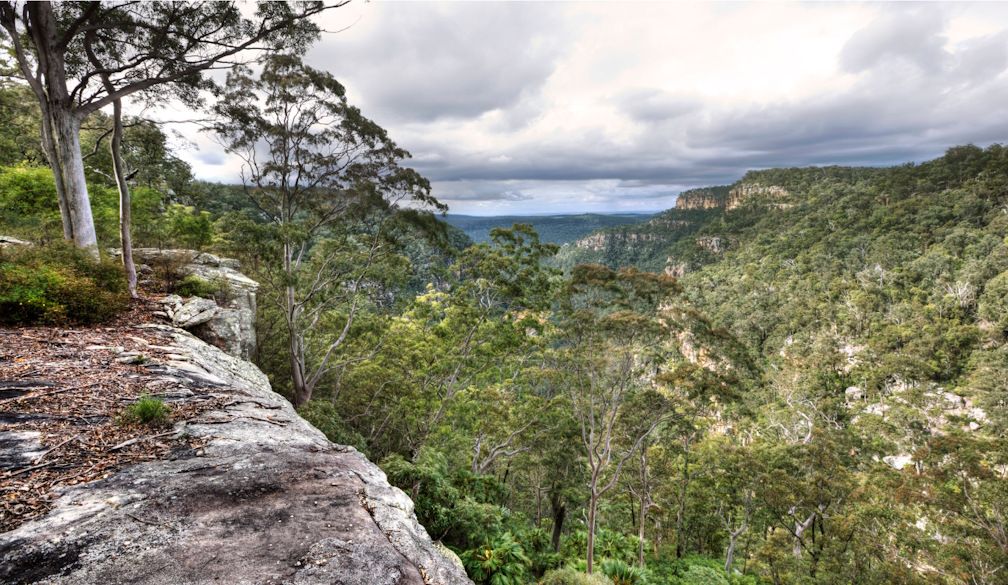
Since European colonisation, 29 million hectares (54%) of the forests and woodlands that once existed in New South Wales have been destroyed. A further 9 million ha have been degraded in the past two centuries. This amounts to more than 60% of the state’s forest estate.
We will never know the full impacts this rampant clearing and degradation have had on the state’s wildlife and plants. But it is now possible to put into perspective the impacts of logging practices in the past two decades on species that have already suffered enormous loss.
Cutting down native vegetation for timber destroys habitat for forest-dependent species. Our research, published today[1], has found ongoing logging in NSW affects the habitat of at least 150 species considered at risk of extinction, due mostly to historical deforestation and degradation.
Thirteen of these species are listed as critically endangered. This means there is a 20% probability of extinction in ten years (or five generations, whichever is longer) without urgent conservation action.
The bare and highly disturbed areas created by logging also increase risks of erosion, fire and invasion by non-native species.
Other states and countries ban native forest logging
Despite these impacts, Australia still logs native forests.
Many countries have now banned native forest logging. They have recognised the enormous impact of intact forests[2] on biodiversity and climate change, and rely entirely on plantations for wood production. New Zealand, for example, banned native forest logging two decades ago, in 2002.
In Australia, South Australia[3] has protected native forests since the 1870s. The ACT[4] banned logging in the 1980s. As of 2024, Western Australia[5] and Victoria[6] have ended their native forest logging operations (except logging for fire breaks, salvage logging after windstorms, and logging on private land).
The reasons are clear: native forestry is unpopular[7] and unprofitable[8], contributes heavily to climate change[9] and is a major cause of species decline[10].
Yet government-owned logging operations in NSW, Tasmania and Queensland[11] continue to erode their remaining forest estates.
Logging impacts on habitats and species add up
The current practice of impact assessment means logging activities are evaluated individually, without looking at the broader history of land management. On their own, small areas of logging might seem insignificant. However, logging these small areas can add up to a much larger long-term habitat loss.
To assess what logging today means in terms of impacts on species, we need to assess how much habitat has been lost or degraded over long time periods.
We used historical loss and degradation as a baseline to evaluate recent logging events (from 2000 to 2022) across NSW. We found continued logging is having impacts on 150 threatened species.
Forty-three of these species now have 50% or less of their intact habitat remaining in NSW. They include the three brothers wattle[12], regent parrot[13] and growling grass frog[14]. Two species, Sloane’s froglet[15] and Glenugie karaka[16], have less than 10% of intact habitat remaining.
Some species’ distributions had high overlaps with recent logging. They include the floodplain rustyhood[17] (75% overlap with logging), Orara boronia[18] (26%), Hakea archaeoides[19] (24%), long-footed potoroo[20] (14%), southern mainland long-nosed potoroo[21] (12%) and southern brown bandicoot[22] (9%). Species with the most distribution by area that overlapped with logging included koala[23] (400,000 ha), south-eastern glossy black-cockatoo[24] (370,000 ha) and spot-tailed quoll[25] (southeast mainland population, 310,000 ha).
Our research shows the importance of a historical perspective. Almost all the forest-dependent species we assessed have suffered terribly from land clearing and fires over the past two centuries. They now survive in small parts of their natural range.
Logging this remaining habitat is forcing many of these species into an extinction vortex. Environmental impact assessments and decisions about land use (such as converting land into conservation zones, solar farms or logging areas) must consider the historical legacies of logging for these species.
Sloane’s froglet has been hit hard by logging and less than 10% of its habitat remains intact.How can we retain our remaining forest estate?
Australia is a signatory to many international conservation goals. For instance, the Global Biodiversity Framework[26] aims to “ensure urgent management actions to halt human-induced extinction of known threatened species and for the recovery and conservation of species”. The Glasgow Leaders’ Declaration[27] committed us to halt and reverse deforestation by 2030.
Logging native forests stands in stark contrast to these undertakings.
In Australia, the states regulate forestry and, strangely, own the forestry business themselves. However, the Commonwealth has the power to intervene[28] and halt native forest logging. With the federal government in the throes of reforming nature laws and an election coming up, the choice is simple: lock in extinction by continuing rampant logging, or lock in species recovery by working with land managers to secure the future of these species.
Australia has a chequered recent history when it comes to protecting its environment. We have one of the highest mammal extinction rates in the world and the highest per capita greenhouse gas emissions of all OECD member countries. We are also the only developed nation identified as a deforestation hotspot[29].
Native forests are essential for carbon sequestration, biodiversity and the cultural wellbeing of First Nations and local communities. An easy win for all these interests is within our reach. Shifting from native forest logging to sustainable plantations will help protect these essential forests while still meeting wood demands.
References
- ^ published today (doi.org)
- ^ enormous impact of intact forests (www.nature.com)
- ^ South Australia (www.pir.sa.gov.au)
- ^ The ACT (assets.wwf.org.au)
- ^ Western Australia (www.wa.gov.au)
- ^ Victoria (www.deeca.vic.gov.au)
- ^ unpopular (fwpa.com.au)
- ^ unprofitable (www.frontier-economics.com.au)
- ^ climate change (www.thetreeprojects.com)
- ^ species decline (zslpublications.onlinelibrary.wiley.com)
- ^ NSW, Tasmania and Queensland (assets.wwf.org.au)
- ^ three brothers wattle (www.environment.gov.au)
- ^ regent parrot (www.dcceew.gov.au)
- ^ growling grass frog (www.dcceew.gov.au)
- ^ Sloane’s froglet (www.environment.nsw.gov.au)
- ^ Glenugie karaka (threatenedspecies.bionet.nsw.gov.au)
- ^ floodplain rustyhood (www.environment.gov.au)
- ^ Orara boronia (www.environment.gov.au)
- ^ Hakea archaeoides (www.environment.gov.au)
- ^ long-footed potoroo (threatenedspecies.bionet.nsw.gov.au)
- ^ southern mainland long-nosed potoroo (www.environment.nsw.gov.au)
- ^ southern brown bandicoot (threatenedspecies.bionet.nsw.gov.au)
- ^ koala (threatenedspecies.bionet.nsw.gov.au)
- ^ south-eastern glossy black-cockatoo (threatenedspecies.bionet.nsw.gov.au)
- ^ spot-tailed quoll (www.environment.gov.au)
- ^ Global Biodiversity Framework (www.cbd.int)
- ^ Glasgow Leaders’ Declaration (webarchive.nationalarchives.gov.uk)
- ^ has the power to intervene (theconversation.com)
- ^ deforestation hotspot (wwf.org.au)