Australians like facial recognition for ID but don’t want it used for surveillance, new survey shows
- Written by: Mark Andrejevic, Professor, School of Media, Film, and Journalism, Monash University, Monash University
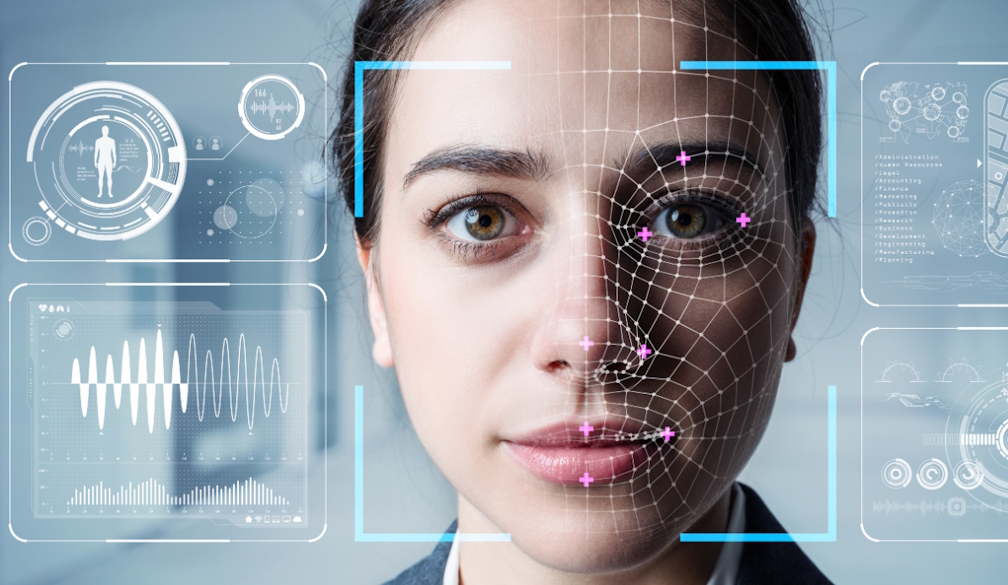
Automated facial recognition is becoming widespread in Australia. The technology has already been used by retail outlets[1], sport stadiums[2] and casinos[3] around the country. And in November, the Australian government’s digital identification system will be expanded[4], after new laws passed parliament earlier in the year.
As the technology becomes less expensive and more powerful, it will lend itself to a growing range of applications, such as a proposed age estimation tool[5].
To find out what Australians think about this fast-growing technology, my colleagues and our team conducted a representative national survey of more than 2,000 people. Our results, which we have just launched[6], indicate an overall lack of knowledge about the technology – and a range of attitudes towards it.
Crucially, these findings can help policymakers ensure the benefits of facial recognition technology are maximised – and the harms limited.
How does facial recognition technology work?
There are two main uses of facial recognition technology. The first, known as one-to-one use, ensures someone is who they say they are – as in the case of unlocking a smartphone. This can make life much more convenient. Instead of carrying around multiple forms of ID, people might simply submit to a face scan.
By contrast, one-to-many uses of the technology enable the identification of an unknown suspect or a face in the crowd.
In both cases, the technology works by creating a template from a photograph of a known individual. New photos can then be compared to the template to see if there is a match.
This match is given as a probability, not as a definitive yes or no – as in other cases of biometric identification. The technology can still be fooled by masks or disguises, but its ability to overcome these challenges is improving[7].
Attitudes vary, depending on how facial recognition is used
Overall, our research revealed that almost three quarters of Australians say they know little about facial recognition technology. Only one in 20 felt they knew “a lot” about it.
Our survey also found Australians are more comfortable with one-to-one uses of the technology. For example, a majority of respondents said they supported the use of the technology for accessing government services (57%).
This support might be good news for the country’s new digital ID system. It envisions a role for biometric technologies[8] – most likely facial recognition – to allow Australians to prove their identity when accessing government and financial services.
A majority of respondents (75.2%) also supported the use of facial recognition technology for identifying criminal suspects. And there was strong support (80%) among respondents for using facial recognition technology to help verify the identities of people who lose their credentials during disasters or war.
There was, however, much less support for other uses.
For instance, the majority (60%) of survey respondents did not support its use in the workplace for tracking the location of workers. They also did not support its use for tracking and targeting shoppers. There was a strong sense facial recognition technology should not be used for commercial benefit.
We also surveyed perceptions of the accuracy of facial recognition tech. A majority of survey respondents felt facial recognition technology is either “accurate” or “very accurate”. In reality, however, there is a range of different systems in use and accuracy can vary widely.
For example, the technology has been shown to be less accurate when used on certain demographic groups, raising issues of racial bias. Misidentification can have serious consequences for those who are wrongly arrested[9] and treated as criminals.
Crucial for survey respondents was notification and consent. 90% of Australians said they wanted to know when and where the technology was being used on them. They also wanted the opportunity to consent to its use.
Governments need to listen to the public – and respond
Automated facial recognition technology is a powerful form of surveillance that raises significant questions around privacy and liberty.
In 2019, the federal parliament proposed the use of a national face recognition database for law enforcement. This plan was deferred in part because of concerns that public response to its more widespread use might limit enrolment in digital ID programs.
More recent legislation restricts one-to-many matching using the national facial recognition database. However, individual states have their own databases from public records. The Australian Federal Police reportedly[10] continue to rely on an agency that uses facial recognition provided by the controversial company Clearview AI.
Given the recent history of data breaches[11], there should be concern about the capability of both the government and private sector to safely store and manage people’s data.
But automated facial recognition technologies can undoubtedly be useful. We urgently need better public education about the technology and the issues it raises, to ensure the responsible and democratic use of facial recognition tech.
And, as former Australian Human Rights Commissioner Edward Santow argues[12], we also need legislation dedicated to minimising the risk of creating an automated surveillance society.
References
- ^ retail outlets (www.choice.com.au)
- ^ sport stadiums (www.9news.com.au)
- ^ casinos (www.theguardian.com)
- ^ expanded (www.finance.gov.au)
- ^ proposed age estimation tool (www.innovationaus.com)
- ^ launched (drive.google.com)
- ^ overcome these challenges is improving (www.techtimes.com)
- ^ role for biometric technologies (www.sydneycriminallawyers.com.au)
- ^ wrongly arrested (www.abc.net.au)
- ^ reportedly (www.crikey.com.au)
- ^ data breaches (www.insurancebusinessmag.com)
- ^ argues (www.uts.edu.au)