One Nation’s rise is no longer anecdotal — Western Australia has provided the evidence
- Written by: The Times
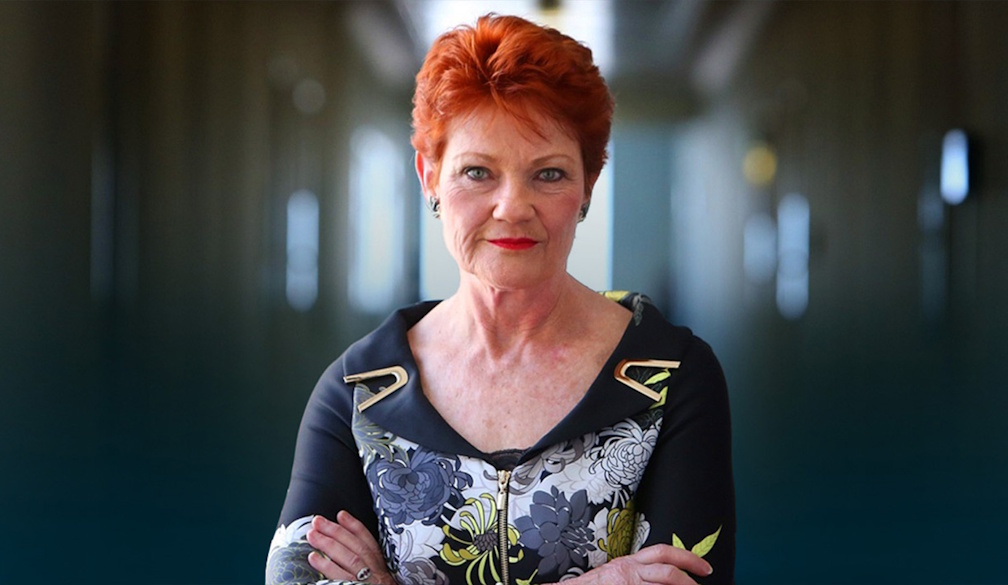
One by-election does not predict the next federal election. Nor does a victory in one Perth electorate establish that Australia has undergone an ideological transformation. But the result in Secret Harbour does something politically important: it converts One Nation’s recent rise from polling, commentary and speculation into actual votes cast in an electorate thousands of kilometres from the party’s traditional Queensland base.
There is a temptation after every surprising election result to declare that Australian politics has changed forever.
That would be a mistake.
The Western Australian Electoral Commission has not even completed the final count in the Secret Harbour by-election. Postal votes can still be received until September 3, and election-night results remain indicative until counting is complete.
But the result is sufficiently decisive for the ABC's election analysts to call the seat for One Nation candidate Luke Herdegen.
And something happened in Perth's southern suburbs on Saturday that deserves examination well beyond Western Australia.
Pauline Hanson's One Nation did not merely perform well in another opinion poll.
People entered polling booths.
They marked ballot papers.
And enough of them voted One Nation to take a traditionally safe Labor seat.
That is evidence.
This was Labor territory
The significance starts with the electorate itself.
Secret Harbour is an outer-southern Perth electorate incorporating communities including Port Kennedy, Secret Harbour, Golden Bay, Karnup, Singleton, Madora Bay and Lakelands.
Its predecessor electorates have a long Labor history.
Former Labor minister Paul Papalia had represented the area since winning the Peel by-election in 2007, and the electorate went into this contest with a Labor margin of 11.5 per cent.
At the 2025 state election, Labor recorded 46.6 per cent of the primary vote.
The Liberals received 25 per cent.
One Nation received less than 9 per cent.
A little more than a year later, the political landscape looks remarkably different.
Look at the primary votes
On the indicative count reported late on election night, One Nation had attracted approximately 35.8 per cent of first preferences.
Labor was on about 25 per cent.
The Liberals were on just 17.4 per cent.
One Nation was leading Labor approximately 53.9 to 46.1 per cent on the two-candidate-preferred count, representing a swing of about 17.5 percentage points against Labor.
The precise figures will change as counting continues.
The political fact is unlikely to.
One Nation has secured its first seat in the Western Australian Legislative Assembly.
That makes Secret Harbour considerably more interesting than an ordinary state by-election.
Polls are easy to dismiss
For months, Australian political discussion has increasingly included One Nation.
National polling has indicated increased support.
Pauline Hanson receives substantial media attention.
Political commentators debate whether the movement is temporary, whether dissatisfied Coalition voters will eventually return, and whether protest voters will behave differently once confronted with an actual ballot paper.
All of those were reasonable questions.
Opinion polls are snapshots.
People can tell pollsters they support a minor party without having to live with the consequences of that choice.
They can use polling responses to express frustration.
Election day is different.
Secret Harbour provided a real-world test.
One Nation passed it.
And it happened in Western Australia
Geography is one of the most important aspects of this result.
One Nation has historically been associated particularly strongly with Queensland.
Secret Harbour is on the opposite side of the continent.
Before the by-election, the contest was explicitly being described as a test of whether the party's recent national polling strength could translate into votes in Western Australia.
It did.
That does not prove One Nation could repeat the performance everywhere.
It does establish that its appeal is capable of crossing the Nullarbor.
That distinction matters.
A political movement begins to look nationally significant when similar voter behaviour appears in geographically separated parts of the country.
Secret Harbour gives us one additional piece of that evidence.
But this is not proof Australia has moved to the right
There will inevitably be attempts to describe the result as evidence of a major ideological realignment.
We should be more careful.
People vote for political parties for many reasons.
Some voters undoubtedly support One Nation's policies and philosophy.
Others may simply want to punish Labor.
Some may be disillusioned Liberal voters.
Some may be protesting against both major parties.
Others may be responding to very local concerns.
And some may have voted primarily for the candidate.
The evidence does not allow us to place all those voters into a single ideological category.
There is, however, a broader conclusion that is much easier to defend.
Traditional political loyalty appears to be weakening.
The Liberals should look at the numbers too
Labor has obvious reasons to examine what happened.
But this was hardly an endorsement of the Liberal Party.
The Liberals' indicative primary vote was only about 17.4 per cent.
That may prove one of the most nationally significant numbers in the entire contest.
If Australian politics were simply experiencing a conventional swing against Labor, we would expect the principal beneficiary to be the Coalition.
That isn't what happened in Secret Harbour.
Voters moved around the established opposition.
That suggests dissatisfaction may be directed not merely at the government but at the traditional two-party political structure itself.
Federal Liberal MP Andrew Hastie recognised the danger before polling day, arguing that the Liberals should be fighting One Nation for every vote rather than treating One Nation's rise simply as an opportunity to weaken Labor.
Secret Harbour suggests that concern was justified.
What are these voters trying to say?
This is where the result becomes more interesting than the personalities involved.
Reporting from Secret Harbour before the election repeatedly encountered concerns about:
- cost of living;
- housing affordability;
- population growth and migration;
- pressure on household finances;
- dissatisfaction with the major parties; and
- a belief among some former Labor voters that the party no longer represented them.
Those individual comments cannot tell us why an entire electorate voted as it did.
But they are consistent with the characteristics political analysts have identified in outer-metropolitan electorates where established party loyalties are weakening.
Secret Harbour is particularly interesting because it is not some remote political curiosity.
It is suburban Australia.
The outer suburbs matter
Australia's outer metropolitan communities contain enormous numbers of people doing the everyday work upon which the economy depends.
Tradespeople.
Small-business owners.
Health workers.
Drivers.
Construction workers.
Retail employees.
Young families.
Mortgage holders.
People commuting considerable distances to work.
Many purchased homes in outer suburbs because housing closer to city centres was unaffordable.
That can make these households particularly exposed to increases in interest rates, petrol, electricity, insurance, groceries and housing costs.
When governments talk about economic statistics, these households experience the economy as money leaving their bank accounts.
That does not automatically translate into support for any particular political party.
Secret Harbour suggests political parties would be unwise to assume those voters will remain where they traditionally belonged.
Cost of living has political consequences
This is perhaps the broader lesson.
Australians have endured an unusual combination of pressures.
Housing became extraordinarily expensive.
Rents increased.
Interest rates rose.
Food became more expensive.
Insurance costs increased.
Electricity became more expensive.
Fuel prices remain vulnerable to international events.
Real household budgets have been squeezed.
Governments can explain why these things happened.
Some explanations will be perfectly legitimate.
But eventually voters judge governments by outcomes rather than explanations.
Secret Harbour provides evidence that at least some voters are prepared to abandon long-standing political allegiances when dissatisfied with those outcomes.
Migration is part of the debate
Population and migration also featured in the campaign.
This subject requires precision.
Migration contributes significantly to Australia's economy and workforce.
Migrants themselves are not responsible for governments failing to provide sufficient housing or infrastructure.
But rapid population growth inevitably increases demand for accommodation, transport, schools, hospitals and other services.
If supply does not expand accordingly, existing pressures become greater.
Voters are entitled to ask whether population policy and infrastructure policy are properly aligned.
One Nation has positioned itself aggressively on migration.
Whether voters agree with its prescriptions is a separate question.
The important political point is that the issue is resonating with at least part of the electorate.
Major parties cannot make that concern disappear by refusing to discuss it.
Nor can One Nation be treated merely as Pauline Hanson
Pauline Hanson remains inseparable from the party's identity.
But Secret Harbour demonstrates the limitation of viewing One Nation solely through its federal leader.
The person elected in Western Australia is Luke Herdegen.
That matters.
For a political movement to become durable, it eventually has to translate the recognition of its national leader into viable local candidates, campaigns and parliamentary representation.
Winning a Western Australian lower-house seat represents another step in that process.
Whether One Nation can build from it is unknown.
But it now has something it did not previously possess in WA's Legislative Assembly:
A seat.
By-elections are dangerous evidence
There is an important qualification to everything above.
This was a by-election.
By-elections are peculiar political creatures.
Governments frequently suffer large swings.
Voters can punish a government without changing the government.
Turnout and campaign intensity can differ from general elections.
Candidate quality matters.
Local circumstances matter.
The retirement of a long-serving member can remove a personal vote.
And protest votes can become more attractive when government itself is not being decided.
ABC election analysis has appropriately cautioned against extrapolating Secret Harbour directly to a general election.
We agree.
Secret Harbour does not tell us what Australians will do at the next federal election.
But neither should it be dismissed
There is an equal danger in moving too far in the opposite direction.
Calling every unexpected result a "protest vote" can become a convenient way of avoiding what voters are saying.
A protest vote is still a vote.
And when sufficient protest votes accumulate, governments change.
The appropriate response to Secret Harbour is therefore neither:
One Nation will sweep Australia.
Nor:
It was only a by-election and means nothing.
Both claims go beyond the evidence.
The sensible conclusion lies between them.
Something politically significant is occurring, and we now have another piece of empirical evidence that it is occurring.
Labor has a problem
Labor lost a seat it should ordinarily have expected to hold.
Its primary vote fell dramatically from the 46.6 per cent recorded at the 2025 state election.
Labor therefore needs to understand why.
Simply characterising voters as angry or misinformed would achieve very little.
Why are they angry?
What has changed?
What do they believe government is failing to provide?
Why did people who previously supported Labor decide One Nation better represented their dissatisfaction?
Those are legitimate political questions.
The Coalition may have the more complicated problem
Labor can potentially recover dissatisfied Labor voters.
The Coalition faces a different strategic challenge.
It needs to defeat Labor while simultaneously preventing One Nation from replacing it as the principal vehicle for voters seeking an alternative.
Secret Harbour demonstrates the problem vividly.
Labor fell dramatically.
Yet the Liberal Party did not capture the benefit.
One Nation did.
That means simply waiting for an unpopular government to lose support may no longer be sufficient.
The Coalition must persuade voters to choose it.
This may be the realignment worth watching
For generations, Australian political analysis has largely operated on a familiar axis.
Labor versus Coalition.
Government versus opposition.
Left versus right.
Secret Harbour suggests another axis deserves attention:
Established parties versus political outsiders.
That phenomenon is hardly unique to Australia.
Traditional political parties across many democracies have struggled as voters become less loyal, political communication fragments and economic insecurity creates opportunities for challengers.
Australia's compulsory voting system and preferential electoral arrangements make our politics different.
But they do not make us immune.
One result does not make a national movement
One Nation still has considerable work to do before anyone could credibly describe it as a replacement for either major political bloc.
It needs candidates.
Organisation.
Money.
Policy depth.
Electoral discipline.
And eventually it must demonstrate that it can do more than collect protest votes.
Representation brings scrutiny.
Winning a seat is one challenge.
Keeping it is another.
Winning enough seats to exercise sustained political influence is considerably harder.
Secret Harbour therefore represents evidence of opportunity, not proof of destiny.
Watch what happens next
The next tests will be more informative than another national opinion poll.
Does One Nation retain strong support after the publicity surrounding Secret Harbour subsides?
Can it repeat the performance elsewhere in Western Australia?
Does its support appear in different demographic areas?
Do Labor voters return to Labor?
Do conservative voters return to the Coalition?
Do the major parties change policy in response?
And perhaps most importantly:
Does One Nation begin winning seats where nobody previously expected it to compete?
If that starts happening repeatedly, Australia will no longer be discussing a polling phenomenon.
It will be discussing a political realignment.
The Times View
Secret Harbour should neither be exaggerated nor ignored.
One Western Australian by-election cannot tell us who will govern Australia.
It cannot prove that the country has moved decisively to the right.
And it certainly cannot establish that One Nation's present support will endure.
But something important has changed.
Until now, much of the discussion about One Nation's resurgence could be dismissed as polling, publicity and speculation.
Secret Harbour gives us something different.
Votes.
One Nation has taken a traditionally Labor lower-house seat in Western Australia.
Labor's support collapsed.
The Liberals did not inherit it.
A substantial number of voters instead chose a party outside Australia's traditional governing duopoly.
That deserves attention.
Perhaps the most important lesson is not that One Nation is suddenly destined for national power.
It is that increasing numbers of Australians may no longer consider themselves permanently attached to either of the parties that have dominated Australian government.
That should concern Labor.
It should concern the Coalition.
And it should interest anyone trying to understand where Australian politics is heading.
The question after Secret Harbour is therefore bigger than who won one Western Australian by-election.
What are Australia's disaffected voters trying to tell the political establishment — and which party will listen first?