Hormuz recovery falters — tanker traffic plunges as hopes of a quick reopening fade
- Written by: The Times
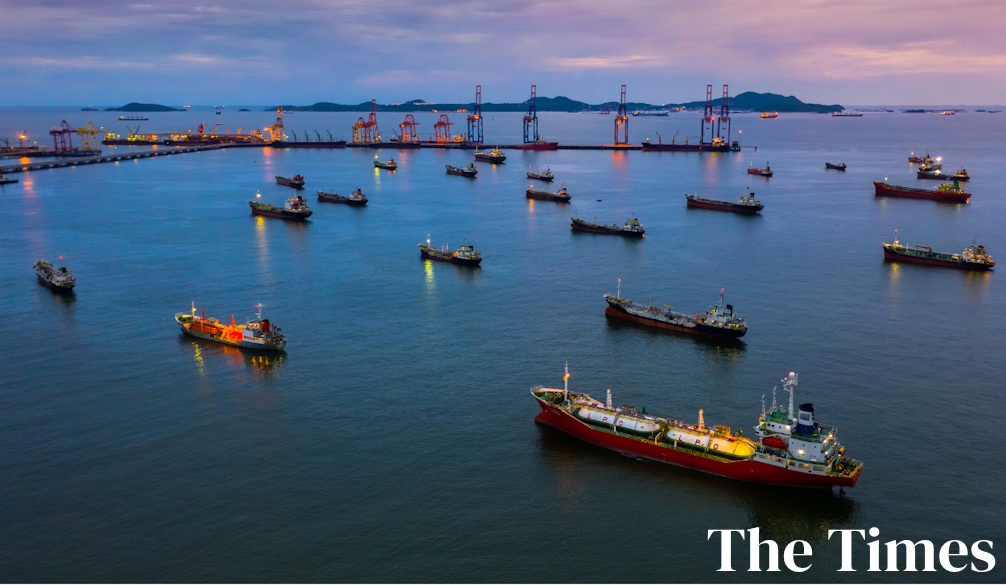
The tentative recovery in shipping through the Strait of Hormuz has suffered an abrupt setback. Only seven commodity vessels crossed the waterway on Thursday, down from a revised 17 the previous day. For Australia, it is another warning that falling oil prices and diplomatic negotiations should not be confused with restored fuel security.
For a brief moment, the numbers appeared to be moving in the right direction.
Ships were returning to the Strait of Hormuz.
Oil prices were falling.
Iran and Oman were negotiating arrangements intended to restore navigation through one of the world's most important energy corridors.
Qatar was attempting to broker a broader diplomatic solution.
Markets began contemplating something that seemed improbable only weeks earlier: the gradual reopening of Hormuz.
Then the shipping numbers went backwards.
Kpler data reported by Reuters on Friday shows just seven commodity vessels passed through the Strait on Thursday.
That compares with a revised 17 vessels on Wednesday and a 10-day average of approximately 15.
Four vessels left the Gulf.
Only three entered.
It is one day's preliminary shipping data, and some vessels may not be visible because their transponders have been switched off.
But after the optimism surrounding a possible reopening, the reversal is significant.
The physical recovery in Hormuz has not yet established itself.
And for Australia, physical supply matters considerably more than diplomatic optimism.
Hormuz remains a fraction of its former self
Before the war, the Strait of Hormuz carried roughly one-fifth of the world's oil and liquefied natural gas supplies.
It was one of the great arteries of the global economy.
The waterway connects the Persian Gulf with the Gulf of Oman and the Arabian Sea.
Saudi Arabia, the United Arab Emirates, Kuwait, Iraq and Qatar all depend to varying degrees on the Gulf's maritime export system.
When Hormuz works normally, enormous quantities of energy move through it almost routinely.
That normality disappeared with the Iran conflict.
Reuters reports overall traffic through the Strait remains at only around 5% to 15% of normal levels.
That is the number Australians should keep in mind when hearing that Hormuz is being reopened.
There may be ships moving through it.
There may be temporary arrangements.
There may be mine-clearing operations.
There may be negotiations.
But a waterway operating at a small fraction of its normal capacity is not a normalised international energy route.
The Wednesday surge was encouraging
Wednesday's revised figure of 17 commodity vessels was important because it exceeded the recent 10-day average.
It suggested commercial operators might finally be responding to improving diplomatic conditions.
Then Thursday produced seven.
The vessels included two medium-range tankers, an intermediate tanker, two chemical tankers, an Ultramax vessel and a very large gas carrier.
The volatility itself tells us something.
Normal commercial shipping depends upon predictability.
Shipowners need confidence that a voyage can be completed.
Insurers need to understand the risks they are underwriting.
Traders need confidence that cargoes will arrive.
Refineries need dependable feedstock.
Customers need reliable delivery.
A route that moves from 17 vessels one day to seven the next remains profoundly abnormal.
There is an important qualification
The Kpler figures are preliminary.
They may also understate actual traffic.
Some vessels operating around Hormuz have been travelling without normal Automatic Identification System signals.
These so-called dark movements make precise ship counting difficult.
The United States has argued that considerably more petroleum is moving out of the Gulf than conventional vessel tracking indicates.
That claim will eventually be tested by something much harder to disguise: imports arriving at their destinations.
And so far, the Asian numbers remain uncomfortable.
Asia is still receiving much less oil
Kpler estimates Asian crude imports during August at around 23.12 million barrels a day.
That is below July's approximately 23.36 million barrels a day and about 14% below pre-conflict levels.
More strikingly, Kpler estimates exports through Hormuz at only around 2.3 million barrels a day in August, down from approximately 4.49 million in July.
India provides another useful indicator.
Its August imports from the Middle East are estimated at about 1.45 million barrels a day — roughly half pre-conflict levels.
That matters to Australia.
We are part of the Asian petroleum market.
If substantially less Middle Eastern crude is reaching Asia, the regional system supplying Australian petrol, diesel and aviation fuel remains under pressure.
The refined-fuel problem remains
There is a temptation to treat every movement in Brent crude as an indication of what should happen next at the Australian service station.
The relationship is considerably more complicated.
Australians consume refined petroleum products.
Crude oil has to be transported.
It has to reach a refinery.
The refinery has to be operating.
The crude has to be converted into petrol, diesel, aviation fuel and other products.
Those products then have to be shipped to consuming countries.
Australia competes for those cargoes in the international market.
The Iran conflict has disrupted several parts of that chain simultaneously.
That is why Australia's fuel problem cannot be reduced to a single question:
What is the price of Brent today?
A better question is:
How much petrol and diesel is actually available in the Asian market, and what does Australia have to pay to secure it?
Diplomacy is continuing
The fall in shipping traffic does not mean the diplomatic process has collapsed.
Quite the opposite.
Qatar has become increasingly involved in attempts to restore navigation.
Following discussions with a Qatari envoy, Iran has agreed to formulate conditions under which normal maritime traffic could resume.
Iran and Oman are also working on a designated shipping corridor through Hormuz.
Those developments are potentially important.
A workable agreement could remove a substantial geopolitical premium from international petroleum prices and allow much larger quantities of energy to move out of the Gulf.
But there is an important complication.
The United States says it is not presently negotiating directly with Iran.
Washington has instead intensified its economic-pressure campaign.
That means the various diplomatic tracks do not yet amount to a comprehensive peace settlement.
Iran wants more than a shipping lane
Iran's position also demonstrates why reopening Hormuz is more difficult than simply clearing mines and drawing lines on a maritime chart.
Tehran is seeking broader concessions.
Its demands have included relief from US sanctions and restrictions affecting Iranian ports.
Iran also wants its position in the management of the Strait recognised.
That turns Hormuz into something much larger than a maritime safety problem.
It has become a bargaining instrument in the wider Iran conflict.
The world's energy markets are therefore waiting on a negotiation involving war, sanctions, sovereignty, maritime law, economic pressure and regional security.
That is not a recipe for a rapid return to normal commercial shipping.
The Gulf is already preparing for another answer
Perhaps the most important long-term development is occurring away from the Strait itself.
Gulf countries are accelerating investment in pipelines, ports and alternative export routes capable of reducing their dependence on Hormuz.
Saudi Arabia and the United Arab Emirates are among those examining or expanding infrastructure that can move petroleum towards alternative ports.
Projects involving routes towards the Red Sea and potentially through countries including Jordan, Syria and Turkey have taken on greater strategic importance.
That tells us something.
The countries sitting beside Hormuz are no longer treating the Strait's reliability as something they can simply assume.
They are investing in redundancy.
Australia should pay attention.
Australia has the same strategic problem at the other end
Australia cannot build a pipeline around Hormuz.
But it can reduce the consequences when Hormuz fails.
That means considering where our fuel comes from.
How much is stored domestically.
How diverse our suppliers are.
How much refining capacity remains available.
Whether emergency stocks are sufficient.
How quickly alternative suppliers can replace disrupted cargoes.
And how regional Australia, agriculture, mining and freight would continue operating during a prolonged international shortage.
National Cabinet has already decided Australia should remain at Level 2 of its fuel-security arrangements.
That decision looks increasingly prudent.
The immediate crisis may eventually subside.
The vulnerability it exposed will remain.
There is also an inflation problem
Expensive fuel does not remain at the service station.
Diesel becomes part of the cost of moving food.
It becomes part of agricultural production.
It becomes part of mining.
It becomes part of construction.
Jet fuel becomes part of the cost of aviation and tourism.
Petrol affects household budgets directly.
Businesses eventually attempt to recover those costs through their prices.
That is why the Hormuz crisis matters to the Reserve Bank as well as motorists.
A prolonged petroleum shock can spread through the economy even when Australia never physically runs out of fuel.
Australia's experience during this crisis has largely been one of availability at a higher price rather than widespread physical shortage.
That is preferable to empty service stations.
It is not economically painless.
Falling oil prices remain encouraging
There is nevertheless genuine good news.
Brent crude has fallen substantially from its crisis highs and was trading around US$89 a barrel on Friday, heading towards a weekly decline of more than 5%.
Markets clearly believe the risk of prolonged disruption has diminished.
That matters.
If diplomacy succeeds and physical shipping follows, lower crude prices should eventually feed through the petroleum system.
But markets trade the future.
Australia buys physical fuel in the present.
The difference between those two things is currently visible in the Strait of Hormuz.
Watch the ships
The most useful measure of progress over the coming days will therefore be surprisingly simple.
Count the ships.
Not for one day.
Not for two.
Watch the trend.
If seven becomes 15, then 30, then 50 and continues rising, something fundamental will have changed.
If large crude carriers and product tankers begin moving consistently and safely, confidence will return.
Insurance costs should moderate.
More crude will reach Asian refineries.
More finished fuel should become available.
Competition for scarce cargoes should ease.
Eventually Australia should benefit.
But if traffic continues oscillating at extraordinarily low levels, the supposed reopening will remain more diplomatic aspiration than commercial reality.
The Times View
Hormuz is demonstrating the difference between reopening a waterway and restoring an energy system.
Wednesday's 17 commodity-vessel transits were encouraging.
Thursday's seven were not.
Neither number, viewed alone, proves where the crisis is heading.
Together they demonstrate that a sustained recovery has not yet been established.
The diplomatic developments involving Iran, Oman and Qatar deserve cautious optimism.
So do lower crude prices.
But Australia should judge the recovery by physical evidence.
Are ships consistently returning?
Is Middle Eastern crude reaching Asia?
Are Asian refineries receiving enough feedstock?
Are petrol, diesel and aviation-fuel supplies improving?
Are freight and insurance premiums declining?
Those are the indicators that will eventually determine what Australians pay.
There is also a larger lesson.
Gulf countries are responding to the Hormuz crisis by investing in alternative pipelines and ports.
They have discovered that dependence upon one strategic chokepoint carries an unacceptable price.
Australia should draw the same conclusion about its dependence on distant refineries, international shipping routes and imported finished fuels.
The immediate story is that Hormuz traffic has fallen sharply again.
The bigger story is that six months of conflict have exposed a weakness in the global petroleum system that will not disappear when the shooting eventually stops.
Oil markets are anticipating recovery.
The ships are telling us to wait for the evidence.