How to rebalance screen use after the holidays
- Written by: Jennifer Stokes, Associate Professor, Teaching Innovation Unit, University of South Australia
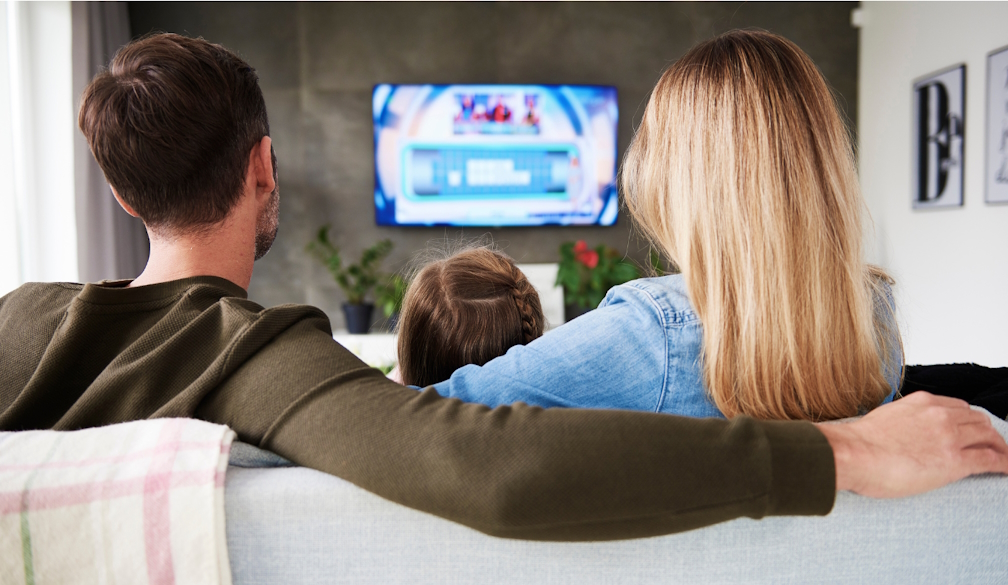
As January lingers on, families may find themselves struggling with what a friend of mine has labelled the “electronic nanny”.
Children have been out of their normal routines for weeks during the holidays. Some are still yet to go back to school. Meanwhile, parents are back at work and needing to juggle those commitments with bored kids.
We know balanced screen use[1] is important for children’s healthy physical, mental and social development. Too much screen time has also been linked to overeating and disrupted sleep[2].
How can families encourage healthy screen use as we ease back into the routine of a new school year?
Parental monitoring recommended
While screen use guidelines[3] provide time limits, there is now a broader move[4] among experts towards “curation over duration”.
This means it matters what children are watching – not simply how long they are watching it for.
Is the content age-appropriate? Is it educational or inspiring[5]? Has it been well-reviewed[6])?
This means parents should play an active role in what content kids are viewing or engaging with. An easy way to do so is to view with children, or at a minimum be present in the same room and alert to what they are watching.
When you are “interactive co-viewing[7]”, you not only watch together, you also discuss the content. This helps children engage with what they are watching and then make connections off-screen.
For example, if you are interested in a sea creature you see on Octonauts, you could go and find a book about it in the local library. Or you could discuss a moral dilemma you see on SpongeBob SquarePants: should SpongeBob have quit his job after another chef was mean about his cooking?
For older children, you could discuss plot points in films or strategies in games.
Read more: 'Screen time' for kids is an outdated concept, so let's ditch it and focus on quality instead[10]
Positive screen use
There are also lots of ways to use screens that can build skills and encourage critical thinking and creativity. Some things to try include:
-
producing a short film, or stop-motion animation, all the way from idea, to script, shooting and editing
-
taking and editing photos to make a calendar
-
exploring an area of interest, such as dinosaurs, the Titanic or ballet dancing, using sites such as ABC Education[11] or PBS LearningMedia[12].
-
investigating generative artificial intelligence (AI). For example, test the capabilities of ChatGPT by asking it a question your child knows the answer to, and evaluating the response together. Does it contain all the relevant information? Is it fair and balanced?
-
exploring how easy it is to edit an image, and consider what this tells us about the potential for online misinformation.
Being physical
Research shows interactive screen use[14] – such as playing games or using educational apps – is more beneficial for kids than just passively viewing content. It can can even support literacy, numeracy and academic persistence.
You can also use screens to encourage physical activity. For example, these holidays, my little ones have enjoyed “shaking their sillies out” with dance-along videos by Danny Go![15]. They have also done “yoga in space” with Cosmic Kids[16].
Older kids may enjoy the dance fitness program Zumba, boxing or sports competitions on the Nintendo Switch.
Or you could stage your own family dance party[17]. The kids could create their own set using a free DJ app[18].
Read more: Screen time doesn't have to be sedentary: 3 ways it can get kids moving[19]
Structure in time away from screens
It’s also important for kids to see parents doing things other than using phones and other screens when they have downtime. Parents play a powerful role modelling time away from screens[20].
Make sure your kids see you enjoy offline activities too, such as reading, playing sport and socialising. If you are struggling to do this as a family – and we all know it is is hard – think about revisiting some of the old standards. You could:
-
go to the park, for a scoot or a walk
-
spend time in nature at the beach or bushwalking
-
set building challenges with Lego
-
draw or do other art activities[21] with your child
-
play board games
-
make a recipe together.
And remember, you are certainly not the only family[22] telling your kids “this is the very last episode”. If today has been a struggle, take tomorrow to recharge and reconnect as a family. Screens are part of our lives today, and we are all striving to find balance.
References
- ^ balanced screen use (theconversation.com)
- ^ overeating and disrupted sleep (theconversation.com)
- ^ guidelines (www.health.gov.au)
- ^ broader move (theconversation.com)
- ^ inspiring (www.commonsensemedia.org)
- ^ well-reviewed (childrenandmedia.org.au)
- ^ interactive co-viewing (www.thekids.org.au)
- ^ Kevin Woblick/ Unsplash (unsplash.com)
- ^ CC BY (creativecommons.org)
- ^ 'Screen time' for kids is an outdated concept, so let's ditch it and focus on quality instead (theconversation.com)
- ^ ABC Education (www.abc.net.au)
- ^ PBS LearningMedia (www.pbslearningmedia.org)
- ^ Ann in the UK/ Shutterstock (www.shutterstock.com)
- ^ interactive screen use (www.acu.edu.au)
- ^ Danny Go! (www.dannygo.net)
- ^ Cosmic Kids (app.cosmickids.com)
- ^ family dance party (academic.oup.com)
- ^ free DJ app (www.mixonset.com)
- ^ Screen time doesn't have to be sedentary: 3 ways it can get kids moving (theconversation.com)
- ^ modelling time away from screens (theconversation.com)
- ^ other art activities (theconversation.com)
- ^ not the only family (rchpoll.org.au)