The budget update shows a slight improvement in the federal deficit, but it’s mostly due to good luck
- Written by: Stephen Bartos, Professor of Economics, University of Canberra
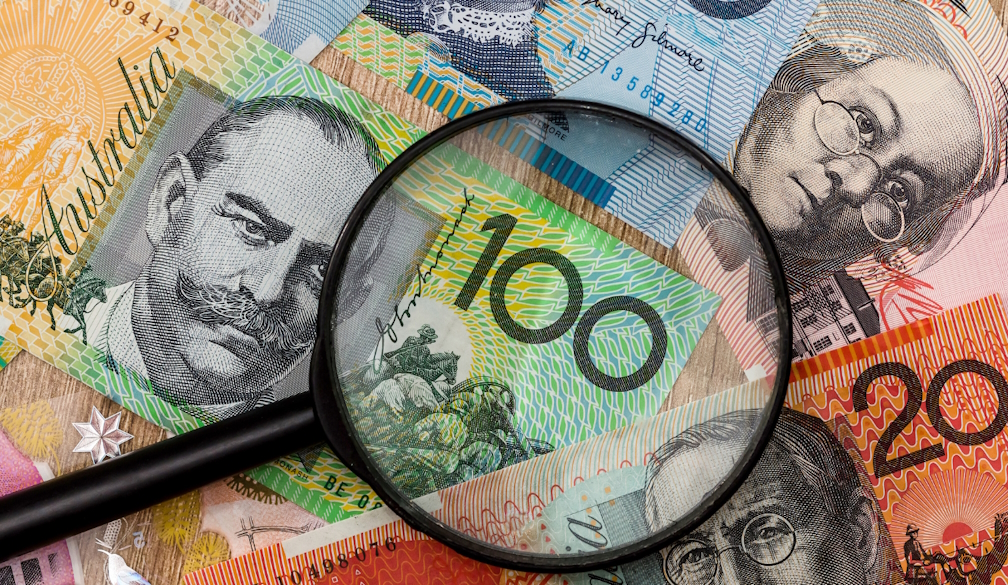
The federal government’s mid-year budget update shows a modest improvement in the deficit forecast in 2025–26, but much of this comes from a larger-than-forecast tax take.
The update, known as the Mid-Year Economic and Fiscal Outlook (MYEFO[1]), estimates a deficit for 2025–26 at A$37 billion, or 1.3% of gross domestic product (GDP). This is down from the $42 billion forecast in the March 2025 federal budget[2] and the Pre-election Economic and Fiscal Outlook (PEFO[3]) issued before the May election.
The drivers of the $5 billion improvement in the bottom line are largely outside government control – higher global commodity prices, and a higher income tax take. That’s due to a stronger jobs market and higher wages growth than previously forecast.
The Australian government’s gross debt is projected to exceed $1 trillion for the first time by mid-2027.
Treasurer Jim Chalmers described[4] the update as being “all about delivery, responsibility and restraint”.
MYEFO is required by the Charter of Budget Honesty Act 1998[5] to be tabled in parliament by the end of January. In recent years it has mostly been released in mid-December.
The document can be merely a technical update of the estimates for economic changes, or an opportunity for policy announcements to reset the government’s budget plans.
The 2025 MYEFO is a mix of both. It includes numerous policy measures, though most confirm announcements already made at or soon after the election. Parameter changes, such as increases in tax revenue, are nevertheless far bigger than all of the policy changes combined.
Spending pressures increasing
Restraint in some areas is needed, given what Finance Minister Katy Gallagher referred[6] to as “significant spending pressures”. These include:
-
Natural Disaster Relief – an additional $6.3 billion over the four years of forward estimates
-
Higher than expected uptake of the Cheaper Home Batteries Program has increased payments by $4.9 billion
-
The Age Pension, up $3 billion over four years, reflecting increased numbers of pensions. This revision is puzzling, because numbers should have been predictable at budget time
-
Defence Force superannuation benefits, up $2.1 billion, largely reflecting a revised valuation of the government’s superannuation liability
-
a range of other increases over the four years of forward estimates, including in veterans’ entitlements, childcare subsidies, non-government schools, and carers.
Not included, but sure to come, is additional spending in response to the Bondi terrorism shooting incident and its tragic loss of life.
Spending pressures outlined in the last budget, in health, the NDIS, public debt interest and defence, continue.
The CSIRO is set to receive an additional $233 million, which will be directed to priorities such as AI, quantum sensing, robotics, critical minerals, climate change adaptation and resilience, agricultural productivity and biosecurity. Tight budgets have led to serious concerns about cuts to CSIRO staff. This additional funding will to an extent help offset those concerns.
Investments in areas such as climate resilience may take time to pay off, but as shown by the massive increase in disaster payments in this budget update, are very much needed.
Cuts in use of contractors
Chalmers has confirmed the government will not be extending[7] electricity bill rebates. They will end in December, as planned. This is a bold measure given opinion polls showed[8] 65% of people surveyed supported extending them.
There have been further cuts in public-service use of contractors and in areas such as travel and hospitality. There are some specific cuts, for example in climate change, but no sign of reported[9] but unconfirmed 5% savings for public service departments.
Shifting spending from one bucket to another
Chalmers claimed[10] the federal government’s $20 billion in savings in the mid-year update meant it “has now delivered $114 billion in savings and reprioritisations since coming to office”.
Although this is technically true, reprioritisation does not help the budget balance. It shifts spending from one bucket to another – a good thing if new purposes meet Australia’s needs more effectively – but does not deliver net savings.
The Australian Financial Review[11] is highly critical of Chalmers’ claims. After more than three-and-a-half years, comparisons with the previous Coalition government’s fiscal record are wearing thin.
Chalmers said the government had “kept average real spending growth to around half the 30-year average”. But that average includes the large amount of spending during the COVID years.
Updated economic forecasts
Treasury has also updated the economic forecasts from the budget.
Treasury has lifted its forecast for inflation during 2025–26 from 3% in the budget to 3.75% in the mid-year update. This is a very similar inflation forecast as the Reserve Bank[12]. But it is 0.5% higher than the forecast growth in wages, so the cost of living will remain an issue.
Inflation is forecast to drop back to 2.75% in 2026–27, back within the Reserve Bank’s 2–3% target[13] band, and less than the expected increase in wages that year.
Real GDP is forecast to grow by 2.25% in 2025–26 and 2026–27. This is just above the rate the Reserve Bank believes the economy can sustain[14] without putting upward pressure on inflation.
Unemployment is forecast to be around 4.5% in mid-2026 and mid-2027.
In short, this update contains no big surprises but also no significant changes to improve the budget bottom line or significant tax reform to make the economy more efficient and more equitable for future generations.
References
- ^ MYEFO (budget.gov.au)
- ^ federal budget (budget.gov.au)
- ^ PEFO (treasury.gov.au)
- ^ described (ministers.treasury.gov.au)
- ^ Charter of Budget Honesty Act 1998 (classic.austlii.edu.au)
- ^ referred (www.canberratimes.com.au)
- ^ not be extending (www.abc.net.au)
- ^ opinion polls showed (theconversation.com)
- ^ reported (www.abc.net.au)
- ^ claimed (ministers.treasury.gov.au)
- ^ Australian Financial Review (www.afr.com)
- ^ Reserve Bank (www.rba.gov.au)
- ^ target (www.rba.gov.au)
- ^ Reserve Bank believes the economy can sustain (www.rba.gov.au)