What are caretaker conventions and how do they limit governments during election periods?
- Written by: Anne Twomey, Professor Emerita in Constitutional Law, University of Sydney
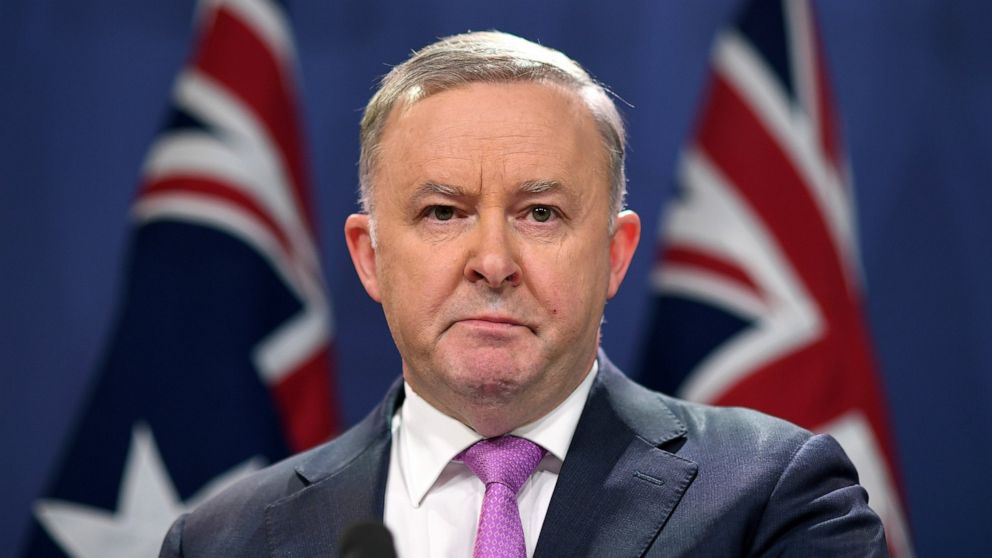
Now that the election has been called for May 3, parliament has been dissolved and the caretaker government period has commenced. During this period, the caretaker conventions[1] require the government to exercise self-restraint. It must stick to routine government business and not embark on major new commitments.
There are commonly claims in the media that various actions by the government breach the caretaker conventions. Before the accusations start flying, here are the basics to help you make your own assessment.
Why do we have caretaker conventions?
There are two reasons for caretaker conventions. First, once parliament is dissolved, the government can no longer be called to account by parliament. It should therefore be more restrained in its actions while not under parliamentary scrutiny.
Second, as a matter of fairness, the government should not be entering into binding commitments immediately before an election, if they will burden an incoming government. It is unfair for an outgoing government to stack important statutory positions with its own people or enter into contracts that commit a new government to policies it opposes.
When do the caretaker conventions apply?
The caretaker conventions commence from the moment parliament is dissolved. They continue until the election result shows the existing government has been returned to office or a new government is formed.
If there is a hung parliament, it may take a few weeks before we know who will form the new government. If important matters have to be resolved during that prolonged caretaker period, the opposition may be consulted to try to get a cooperative outcome. The existing government, however, retains full legal power to act at all times.
How do the caretaker conventions restrict government actions?
Before each federal election, the Department of the Prime Minister and Cabinet issues a document called Guidance on Caretaker Conventions[2]. It sets out the rules for ministers and public servants.
During the caretaker period, a government must avoid:
- making major policy decisions that are likely to commit an incoming government
- making significant appointments
- entering into major contracts or undertakings, such as entry into treaties or other international agreements.
Whether a decision, appointment or policy is major, is a matter of judgement. In making this assessment, consideration is given to whether it is likely to be controversial or a matter of contention between the government and the opposition. The cost of the decision and its impact on future resources and policies will also be considered.
Both the government and the opposition can still, of course, make election commitments about future action. The caretaker conventions only apply to actions taken within the caretaker period. They also do not apply to decisions made and actions taken before the caretaker period commenced, even if they are only announced after it has commenced.
The public service and the caretaker period
Rules have also developed on the fair use of the public service and public resources before and after elections. Technically, these are not part of the caretaker conventions, which concern self-restraint by ministers. But because they concern fairness in relation to elections, they are often lumped in with the caretaker conventions and they are included within the official guidance document.
These rules are based upon obligations imposed on public servants by statutes and other instruments, such as the Public Service Act 1999[3] (Cth), and APS Code of Conduct[4]. They require public servants to behave in an impartial and apolitical manner. They also require that public resources not be used to advantage political parties during an election campaign.
It is also customary to restrict the use of government advertising during the caretaker period to necessary matters, and those that do not highlight the role of ministers or promote the achievements or policies of the government.
Two recent examples show how these rules can become controversial during an election campaign. In 2013, the Rudd Labor government was criticised[5] by the opposition for breaching the caretaker conventions by running ads, within Australia, about asylum-seekers not being settled in Australia. The ads were reluctantly[6] approved by public servants under a ministerial direction that they were obliged to obey.
The opposition was happy for the ads to be run in overseas countries, as a source of information and deterrence, but regarded their publication in Australia as partisan and breaching the rules. Opposition spokesperson Scott Morrison called it[7] a “shameless and desperate” grab for votes, with the government spending taxpayers’ money to advertise to the vote-people, rather than the boat people.
On the day of the 2022 election, the Morrison Coalition government instructed[8] the Department of Home Affairs to publish a statement that a boat containing asylum seekers had been intercepted.
It requested that this information be emailed immediately to journalists and tweeted by the Australian Border Force. The issue was highly political[9]. Prime Minister Scott Morrison told a press conference before any announcement had been made that:
I’ve been here to stop this boat. But in order for me to be here to stop those that may come from here, you need to vote Liberals and Nationals today.
Officials published a factual statement about the boat, because they were required to act as directed by the minister. But, as a subsequent investigation[10] revealed, they refused requests to amplify the controversy by sending material to journalists and to publish it on social media, as this would breach their obligations to be apolitical.
Who enforces the caretaker conventions?
The caretaker conventions are not legally binding and cannot be enforced by a court. But some governors-general have given effect to the conventions by deferring action on anything that would breach them. Then, when the election is over, a new government can decide whether to proceed with the matter.
Breaches by public servants of their obligations under codes of conduct and the Public Service Act can have real consequences, such as disciplinary action being taken against them.
While conventions are not legally enforceable, they ordinarily work because there is agreement among political actors that these rules are fair and politically binding on them. Controversy in the media about breaches of conventions can raise public anger. Punishment is left in the hands of the voters.
References
- ^ caretaker conventions (press-files.anu.edu.au)
- ^ Guidance on Caretaker Conventions (www.pmc.gov.au)
- ^ Public Service Act 1999 (www.legislation.gov.au)
- ^ APS Code of Conduct (www.apsc.gov.au)
- ^ criticised (www.theguardian.com)
- ^ reluctantly (www.smh.com.au)
- ^ called it (www.abc.net.au)
- ^ instructed (theconversation.com)
- ^ highly political (www.themandarin.com.au)
- ^ subsequent investigation (minister.homeaffairs.gov.au)