Regional Australia needs more workers to rebuild after disasters like Alfred. Skilled refugees could help
- Written by: Sally Baker, Associate Professor, Migration and Education, Australian National University

The damage inflicted by ex-Tropical Cyclone Alfred on Queensland and northern New South Wales has been extensive. Several areas have had infrastructure badly damaged, and many homes have been destroyed.
With natural disasters set to become “situation normal” as the impacts of heating oceans and climate change accelerate, it’s crucial Australia consider contingency workforce planning.
Disasters such as these expose the extent of the severe skills shortages experienced in many parts of Australia, but especially in the regions. Each year, regional Australia loses to cities thousands of professional and trade-related people whose skills cannot be replaced.
Rebuilding, restoring and rehabilitating the affected areas will require the immediate and sustained work of skilled workers – but these are in short supply in many places.
Already it was hard to find people with the necessary skills to undertake infrastructure maintenance. Now people affected by ex-Tropical Cyclone Alfred are joining long wait lists for electricians, plumbers, builders and other services.

Where are the workers when you need them?
The situation is stark. There are not enough skilled workers to support Australia’s day-to-day building and maintenance needs, let alone in response to disasters.
The federal government agency Jobs and Skills Australia[2] estimates 67 occupations under the category “Technicians and Trades Workers” are in persistent shortage. This represents a third of the skills shortages in Australia[3].
These shortages are much more acute in regional, rural and remote parts of Australia. In these places, location is commonly cited as the reason why suitable applicants do not take the job.
This labour is not just a problem for disaster responses. These skills gaps are also pushing up construction costs, frustrating building works needed to relieve the housing pressure Australia-wide.
The situation is so bad states and territories are competing for tradespeople to move. The Western Australia government’s Build a Life in WA[4] campaign, for instance, offers cash incentives to attract building and construction professionals, and skilled tradespeople.
Australia’s skills gaps are so entrenched, education and training schemes – such as apprenticeships – are not going to help quickly enough.
Instead, some see skilled migration as a possible solution. In 2024, peak bodies such as the Business Council of Australia[5] and Master Builders Australia[6] lobbied the Australian federal government for changes to the ways that migration can respond to the skills needs[7]. They argue 90,000 new tradies were needed by the end of 2024[8].
However, Australia is competing with many other countries for skilled tradespeople. Traditional sources of migrant labour may not provide the number of skilled migrants needed.
An untapped source of skilled workers: refugees
One solution to these problems is exploring the untapped potential of the more than 122 million people who are displaced around the world. Many have the skills and experience that countries like Australia need[9].
One pilot program, the Skilled Refugee Labour Agreement Pilot[10], is being trialled by the Australian Department of Home Affairs.
This scheme provides concessions to the usual visa requirements for skilled migration. This helps refugees to overcome the administrative hurdles that exclude them from regular processes (such as not having a passport).
With this flexibility, the program — led by not-for-profit group Talent Beyond Boundaries[11] — will match 500 refugees to employers by mid-2025.
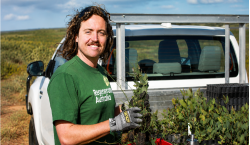
Talent Beyond Boundaries matches refugees with employers.To date, 40% of workers accessing this pathway in Australia have been recruited by employers in regional areas. Roughly 40% are technicians and trades workers.
This kind of solution helps the Australian government expand its response to the ever-increasing numbers of displaced peoples globally.
It also provides opportunities for employers to source skilled workers through the matching facility offered by Talent Beyond Boundaries.
Using their extensive Talent Catalog[12], Talent Beyond Boundaries can connect employers in professions with key skills gaps, and in areas experiencing severe skills shortages, to a pool of more than 120,000 skilled workers looking for an opportunity to restart their careers and lives in safety.
Recognising the skills in our midst
A second creative solution is to leverage the skills and expertise that already exist in Australia’s migrant and refugee communities.
The Billion Dollar Benefit[13] campaign is spearheaded by not-for-profit group Settlement Services International[14]. It estimates one in four permanent migrants in Australia are working below their skill level[15]. The cost of failing to leverage these existing skills is about A$1.25 billion over five years, it estimates.
Tailoring solutions
We’re currently researching the economic, social and policy dimensions of skilled refugee labour mobility in addressing skills shortages in regional Australia, particularly for small and medium-sized employers.
Working with partner organisations Talent Beyond Boundaries and a think tank called the Regional Australia Institute[16], researchers at UNSW and ANU have been speaking to employers, community leaders, employment and settlement services in regional areas across the country. We’ve also been speaking with skilled refugee workers who have settled in regional Australia through the pilot.
What we are hearing is that businesses are desperate for workers ready to go. They are frustrated by the costly, lengthy and complicated processes of sourcing talent from overseas. The costs are especially prohibitive for small and medium enterprises.
Highly skilled refugees have told us the Skilled Refugee Labour Agreement Pilot[17] has helped them regain a foothold in their careers, and rebuild their and their children’s lives, while also helping meet regional skills shortages.
Programs matching skilled refugees with employers and regions desperate for skilled workers can be a win-win.
References
- ^ AAP Image/Supplied by Queensland Police Service (photos.aap.com.au)
- ^ Jobs and Skills Australia (www.jobsandskills.gov.au)
- ^ third of the skills shortages in Australia (www.jobsandskills.gov.au)
- ^ Build a Life in WA (buildalife.wa.gov.au)
- ^ Business Council of Australia (www.bca.com.au)
- ^ Master Builders Australia (masterbuilders.com.au)
- ^ respond to the skills needs (www.bca.com.au)
- ^ by the end of 2024 (masterbuilders.com.au)
- ^ countries like Australia need (link.springer.com)
- ^ Skilled Refugee Labour Agreement Pilot (immi.homeaffairs.gov.au)
- ^ Talent Beyond Boundaries (www.talentbeyondboundaries.org)
- ^ Talent Catalog (www.talentbeyondboundaries.org)
- ^ Billion Dollar Benefit (www.billiondollarbenefit.org.au)
- ^ Settlement Services International (www.ssi.org.au)
- ^ working below their skill level (www.ceda.com.au)
- ^ Regional Australia Institute (www.regionalaustralia.org.au)
- ^ Skilled Refugee Labour Agreement Pilot (immi.homeaffairs.gov.au)