Fifty years ago, Cyclone Tracy devastated Darwin. The lessons from it have still not been learnt
- Written by: Steven Farram, Associate Professor in North Australian and Regional Studies (History), Charles Darwin University
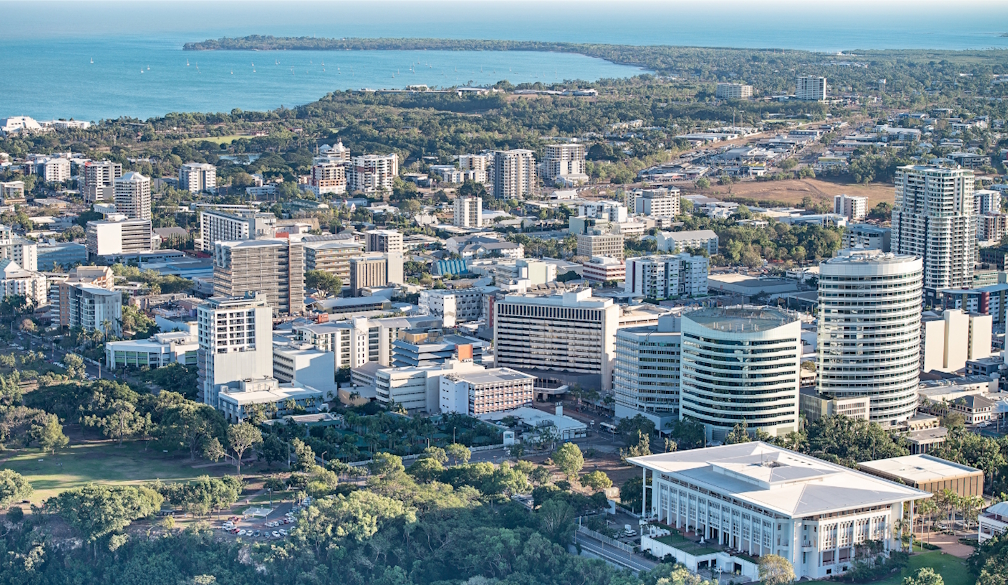
It is hard to comprehend the force with which Cyclone Tracy struck Darwin early on Christmas Day, 1974. It was so ferocious that it killed 66 people, partly or completely destroyed 10,000 homes, and wiped out most public utilities.
In its wake, at the height of the wet season, the town was left with no electricity, no reliable water supply and no sewerage. Thousands of people were made homeless overnight.
When the rest of Australia learned what had happened, an unprecedented recovery operation began. Fear of disease prompted a mass evacuation. Of the 47,000 people in Darwin that Christmas, 23,000 were evacuated by air to other cities within a week. Others left by road. By New Year’s Day, the population was down to 11,000. Many evacuees never returned, with some too traumatised to think of ever living in Darwin again.
With the 50th anniversary of the disaster this year, Cyclone Tracy is receiving a lot of attention. Books[1], documentaries[2], exhibitions[3] and memorials[4] are in the news as Darwin remembers one of the worst natural disasters in Australia’s history.
Despite all this attention, many newcomers have little idea about what to do in the event of a cyclone. Media, government and employers play an important role informing people of the appropriate precautions and responses, but the history of major cyclones in the Top End is little known, even among long-term locals. This history needs to be better understood.
The first recorded Northern Territory cyclone occurred at the Victoria settlement on the Cobourg Peninsula, about 350 kilometres east of Darwin, in 1839. Most buildings were destroyed, only two of 20 small boats survived. A larger boat, Pelorus, was forced on its side. Eight crew members died. The death toll was likely higher, as a track of fallen trees nearly 13 kilometres wide was later discovered in the surrounding countryside.
Victoria, on the Cobourg Peninsula, was abandoned in 1849, and Darwin established 20 years later. It experienced its first cyclone in 1882, but the damage was slight compared to what happened 15 years later.
In January 1897, a terrific cyclone hit Darwin. The weakest buildings were destroyed outright, and even the strongest stone buildings lost roofs, or suffered structural damage. Houses on piers were lifted into the air and crashed down further away. Eighteen of the 29 pearling luggers in the port were lost. Twenty-eight people were killed.
After the cyclone, the Charles Point Lighthouse was visited by large numbers of distressed Aboriginal people who had lost all their natural sources of food, as the surrounding bush had been stripped up to a distance of 65 kilometres.
When another major cyclone struck in March 1937, it destroyed or damaged nearly every building in Darwin. The damage might have been less if more care had been taken in the rebuilding since 1897, but for most people that was either a dim memory or something they knew nothing about. In the circumstances, it was lucky there was only one death.
And so, we come to 1974. Shortly before Tracy, the Institution of Engineers suggested that many buildings in Darwin were not strong enough to withstand cyclonic winds. That prediction proved to be true, and the newly-built northern suburbs were almost completely flattened.
After Tracy, Darwin was rebuilt using a tough new building code, but the city was not visited by another major cyclone for many years. In early 2011, Cyclone Carlos[5] dumped massive amounts of rain on Darwin, and hundreds of trees collapsed due to high winds and inundated soil. Some houses and cars were crushed, but the damage was not massive.
The “big one” turned out to be Cyclone Marcus[6], which struck Darwin in March 2018. More than 400 power lines were brought down, leaving more than 26,000 homes without power for days. Thousands of falling trees caused extensive damage to cars, fences and buildings. Miraculously, no one was reported to have been killed or seriously injured. That was partly due to improved building standards, but it was also partly luck.
After Carlos and Marcus, many trees, especially the notoriously unstable African mahogany, were removed from urban areas around Darwin, but other trees can also cause damage.
My house, for example, was struck during Marcus by two falling mango trees from my neighbour’s yard, which we had complained about for years. We were also left without power for days. Because the NBN had replaced the copper line, this also meant we had no telephone. For those without mobile phones, this was a terrible inconvenience. People in nearby Nightcliff did not have these problems because that suburb is one of the few with underground power.
Successive governments have failed to meaningfully extend underground power. After the 2024 Northern Territory elections, the new government announced[7] that existing plans to underground power had been scrapped in order to spend the money elsewhere.
Fifty years since Cyclone Tracy, it seems the lessons have still not been learnt.
References
- ^ Books (cyclonetracy.darwin.nt.gov.au)
- ^ documentaries (www.skynews.com.au)
- ^ exhibitions (cyclonetracy.darwin.nt.gov.au)
- ^ memorials (www.abc.net.au)
- ^ Cyclone Carlos (www.bom.gov.au)
- ^ Cyclone Marcus (theconversation.com)
- ^ announced (www.abc.net.au)