How our regions can help make Australia’s growing cities more sustainable
- Written by: Peter Newton, Emeritus Professor in Sustainable Urbanism, Centre for Urban Transitions, Swinburne University of Technology
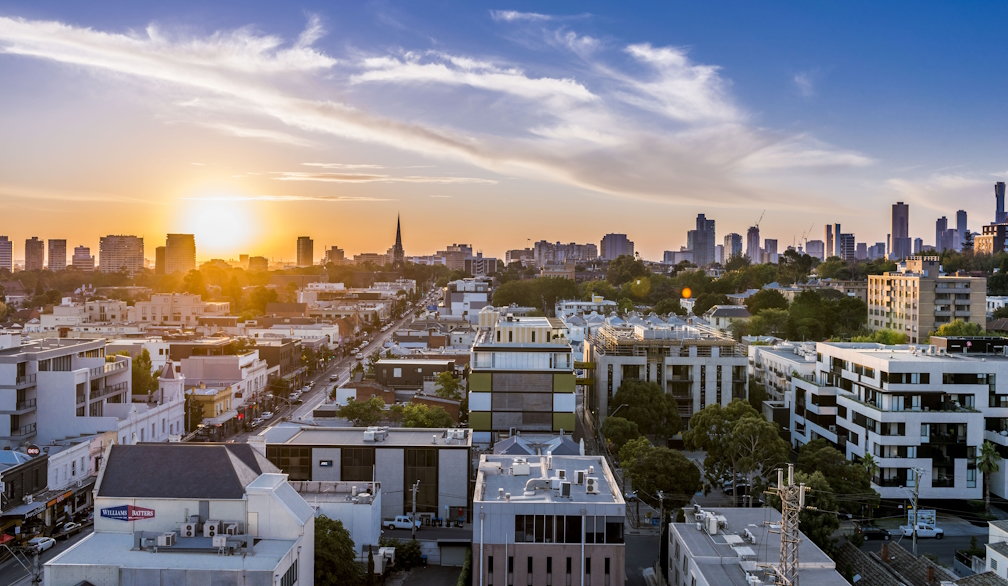
The way we organise our cities and regions creates problems everywhere. We’re facing difficult and polluting drives[1] to work, a lack of affordable housing[2], and urban designs that lead to car dependency and are bad for our health[3].
For example, poor levels of walkability are associated with higher rates of obesity, hypertension[4] and cardiovascular disease[5]. Parks and greenery are associated with better mental[6] and cognitive[7] health.
Australian cities sprawl. Many suburbs are hard to get to by public transport or cycling and walking[8].
Our sprawling cities use a lot of land per person[9]. Their resource use and carbon footprints[10] are massive. They also produce huge amounts of waste[11].
To resolve such issues, government planners should think beyond our capital cities. Australia needs to develop strategies that connect these capitals with surrounding regional cities to create “megacity regions”.
It’s a settlement model that could work better than our big cities do now, making urban growth more sustainable[12]. The emergence of hybrid work, fast internet and high-speed rail favours this form of settlement.
What are megacity regions?
A megacity region, according to the OECD[13], is a network of urban areas linked to a capital city by home-to-work commuting. Megacity regions[14] connect these urban centres more efficiently to make them more sustainable and productive.
An early example is the Bos-Wash corridor (including Boston, New York, Philadelphia, Baltimore and Washington DC) in North America[15] that emerged around the mid-20th century. Megacity regions are now common across Europe[16] (for example, Germany’s Rhine-Ruhr region including Dortmund, Essen, Duesseldorf and Cologne, and the Netherlands’ Randstad region including Amsterdam, The Hague, Rotterdam and Utrecht). The Taiheiyō Belt in Japan (including Tokyo, Nagoya, Osaka, Hiroshima and Fukuoka) is one of many Asian examples[17].
How ready is Australia for megacity regions?
The 2019 CSIRO Australian National Outlook[18] explored the question “What will Australia be like economically, socially and environmentally in 2060?” Its modelling showed “stronger regions” created major benefits across transport, health, education, jobs and housing. One scenario involved 16 million people living in regional Australia by 2060, with 10 million in regional cities.
CSIRO concluded that “investing in the growth of regional satellite cities with strong connectivity to those capitals” creates many opportunities. This growth would benefit the regions while easing pressures on the capitals.
CSIRO scenario modelling of Australia’s future development highlighted the opportunities stronger regions would create.In recent years, the New South Wales government has developed ideas for Sydney to grow into a Six Cities Region[19] from Newcastle to Wollongong.
The Committee for Melbourne has called for an Australian East Coast Megaregion[20] to boost economic growth and attract foreign investment.
In 2023, the Victorian government indicated a statewide strategy, Plan Victoria[21], would replace Plan Melbourne[22].
However, without robust regionalisation policies, Melbourne and Sydney are likely to become sprawling megacities of ten million people[23] or more this century. This will add to the strain on transport, infrastructure and housing[24].
What makes change possible?
Cities and their central business districts are important for their agglomeration effects – the accumulated benefits of concentrated social and economic activity. But this also often leads to social, economic and environmental problems.
Integrating regional cities into the economic life of their capital cities can reduce some of these problems. It can also produce many benefits, including new and more efficient industries, enhanced communication networks and stronger labour markets.
Settlement systems have evolved throughout history. Walking cities became rail-oriented cities, which became car-based cities. All these models in their day supported a daily return commute averaging one hour (Marchetti’s constant[25]).
Our research[26] explores how new technologies and work practices can enable a fourth transition to the megacity region. The drivers of this change include ubiquitous fast internet, hybrid work and high-speed rail.

Ubiquitous fast internet
NBN broadband data from 2012 to 2021 showed little difference between Melbourne and Victorian regional cities in the uptake of typical residential internet connections. There was a major difference for higher-speed business connections.
Major capital cities continue to act as engines of bandwidth-hungry, information economy industries in Australia. They have more high-skilled workers and higher uptake of fast internet.
Overall, the data reflected that regional cities in Victoria mostly house “population-serving” rather than “producer-services” industries. Fast internet can open up job opportunities, but is not by itself enough to decentralise knowledge industries.
Hybrid work
Working both from home and in the office has become established[28] since COVID. Hybrid work improves sustainability[29], mostly by reducing car use and road congestion.
Today, only 18% of Australian knowledge workers[30] work “only in the office”.
Not having to go into work every day means knowledge workers can live further from their workplace. This changes the employment landscape in regional centres. Many information economy jobs can be done in non-metropolitan locations where housing costs less.
High-speed rail
Fast rail systems have long been debated in Australia, with various options proposed[31].
Victoria introduced “faster” regional rail in 2005-06. The populations of urban centres served by these lines have since grown faster than “off-line” ones.
The gap in job growth rates between on-line and off-line centres was greater for producer services than people-serving jobs. The latter are tied more closely to demand from local residents.
Designated growth areas on the outer fringes of Melbourne had much higher population and employment growth rates, indicating that current transport polices have supported urban sprawl. High-speed rail can help urban growth to “leap over[32]” outer suburbs to the regional cities.
What could high-speed rail lead to? In England, the advent of high-speed rail (speeds of more than 200km/hr) resulted in notably higher population growth in on‑line local area districts compared to off-line. The on-line districts, across the board, experienced a stronger shift towards information and knowledge-based industries than off-line ones. Some even outperformed outer metropolitan London districts.
Why is this important now?
Both federal[33] and Victorian[34] governments are preparing strategic plans to guide long-term urban development. Both have issued discussion documents for public feedback.
These documents are long on planning principles but short on mission-scale programs capable of transformative change. This sort of change is now the focus of long-term planning internationally[35]. Land-use planning of megacity regions needs to feature strongly in Australian urbanisation plans too.
We have a once-in-a-generation opportunity to achieve urban development at a scale and in a form that can transform Australia’s settlement system.
References
- ^ polluting drives (www.dcceew.gov.au)
- ^ lack of affordable housing (www.housingaustralia.gov.au)
- ^ bad for our health (www.aihw.gov.au)
- ^ hypertension (www.sciencedirect.com)
- ^ cardiovascular disease (www.ahajournals.org)
- ^ mental (pubmed.ncbi.nlm.nih.gov)
- ^ cognitive (www.sciencedirect.com)
- ^ public transport or cycling and walking (www.infrastructureaustralia.gov.au)
- ^ a lot of land per person (www.sciencedirect.com)
- ^ carbon footprints (climateanalytics.org)
- ^ huge amounts of waste (soe.dcceew.gov.au)
- ^ making urban growth more sustainable (www.nature.com)
- ^ according to the OECD (www.oecd.org)
- ^ Megacity regions (www.taylorfrancis.com)
- ^ North America (direct.mit.edu)
- ^ Europe (www.environmentandurbanization.org)
- ^ many Asian examples (link.springer.com)
- ^ Australian National Outlook (www.csiro.au)
- ^ Six Cities Region (isjo.nsw.gov.au)
- ^ East Coast Megaregion (melbourne.org.au)
- ^ Plan Victoria (www.theage.com.au)
- ^ Plan Melbourne (www.planning.vic.gov.au)
- ^ megacities of ten million people (www.abs.gov.au)
- ^ strain on transport, infrastructure and housing (www.aph.gov.au)
- ^ Marchetti’s constant (www.sciencedirect.com)
- ^ Our research (www.mdpi.com)
- ^ Author provided, adapted from P. Newton et al 2024 (www.mdpi.com)
- ^ become established (www.pwc.com.au)
- ^ improves sustainability (journals.sagepub.com)
- ^ 18% of Australian knowledge workers (www.linkedin.com)
- ^ various options proposed (www.youtube.com)
- ^ leap over (ara.net.au)
- ^ federal (www.infrastructure.gov.au)
- ^ Victorian (www.infrastructurevictoria.com.au)
- ^ focus of long-term planning internationally (www.instituteforgovernment.org.uk)