Australia’s child support system can put single mothers at risk of poverty and financial abuse
- Written by: Kay Cook, Professor and Research Director, School of Arts, Social Sciences and Humanities, Swinburne University of Technology
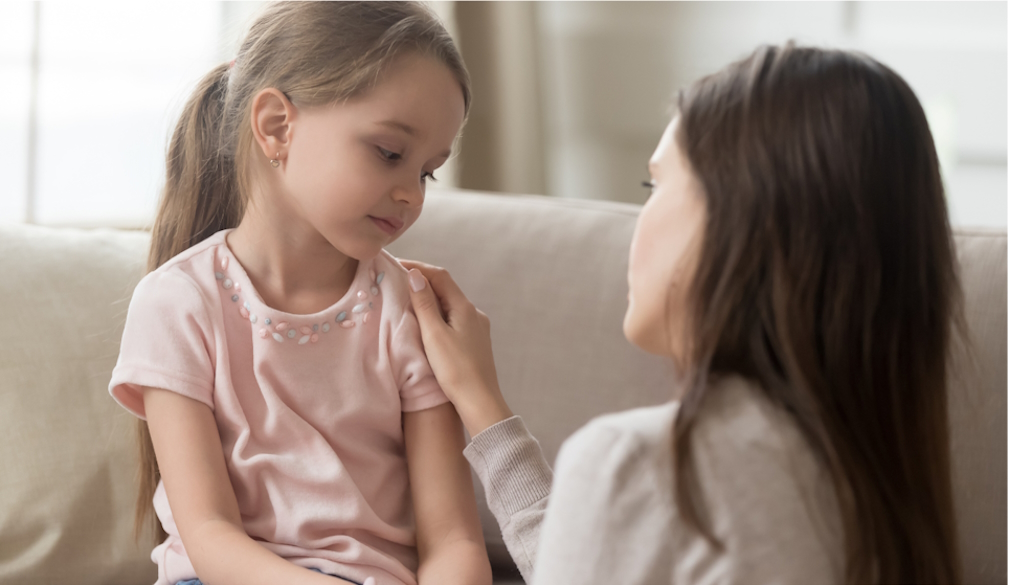
Australia’s child support system can not only increase women’s poverty, but can actually facilitate financial abuse, according to our recent research[1].
Child support[2] is an important system[3] that aims to share the financial burden of raising children between separated parents.
But there are some serious problems with the way it operates, putting already vulnerable women further at risk.
Drawing on the experiences of 675 single mothers, we sought to examine women’s experience with the child support system from start to finish.
Our research suggests four key changes could improve both women’s safety and financial wellbeing.
How does child support work?
Where deemed necessary, child support arrangements typically require one separated parent to make payments to the other, on a regular basis.
How much is paid and how it is collected can vary in different circumstances.
In some families, a child support recipient’s income will be too high to receive the family tax benefit[5] – a key payment that assists with the costs of raising children.
In this instance, a family can decide for itself how much will be paid, to whom, and how.
This is called self management, but it is very difficult to navigate when abuse is present in a relationship.
For families that do collect the family tax benefit, separated parents can use Services Australia to calculate the amount[6] that will be paid.
Services Australia will consider factors including what it costs to care for and educate a child, as well as the difference in income between the two parents.
Once the amount has been calculated, separated parents can transfer payments privately between themselves, an approach called “private collect”.
Alternatively, this group can also use a service called “agency collect” to manage the transfer. Here, Services Australia collects the funds from the paying parent, then gives it to the agreed recipient.
For parents using agency collect, payments can also be “garnisheed” – deducted from a paying parent’s salary.
The system is failing the most vulnerable
Government reports reveal that across the agency collect system, a staggering $1.7 billion[7] is owed to a third of single-parent households, representing 475,000 children.
The vast majority[8] of this money is owed to women, two-thirds[9] of whom have children in their care 86% or more of the time.
Losing out on payments
Across the child support system, 28%[11] of paying parents fail to submit tax returns on time, reducing the accuracy of assessments.
Centrelink’s Family Tax Benefit A (the first part of a two-part payment) is linked to child support, with every dollar of child support above a certain threshold reducing this payment by 50 cents.
Concerningly, while reports indicate that 60%[12] of single mothers receiving income support have experienced violence prior to separation, less than 15%[13] receive exemptions from having to seek child support on the basis of this violence.
By not applying for either child support or an exemption, single mothers could lose a significant portion of their Family Tax Benefit A payments.
These sobering statistics are only part of the picture. Others remain invisible.
There are another 500,000 or so children in the private collect system. Many of their situations are a mystery. Services Australia doesn’t know how much those women and children are owed, as they don’t trace this amount and assume that payments are fully compliant.
What we uncovered
Our mixed methods survey[14] of 675 single mothers asked women about their experiences in the child support system from start to finish.
We asked women how they made various decisions about child support, such as when to apply for it and when to change how it is collected and calculated.
78% of women reported experiencing some form of violence at the time of separation.
But the research also showed how the nature of this abuse can change post-separation, when financial abuse becomes the primary mechanism.
Just over half the women reported currently experiencing either emotional or psychological abuse, and 60% financial abuse.
Women shared they were often fearful of retaliation from their ex-partner if they applied or changed child support payment arrangements.
I was advised not to apply at the time because of the family violence and he had made threats to kill me so [it] was recommended I didn’t give him any reason to act on this so I went without child support for some period of time.
Others had to ask for an exemption to apply.
A Centrelink social worker changed my son’s father to unknown so I wouldn’t be murdered.
The results show how the current system’s logic can force women to risk their financial welfare to ensure their own safety.
I withdrew my application to avoid further conflict by telling CSA [Child Support Agency] there was a private agreement but there isn’t and he doesn’t pay anything.
Often, women are paying back debts to Centrelink due to retrospective changes in their ex-partner’s income or level of care, at the same time they themselves are owed thousands of dollars in child support arrears.
I’ve at times been living on as little at $72 a week of FTB [Family Tax Benefit] as my sole income to feed, house, clothe and educate myself and two children. I don’t understand how that is possible.
How could we fix it?
Based on our findings, our report makes four recommendations that could bring about meaningful improvements, give women choices to suit their family, and create a system that is safe.
-
De-link family payments from child support.
-
Co-design family violence processes in the child support system.
-
Move all payment collections back to being handled by the tax office.
-
Make all payment debts owed to and enforced by the Commonwealth.
Any meaningful solution to this problem will need to include the voices of victim survivors, advocates, researchers and social support organisations to co-design an effective system.
The authors would like to acknowledge the assistance of Terese Edwards, chief executive of Single Mother Families Australia (SMFA), in the preparation of the report.
Terese and SMFA provided in-kind support in the form of survey design feedback and recruitment assistance. Terese also contributed to writing the report.
References
- ^ recent research (fixchildsupport.com.au)
- ^ Child support (www.dss.gov.au)
- ^ system (www.servicesaustralia.gov.au)
- ^ AKIRA_PHOTO/Shutterstock (www.shutterstock.com)
- ^ family tax benefit (www.servicesaustralia.gov.au)
- ^ calculate the amount (www.servicesaustralia.gov.au)
- ^ $1.7 billion (www.abc.net.au)
- ^ vast majority (www.facebook.com)
- ^ two-thirds (data.gov.au)
- ^ FotoDuets/Shutterstock (www.shutterstock.com)
- ^ 28% (data.gov.au)
- ^ 60% (www.violenceorpoverty.com)
- ^ 15% (data.gov.au)
- ^ survey (fixchildsupport.com.au)
- ^ rigsbyphoto/Shutterstock (www.shutterstock.com)