The Prime Minister's interview with Chris Uhlmann, Weekend Today
- Written by: Scott Morrison
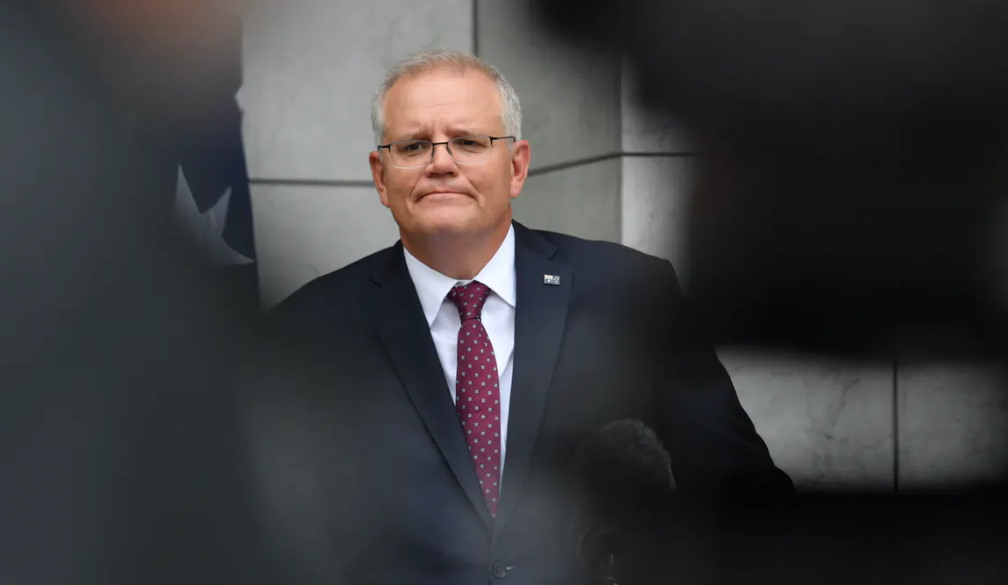
CHRIS UHLMANN: Prime Minister, welcome.
PRIME MINISTER: Good morning, Chris.
UHLMANN: Were you too slow to act on the floods in New South Wales and Queensland?
PRIME MINISTER: We moved as quickly as the Defence Forces and the agencies can, and I'll give you a good example. Back in 2011, in the Queensland floods, those terrible Brisbane floods, they moved as quickly and did everything as they possibly could on that occasion. This time around, four times the number of ADF on the ground a week earlier, almost a week earlier. Now that's a statement about the increase in the capability of our Defence Forces. But I understand the frustration, because in a disaster like I have seen up in Lismore, no response is ever going to be able to meet the overwhelming need. And the first response always comes from the community, Chris. It always comes from the community, and then it comes from the SES, and then the ADF comes and and supports that. But on the Monday, after the floods hit on the Sunday night, ADF were winching people off roofs and risking their own lives.
UHLMANN: And yet again, though, we seem to have this division between states and the Commonwealth, even on what a national emergency is and when it should be called, because Queensland doesn't want one called. Why is that? Why are we always seeing this division now?
PRIME MINISTER: Well, I don't know if I'd quite put it that way. What I'd say is this: states obviously respond to emergencies. They run the SES, they run the police, they run the hospitals, they run all of those immediate responses. But whether it was the Queensland floods up in North Queensland some years ago, and I remember when I was up there in the middle of those floods, you know, the Queensland, North Queensland Cowboys were out in boats rescuing people. The whole community was out rescuing. That is what happens in relation to every natural disaster. The the SES or the Defence Forces, they don't replace that community response. They add to it, they support it, and they bring in the heavy equipment. But as I said, on the very day as the floods hit, ADF were winching people off roofs.
UHLMANN: And again, some of the SES were saying to people, don't get in those boats, don't get on those jet skis, don't go out there. Thousands of people might have died if that was the case. Are we in a situation now where there's been government overreach - governments are telling people they can do too much for them?
PRIME MINISTER: I I have a lot of sympathy with that view, and I think we've seen that now. This idea, and I got a question like that when I was up there in northern New South Wales - why did people have to go and rescue their neighbours? Of course we need people to go and rescue their neighbours. We we need the community response. That is the first response because the community is always going to be the first ones there. To deploy nationally positioned Forces around the country and mobilise them with the equipment and the heavy equipment and the supplying and the provisioning - that, you can't just turn that off and on. You're never going to have an ADF base sitting around the corner in every single town. And let's not forget, this flood in the Northern Rivers and Lismore was a one in 500 year flood. And I was talking to a dairy farmer who had got his cattle to the place of safety in the milking shed, which was built above the highest ever flood they'd ever seen. And he lost all of his, pretty much all of his cattle. So this was quite an extraordinary event. And the bravery and response of the community - his son Matt rescued his dad, then went into town on his jet ski and rescued 40 people that night.
UHLMANN: But it won't be a one in 500 year event, will it? It might be a one in 10 year event. You've said now that Australia is becoming a harder place to live in. That's because of climate change, isn't it?
PRIME MINISTER: Yes, it is.
UHLMANN: And the Coalition's been a long time coming to that conclusion, hasn't it?
PRIME MINISTER: We've always, I think, been very clear on the issues of resilience, and when it comes to adaptation, and this is one of the big challenges. I mean, I gave this, I said this a couple of years ago. I said, we need to get emissions down, and we've got it down by more than 20 per cent. Canada can't say that. New Zealand can't say that. United States can't say that. Japan can't say that, but we can. But dealing with climate change isn't just about getting emissions down. It's about resilience and adaptation. Now let's talk about bushfires in that context. You want to deal with resilience on bushfires, you have to do fuel load management. You want to deal with floods, you've got to build dams. Now it hasn't been the Coalition that has been against reducing fuel loads and building dams in this country.
UHLMANN: But you might also need to build levees and you might also need to tell people that if you're living on a floodplain, there is nothing a government can do for you when it floods, particularly when it's one like this, or or you're building up against the bush. We have to look at building levees, don't we, and have to look at how and where we build?
PRIME MINISTER: Well, you take a, you take a place like Grafton, which, you know, built levees many years ago - they still get floods. But when I spoke to the Mayor of Ballina when I was up there, those areas of Ballina that were actually built under the new planning guidelines, which are a bit higher, a bit more expensive, they they got through. Other parts of of Ballina didn't, did not, which were built in the older areas. And the Planning Minister in New South Wales Anthony Roberts has made this point about having that broader response that deals with planning issues. But when I spoke to the Mayor of Lismore, he was elected on a platform of getting the head water management and the levees and all of those flood mitigation works in place that had been resisted up there in Lismore for a very long time. He was elected on a platform to get this done and I've committed to him that we will spend over $100 million backing in a resilience plan that he was elected to get done. And I'm sure the New South Wales Government will join me fully.
UHLMANN: Prime Minister, it's been an extraordinary couple of years. You go back and look at the bushfires, then COVID-19 and then the floods. There are some who would say of you, across all of those sorts of things, there's been a familiar pattern, which is a lack of foresight, acting too slowly when the crisis comes and then blame shifting afterwards. Do you accept any of that as criticism of the way that you you behaved? Do you reflect on on those those things and think, I shouldn't have behaved that way, or I did something wrong?
PRIME MINISTER: I don't accept Labor's narrative on that. And there's a, you know, a chorus of commentary which seeks to support that. And that's often the same chorus that didn't like how the last election went. But what I do accept is that in every single one of these cases you you learn many things. Now was Australia quick to move on JobKeeper? You know, $80 billion that effectively saved the Australian economy during the pandemic. Yes, of course we were. Was Australia one of the first movers to close the borders when it came on the pandemic, in particular to China? We were criticised for closing the borders for China and told we were being racist. Was Australia slow to move in calling out the origins of the virus? No, we weren't. Was Australia quick to move when it came to realigning our defence positioning and our our force structure and the alliances and partnerships we have with other countries, particularly the United States and the United Kingdom? These this web of protection we've built over the last two and a half years, to wake, basically, the western world up to the challenges we face? No, I don't think we have.
UHLMANN: Yeah, but you look, you're looking at the successes. But but the Labor Party has made this campaign about your character and about trust, and that does seem to have some resonance with the community. Why should people trust you with another three years in government, having looked at your record?
PRIME MINISTER: Well, I'm not pretending to be someone else. I'm not pretending to ride on someone else's coat-tails. Australians know me and they know that I'm pretty resilient. But more importantly, the key answer to that question is because Australians need a strong economy, because Australians need to see those jobs, because Australia needs a government that knows how to stand up to the threats that we face. And that's what I've demonstrated. That's what my Government has demonstrated, and the plan we have to keep doing that means we will get even more Australians in jobs. I mean, through this pandemic we have one of the strongest economies in the world. December quarter figures show that our economy has outpaced all the G7 nations. Our our immunisation rate, 95 per cent, one of the highest in the world, and we've got more people in jobs after the pandemic than we had before the pandemic. So when you look at, when you look at the big things: Are more people in work? Are Australians safer? Have we built a more resilient country? Have we got one of the highest levels of pandemic preparedness in the world, rated number two? And if if they want to take my word for it, they can take Bill Gates' word for it.
UHLMANN: Let's look to some of the small things that really matter to people - the cost of petrol.
PRIME MINISTER: Sure.
UHLMANN: The cost of housing. What can you possibly do about that - petrol $2.20 a litre now, $200 a tank - what can you do?
PRIME MINISTER: Well, it is, it's roughly exactly what you're saying, I checked that again this morning. But I think Australians know that what's happening with petrol prices at the moment is being caused by what's happening with the war in Europe. I think Australians understand those issues. And so we're working with other countries around the world at the moment in terms of releasing fuel reserves to try and alleviate the pressure on fuel prices. The other thing we've done, particularly on energy prices, I mean, there is a a 75 per cent gap between the international price of gas and what we're paying here in Australia because of the gas mechanism we put in place, which kept, and that is the reason why, Chris, that electricity prices have fallen under, since I've been Prime Minister in particular.
UHLMANN: On petrol though, on petrol, you do have one lever. That's excise - 44 cents every litre. That's a Government excise. Can you cut that?
PRIME MINISTER: The Budget is coming up at the end of this month, but I think Australians understand ...
UHLMANN: So is that a yes or a no? Can you cut it? Have you been thinking about cutting it?
PRIME MINISTER: No, the answer is the Budget's at the end of this month. But my point is that excise, where it has sat, is not going to change what the fluctuations are in price, that is going to mean many times over any change you made in excise. I mean, we've seen it going from, you know, $1.70s to $2.20. That's that's that's gone above the total excise you even pay on fuel per litre. So what is driving fuel prices are things well beyond the shores of Australia, but you ask about housing. Since we were elected last at the last election, we have got more than 300,000 Australians into their home. They've bought it, they've bought it. Now, and that is at a time when housing prices have been increasing. And what we did was, is we alleviated the burden on the saving for the deposit. The biggest challenge Australians face in owning their first home or buying any home is saving for that deposit, and we cut that from 20 per cent down to five per cent. Now I've spoken to people we've got into homes. They've told me it's saved them eight years, eight years. So the things we can do, we do, and the things we can't do anything about, well, we understand them and work with other countries around the world to try and relieve those pressures.
UHLMANN: Speaking of the world that we're in at the moment, it's a fairly unsettling place, and China is clearly part of the, part of your concern, a real part of your concern. Do you have any red lines? Would you stop China from building building a military base, either in the Coral Sea or the South Pacific? Would you actually stop that from happening?
PRIME MINISTER: Our Pacific Step-up, which has been another hallmark of what our Government has been doing, has been about working with our Pacific partners to ensure we can keep the our our region ...
UHLMANN: Do you have red lines in the Pacific? If they, if they said they were going to build a military base in Fiji, in Tonga, would you stop them?
PRIME MINISTER: Well, they've they've been very clear about those aspirations ...
UHLMANN: And you'd stop them?
PRIME MINISTER: But they haven't, have they? They haven't. They haven't. And one of the reasons that Australia is respected so well by our partners, whether it's the Americans or the Japanese or or the United States or sorry, the United Kingdom, or India or other countries, is because we work so hard on the relationships. Let me tell you about Fiji. In Fiji, we ensures that they, we got them vaccinated, at the biggest moment of their need. And Prime Minister Bainimarama accepted that support, and when help was offered from other places, he was able to say, no, we're good. The Australians have looked after us. That's how you achieve the goal. You work closely with our Pacific family, and I refer to them as family. I talk to Pacific leaders every single week and that is what ensures that we can block the incursion into our region, because we share values with the Pacific.
UHLMANN: Prime Minister, finally and briefly, 30 seconds, you're going up for election again. Why should the Australian people trust you again with another three years in government?
PRIME MINISTER: Because we've delivered the jobs, we've got the economic plan, which means a strong economy, which means a stronger future for Australians. If you don't have a strong economy, you can't guarantee the essentials Australians rely on. You can't keep Australians safe, and you can't keep Australians going forward in what will be a very difficult period over the next three to five to 10 years. We've delivered on jobs, we've delivered on security, and that's what Australia needs.
UHLMANN: Prime Minister, thank you.
PRIME MINISTER: Thank you.