Fuel, Fertiliser and Freight: Australia’s Food Supply Chain Is Bracing for a Perfect Storm
- Written by: Times Media
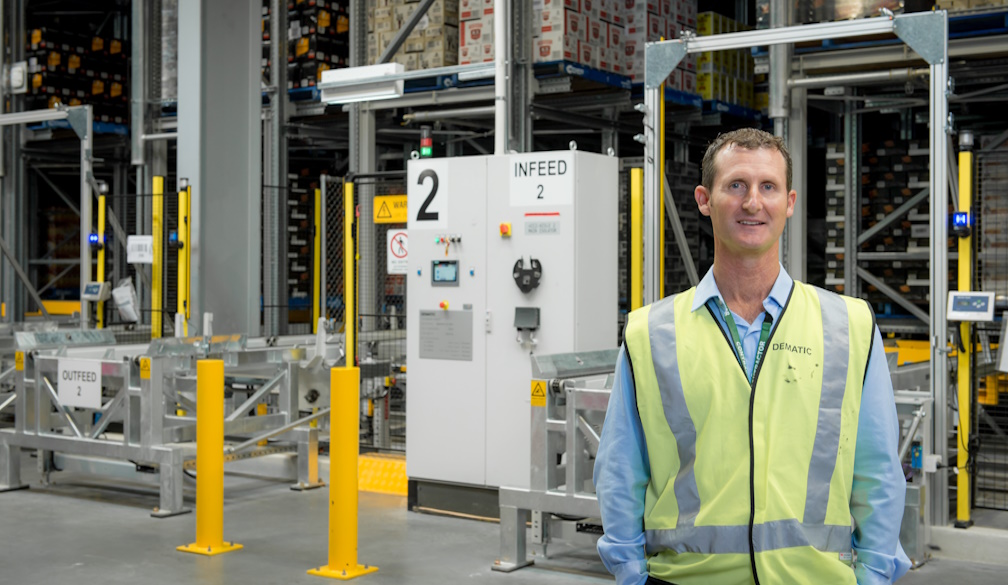
Pressure on Australia’s food supply chain is converging on the distribution centres that feed the country’s supermarkets.
Australia is facing a convergence of supply chain pressures the country has not experienced simultaneously before. Ongoing instability in key global shipping routes, including the Strait of Hormuz, has driven sharp volatility in global oil prices, leaving diesel - the lifeblood of freight, farming and food distribution, exposed to sustained price pressure and uncertainty.
Fertiliser supply, already tight, remains under strain as global supply chains adjust to shifting trade flows and geopolitical tensions. At the same time, consumers, squeezed by cost-of-living pressures, are shifting their spending in ways that are reshaping demand across every category of grocery retail.
For the companies that move food from farm to shelf, these are not separate problems. They are the same problem, arriving at the same time, and landing on the same infrastructure: the distribution centres that link Australian manufacturers, retailers and consumers.
“There is a perfect storm forming around food security in Australia right now. Fuel is volatile. Fertiliser is short. Shopping habits are shifting. And the supply chain is being asked to absorb all of it at once,” says Dave Rubie, Sales Director, Integrated Systems and Mobile Automation at Dematic. “The businesses that handle this well will be the ones that already designed flexibility into their operations. The businesses that struggle will be the ones still running the supply chain they built for a more predictable decade.”
Dematic, Australia and New Zealand’s largest supplier of warehouse automation solutions, says the current environment is accelerating a shift that was already underway: the consolidation of multiple distribution operations onto fewer, higher-density, better-connected sites - often co-located with manufacturing to cut freight out of the equation entirely.
“The most obvious way to insulate a food and beverage business from fuel volatility is to reduce the number of truck movements it depends on. That means bringing warehousing and manufacturing onto the same site wherever possible, and consolidating operations that were previously scattered across third-party logistics providers. It also means building denser distribution facilities, so you can hold more inventory on less land without the transport penalty,” says Rubie.
This approach is not theoretical. Several of Australia’s largest food and beverage operators have already reshaped their supply chains around exactly this logic - and are now operating with a structural cost advantage as fuel prices climb.
Asahi Beverages’ automated distribution centre at Heathwood in Queensland is one of the most frequently cited examples of the consolidation model in Australia. The facility brought multiple separate distribution operations together on a single site, dramatically reducing the number of inter-warehouse truck movements and delivering a documented 250 per cent productivity gain for the business. In an environment where every litre of diesel now costs significantly more than it did a month ago, the transport savings that consolidation was designed to deliver have become materially more valuable.
Another leading global spirits and beverages company, Diageo, made a similar move in 2014, consolidating storage operations that had previously been spread across multiple third-party logistics providers into a single automated facility. The original business case was built around reducing transport costs between sites. That logic holds more strongly today than it did when the decision was made. Every kilometre of freight taken out of a supply chain in 2026 is worth substantially more than it was in 2025.
The logic of consolidation is not confined to beverages. Teys Australia, one of the country’s largest beef processors and exporters, invested approximately $100 million in a centralised, highly automated beef aggregation and export facility near the Port of Brisbane - designed to replace a fragmented model in which each of its three major Queensland processing plants at Beenleigh, Lakes Creek and Biloela ran its own cold storage and trucked product directly to port or to nearby external cold stores.
The new facility, powered by a Dematic automated storage and order build system more than 20 metres in height, now handles more than seven million cartons of chilled and frozen beef per year. Critically, the system can build a single export pallet drawing cartons from all three processing sites - giving Teys the ability to respond to shifting customer orders with a level of agility that a decentralised, site-by-site model could never deliver. Moreso, the system achieves significant labour savings and has reduced export delivery times by a whole week. For an exporter facing local and global competition, whose supply chain is exposed to domestic freight costs, international shipping volatility, and shifting tariffs, that performance and flexibility is now the operating foundation of the business.
“What these businesses have in common is that they treated their supply chain as something to be designed, not just operated. They asked how many trucks, how much land, how many handovers between sites, and they worked to bring those numbers down,” says Rubie. “The businesses that made those decisions five or ten years ago are in a much stronger position today than the ones that didn’t. The current environment is making that gap visible to everyone.”
The pressure on Australia’s food supply chain does not stop at the distribution centre. Farmers facing diesel shortages cannot run tractors. Farmers facing fertiliser shortages cannot maintain yields. Extreme weather events are compounding the strain on fresh produce. And consumers, watching their household budgets tighten, are shifting toward frozen and longer-life products - a pattern that has repeated in every previous downturn and is reasserting itself now.
Australia is currently experiencing a food security challenge that it has not had to confront in living memory, and one that the country’s supply chain infrastructure will either absorb or buckle under.
“Australia has been fortunate. We have had a supply chain that was based upon pricing assumptions and guarantee of energy supply and we have not had to think about food security the way other countries have,” says Rubie. “That is changing. The good news is that the tools to build a more resilient supply chain exist, they are proven, and Australian operators have been quietly adopting them for years. The question now is how quickly the rest of the sector can follow.”
For operators still running fragmented, transport-heavy distribution models, the current environment is a warning. For those who have already consolidated and automated, it is a validation. And for the policy-makers and industry bodies watching Australia’s food supply chain absorb the shock, it is a test of infrastructure decisions that were made years ago and are now being tested in real time.
For more information visit https://www.dematic.com/en-au/