how the right smells can encourage shoppers to buy healthier foods
- Written by: Megan Phillips, Senior Lecturer (Assistant Professor) in Marketing, Auckland University of Technology
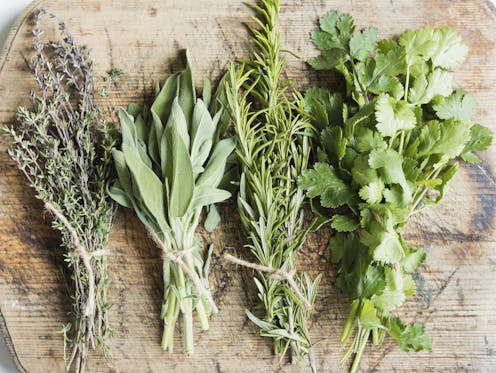
Imagine walking down the aisle of your local grocery store. The scent of mixed herbs catches your attention, mentally transporting you to a kitchen filled with the aroma of your favourite home-cooked meal.
Suddenly, you’re craving hearty minestrone soup or yearning for homemade beef lasagne. In an instant, your plans for dinner – and your shopping list – change.
This sensory experience is not a new phenomenon. Using scent to sell in retail stores is a well-established strategy. But our new research[1] has found introducing a herbal scent (such as thyme, rosemary, oregano and basil) in supermarkets can encourage shoppers to select and purchase more wholesome foods.
Beyond general smells that come from the products, supermarkets often use artificial scent strategies, such as diffusing grapefruit in the produce section[2], chocolate in the confectionery aisle[3], rosemary focaccia by the bakery, and baked cheesecake in the aisles[4] to boost sales.
Previous research has found diffusing a chocolate scent in a bookstore [5] increased interest in romance books and cookbooks. And natural scents in a store[6] boosted spending on products with fewer artificial or synthetic characteristics.
Scents such as rose maroc (considered “masculine”) and vanilla (deemed “feminine”) have been shown to influence[7] shopping behaviours toward gender-specific clothing.
Understanding the influence of certain smells isn’t just about boosting sales. Supermarkets play a pivotal role[8] in shaping food choices. Using scent strategies to nudge consumers toward more wholesome food options is an under-explored opportunity to improve public health outcomes.
So, can the right smell increase choice and sales of nutritious wholesome foods?
Understanding the effect of herbs
Our research was broken into three parts – experiments in the laboratory, field study and online surveys.
We invited participants into our sensory laboratory at Auckland University of Technology. Each person was exposed to the smell of mixed herbs while shopping in a virtual supermarket. Shoppers purchased more wholesome baskets of goods when exposed to the herbal smell compared to the non-herbal smell (baked goods).
For every $155 spent, shoppers exposed to herbal smells bought three more wholefood items compared to those who were given non-herbal scents.
To test if those effects also occurred in-store, we collaborated with a New Zealand supermarket retailer to run a field study. We diffused a herbal scent in two stores and found shoppers exposed to the scent purchased more wholesome fresh food items than those not exposed to any scent.
We also wanted to understand the extent to which scent can influence wholesome food choices. Is the effect of smell strong even if consumers simply imagine the scent? The answer is yes.
In an online survey, we asked participants to imagine walking into their local supermarket and noticing the smell of mixed herbs. Those who imagined the herbal scent showed a stronger desire to buy ingredients for a homemade herb-rich pasta sauce and fresh ingredients for beef stew compared to those imagining no scent.
The research shows smells have the power to help us make better choices at the supermarket – even when they are only imagined.
Why does smell influence choices?
Scent marketing[10] influences human emotions, memories and motivations. This is largely due to the direct link[11] between the olfactory system from our noses and the limbic system – the part of the brain responsible for memory and behavioural responses.
When odours are processed and retrieved, they can activate associations with sensory knowledge[12], leading to important changes in our behaviour. This is fascinating to think about. Past research shows that when participants were exposed to a citrus scent[13], it triggered cleaning behaviour.
That led to more people in the study smelling citrus, and then doing more of the cleaning up after an eating task – compared to participants who didn’t smell citrus.
When it comes to food, participants primed with a fruity scent[14] (like melon and pear) had thoughts about fruit and vegetables, and were more likely to pick starters and desserts with vegetables and fruit.
The smell of herbs is a scent many consumers are familiar with — used for centuries[15] in global cuisines and everyday home cooking to enhance the flavour of food[16]. Repeated exposure to a scent and the accompanying experiences can form strong associations in memory[17].
Our research shows these associations (herbs and Sunday roast, for instance) can drive food choices in supermarkets.
The mere act of smelling or imagining a herbal scent stimulates memories of cooking and eating home-cooked meals prepared from fresh ingredients. We found the association with home-cooking then stimulates a desire to choose and purchase related wholefoods rather than more processed foods.
Whether New Zealand retailers adopt artificial scents to nudge consumers toward more wholesome foods remains to be seen. But the potential for improving food choices, and by extension public health, is significant.
References
- ^ our new research (www.sciencedirect.com)
- ^ grapefruit in the produce section (www.youtube.com)
- ^ chocolate in the confectionery aisle (www.cbsnews.com)
- ^ baked cheesecake in the aisles (www.grocerydive.com)
- ^ diffusing a chocolate scent in a bookstore (www.sciencedirect.com)
- ^ natural scents in a store (www.sciencedirect.com)
- ^ shown to influence (www.sciencedirect.com)
- ^ play a pivotal role (onlinelibrary.wiley.com)
- ^ Daniel Koebe/Getty Images (www.gettyimages.com.au)
- ^ Scent marketing (www.sciencedirect.com)
- ^ direct link (pubmed.ncbi.nlm.nih.gov)
- ^ activate associations with sensory knowledge (onlinelibrary.wiley.com)
- ^ exposed to a citrus scent (pubmed.ncbi.nlm.nih.gov)
- ^ primed with a fruity scent (www.sciencedirect.com)
- ^ used for centuries (pubmed.ncbi.nlm.nih.gov)
- ^ enhance the flavour of food (shop.elsevier.com)
- ^ strong associations in memory (www.sciencedirect.com)
Authors: Megan Phillips, Senior Lecturer (Assistant Professor) in Marketing, Auckland University of Technology