Toxicity swirls around January 26, but we can change the nation with a Voice to parliament
- Written by: Megan Davis, Pro Vice-Chancellor Indigenous UNSW and Professor of Law, UNSW
We are on the eve of the nation’s annual ritual[1] of celebrating the arrivals, while not formally recognising the ancient peoples who were dispossessed.
Each year the tensions spill over, rendering Australia Day/Invasion Day/Survival Day a protest[2] as much as a celebration.
But there is a quiet process underway, aimed at achieving substantive recognition of the First Nations that has so far eluded Australia.
A new report on an Indigenous Voice
This process of constitutional recognition is now in its second decade — yes, it has been ten years since the process began. In early January, to kick off the second decade, Minister for Indigenous Australians Ken Wyatt released the Indigenous Voice Co-design Process Interim Report[3].
It runs to almost 300 pages and offers First Nations peoples about three months[4] to provide a response.
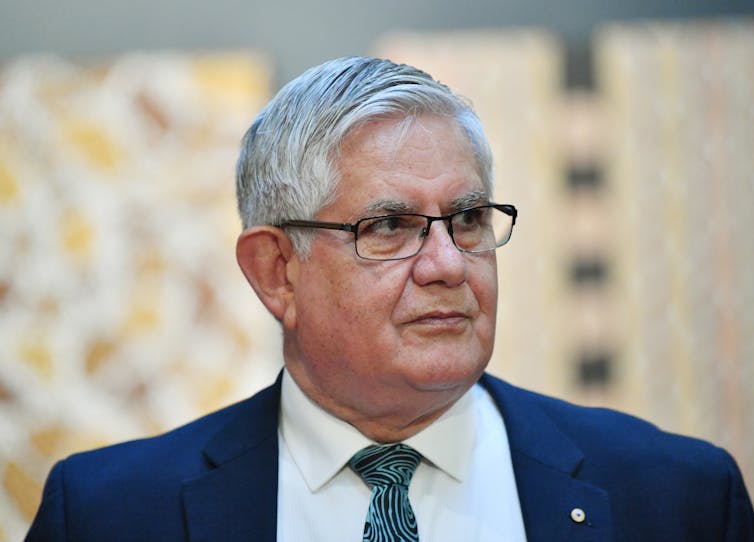 Minister for Indigenous Australians Ken Wyatt has just released a paper on an Indigenous Voice.
David Mariuz/AAP
Minister for Indigenous Australians Ken Wyatt has just released a paper on an Indigenous Voice.
David Mariuz/AAP
The genesis for the Voice lies in the historic 2017 Uluru Statement from the Heart[5] and First Nations’ preference for a constitutionally enshrined Voice.
The report is a solid first run at designing a Voice. It brings Australia a step closer to realising the Uluru Statement[6]. But it falls short of the Voice to parliament sought by those consulted in the lead up to the Uluru Statement and the statement itself.
A Voice for the voiceless
Previously, I have set out[7] the lengthy and complex process that has led us to this point.
I have also explained why First Nations people chose a constitutionally protected Voice as both symbolic and substantive recognition — and why a legislated voice is not able to deliver the transformative change communities so desperately need.
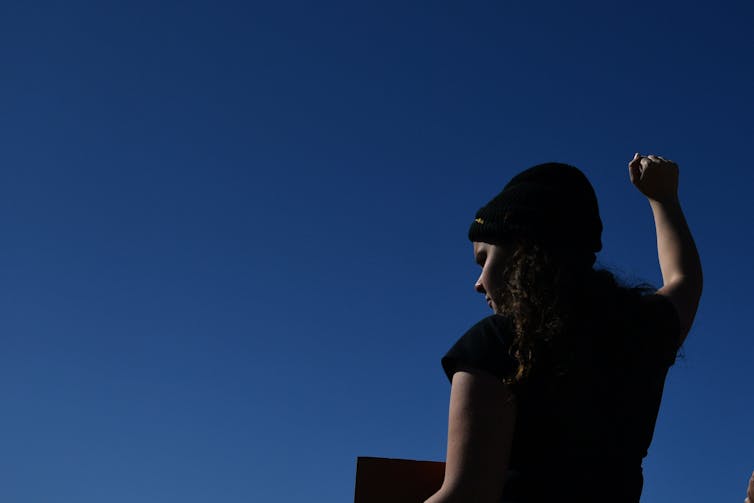 The process of constitutional recognition for First Nations peoples is now in its second decade.
Mick Tsikas/AAP
The process of constitutional recognition for First Nations peoples is now in its second decade.
Mick Tsikas/AAP
The push for a Voice came from the voiceless — those less likely to be afforded a seat at the table in Indigenous affairs — because the regional dialogues[8] privileged their participation.
It was their view that those who filled the leadership vacuum left by the Aboriginal and Torres Strait Islander Commission (abolished in 2005[9]) were unrepresentative. This includes ever-present and overbearing Commonwealth bureaucracy on Indigenous affairs and other organisations who purport to represent community but are not accountable back to community.
In 2018, the joint parliamentary committee[10] on the Recognition of Aboriginal and Torres Strait Island Peoples — chaired by Labor’s Pat Dodson and Liberal MP Julian Leeser — found the Voice was the only viable constitutional option. But it also found the concept required more meat on the bones before Australians could vote at a referendum. It said this should be done through “co-design” with First Nations peoples.
The 2019 budget saw $7.3 million [11]for a co-design process for the Voice and $160 million[12] for a future referendum once a model is determined. The Coalition’s 2019 election policy also reflected the two-step approach:
A referendum will be held once a model has been settled, consistent with the recommendations of the [Dodson/Leeser] Committee.
The interim Voice report is the settling of that model.
A Voice to government only?
Wyatt has been clear in the past he is only designing a “Voice to government[13]”, which aligns with his worldview as a career public servant.
However, the Voice interim report[14] expressly sets out two components for comment: a Voice to government and a Voice to parliament.
Read more: Ken Wyatt's proposed 'voice to government' marks another failure to hear Indigenous voices[15]
The Voice to government component is one for First Nations communities to contemplate.
Only First Nations people on the ground can tell the inquiry whether the various local and regional mechanisms function in the way the report suggests they do. Only they can tell the government whether they feel their voices are represented effectively by the structures and entities that exist. This is why their input is so crucial to this report.
It is important to note that at the regional dialogues that led to the Uluru Statement, there was not a single existing entity that communities identified as representing their voices. National peak bodies and constituent organisations, were expressly singled out in regional dialogues as not representing grassroots voices.
Read more: Constitutional recognition for Indigenous Australians must involve structural change, not mere symbolism[16]
They were also criticised for being unaccountable and not reporting back to communities about what they say and do in Canberra.
Even so, the interim report has some alignment with the Uluru dialogue’s deliberative method [17], this includes the proposed transitional arrangements for local and regional entities, allowing communities to conceive of and design new entities.
However, it is difficult to gauge whether this can give voice to the voiceless.
Voice to parliament falls short
The Voice to parliament component of the interim report opens the door to submissions on a constitutional Voice. There is no other way to assess the efficacy of the legislated approach, which unsurprisingly falls short of the voice[18] sought by delegates at the regional dialogues[19], the national constitutional convention[20] and in the Uluru Statement.
This is because the Uluru Statement sought a mandated place at the table with the force of law. The interim report falls short of this by studiously avoiding power[21].
While the proposal suggests there is an “obligation to consult” on race power matters and “expectation to consult” on broader matters, there is no power that animates an actual obligation.
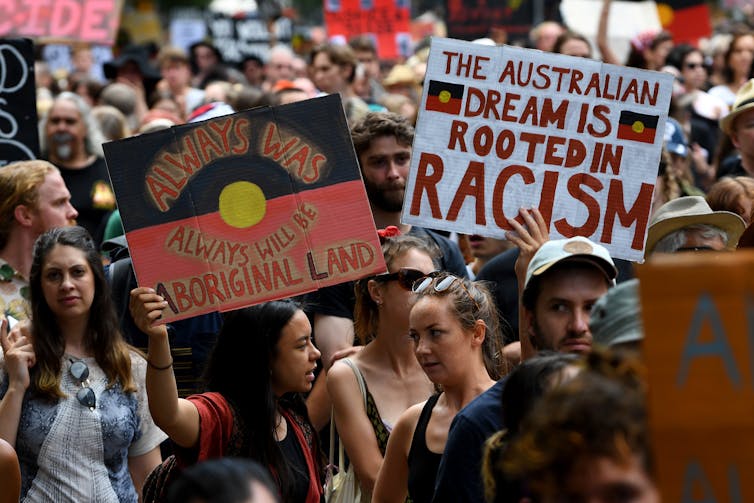 January 26 is as much about protest as it is about BBQs and a public holiday.
James Ross/AAP
January 26 is as much about protest as it is about BBQs and a public holiday.
James Ross/AAP
After all, it is based on legislation that can be overridden by subsequent legislation, which is par for the course in Indigenous affairs. Media reports[22] talk of the “obligation to consult” on race power as if it is hard law, but this Voice is mediated by the government of the day and therefore the antithesis of what people sought.
It carefully crafts a process that still renders the voice supine to government. This is both in terms of reporting to a parliamentary committee and the transparency mechanisms, where inevitably, the government becomes the Indigenous Voice to parliament.
Read more: Australia Day, Invasion Day, Survival Day: a long history of celebration and contestation[23]
The most prominent misalignment with the dialogues was they wanted a voice protected by the Constitution via a referendum, so it could survive successive governments and avoid being subject to the whim of the government of the day.
This would give our communities the certainty and security they need to make long-term plans for the future. First Nations peoples understand our affairs are a political football. And that our working and community lives are subject to a three-year cycle of one government to the next. It is a driver of disadvantage.
This is why so many Indigenous organisations[24] are expressing disappointment at this proposal. The “anything is better than nothing” approach does not apply when the change is akin to the status quo; it just looks more officious with more squiggly flow charts.
A path to friendship
This is now an opportunity for Australians and First Nations peoples to make their views clearly heard. It is only an interim report, and it requires the feedback of many.
All Australians want to find a way through the annual debates[25] about Captain Cook, the First Fleet[26] and national identity, to a more inclusive and nuanced narrative of who we are.
Read more: An Indigenous 'Voice' must be enshrined in our Constitution. Here's why[27]
Survey research shows a clear majority[28] of Australians want to recognise a First Nations Voice in the Constitution.
As we approach yet another national day replete with swirling toxicity, the path to friendship offered by the Uluru Statement — an expression of peace — provides a roadmap for Australia.
This is not about changing the date, but changing the nation.
References
- ^ annual ritual (www.abc.net.au)
- ^ a protest (www.theguardian.com)
- ^ Indigenous Voice Co-design Process Interim Report (voice.niaa.gov.au)
- ^ about three months (haveyoursay.voice.niaa.gov.au)
- ^ Uluru Statement from the Heart (theconversation.com)
- ^ Uluru Statement (ulurustatement.org)
- ^ I have set out (theconversation.com)
- ^ regional dialogues (www.google.com)
- ^ abolished in 2005 (www.aph.gov.au)
- ^ joint parliamentary committee (www.aph.gov.au)
- ^ $7.3 million (www.sbs.com.au)
- ^ $160 million (parlinfo.aph.gov.au)
- ^ Voice to government (www.abc.net.au)
- ^ interim report (voice.niaa.gov.au)
- ^ Ken Wyatt's proposed 'voice to government' marks another failure to hear Indigenous voices (theconversation.com)
- ^ Constitutional recognition for Indigenous Australians must involve structural change, not mere symbolism (theconversation.com)
- ^ deliberative method (theconversation.com)
- ^ falls short of the voice (ulurustatement.org)
- ^ regional dialogues (www.referendumcouncil.org.au)
- ^ national constitutional convention (www.aph.gov.au)
- ^ avoiding power (www.sbs.com.au)
- ^ Media reports (www.theguardian.com)
- ^ Australia Day, Invasion Day, Survival Day: a long history of celebration and contestation (theconversation.com)
- ^ Indigenous organisations (alc.org.au)
- ^ annual debates (theconversation.com)
- ^ First Fleet (www.theguardian.com)
- ^ An Indigenous 'Voice' must be enshrined in our Constitution. Here's why (theconversation.com)
- ^ clear majority (www.theguardian.com)