


The Rise of Middle Eastern Fragrances in Australia
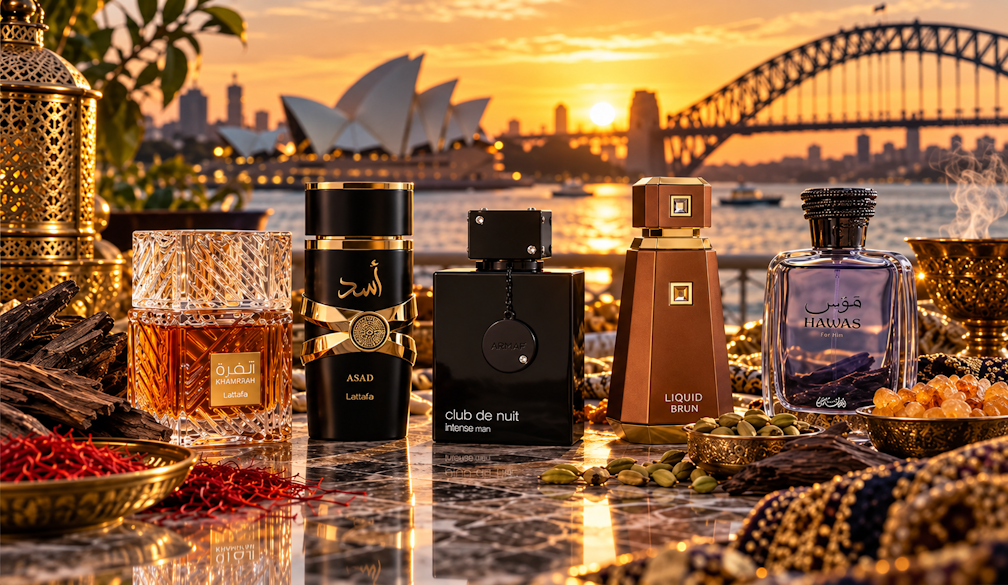
For years, Australia’s fragrance shelves have been dominated by familiar European and American names. Walk through almost any major department store and you will still find the same well-known fashion houses and global beauty brands taking centre stage.
But fragrance tastes are changing.
Middle Eastern perfume houses, particularly those from the United Arab Emirates and neighbouring regions, are finding a growing audience in Australia. Their appeal is easy to understand: bold scent profiles, impressive performance and, in many cases, prices that make experimenting with fragrance far more accessible.
What was once a relatively niche part of the perfume world is now becoming much harder to overlook.
Why Middle Eastern Fragrances Stand Out
Part of the appeal comes down to the way these fragrances are composed.
Many mainstream designer perfumes are created with broad appeal in mind. They tend to be polished, familiar and easy to wear. Middle Eastern houses are often more willing to lean into richer ingredients and stronger contrasts, with amber, vanilla, spices, woods, resins, oud and sweet gourmand notes appearing frequently.
That can make the experience feel more distinctive.
For someone who has already worked their way through several popular designer releases, discovering a fragrance built around smoky oud, dense vanilla or spiced amber can feel like entering a completely different side of perfumery.
Traditionally, that sense of discovery often led fragrance enthusiasts towards niche houses. Middle Eastern brands now offer another path. Many deliver unusual compositions and plenty of personality without necessarily carrying the high prices associated with niche perfumery.
Australian fragrance lovers can now move easily between designer and niche perfumes and Middle Eastern releases, rather than treating them as completely separate worlds.
Strong Performance Is Part of the Attraction
Performance is another reason these fragrances have generated so much interest.
Anyone who spends time in fragrance communities will quickly come across discussions about longevity, projection and sillage. These factors do not determine whether a perfume smells good, but they certainly influence how people judge value.
Of course, no region or brand can guarantee strong performance across every fragrance. Some perfumes last all day, while others sit much closer to the skin. Even so, many popular Middle Eastern releases have built reputations around richer concentrations and a noticeable presence.
That appeals to people who want to apply a fragrance in the morning and still be able to smell it hours later.
Australia’s climate adds another layer to the equation. Heat can change the way a perfume behaves considerably. A dense amber or sweet gourmand fragrance can become much stronger on a hot afternoon, while citrus, aquatic and fresher woody scents may feel more comfortable in warmer weather.
Rather than expecting one bottle to work perfectly in every situation, more fragrance enthusiasts are building collections around different seasons, occasions and moods.
Social Media Has Changed How Fragrances Are Discovered
Not long ago, most people discovered new perfumes through department store counters, advertising or recommendations from friends.
That is no longer the only route.
TikTok, YouTube, Instagram, Reddit and dedicated fragrance communities now introduce people to perfumes from almost every corner of the world. A brand does not need a prominent counter in a major Australian retailer to develop a following here.
A single fragrance can suddenly find itself being discussed in review videos, comparison posts and online communities. People compare notes, longevity, pricing and similarities to more expensive releases before deciding whether something is worth trying.
That visibility has helped names such as Lattafa, Armaf, Rasasi and French Avenue become increasingly familiar to fragrance enthusiasts who might never have encountered them through traditional retail.
It has also made perfume discovery far less dependent on geography. A fragrance launched thousands of kilometres away can quickly find an audience in Australia if enough people start talking about it.
Value for Money Is Hard to Ignore
Price matters too.
Designer perfumes can be expensive, while a bottle from a luxury niche house can easily cost several hundred dollars. For someone who enjoys experimenting with different scents, building a collection can become expensive very quickly.
This is one area where many Middle Eastern brands compete particularly well. Elaborate presentation, impressive performance and interesting scent profiles can often be found at prices considerably below those of established luxury houses.
That does not make every Middle Eastern fragrance a bargain, just as a higher price does not automatically make a designer or niche perfume better.
It simply gives shoppers another option.
A collection today might include a designer fragrance for work, a niche bottle saved for special occasions and a few Middle Eastern perfumes chosen simply because they are enjoyable to wear.
The label matters less than it once did. What matters is whether the fragrance itself is worth wearing.
Samples and Decants Make Exploring Easier
More choice brings one obvious problem: blind buying.
Reading a list of fragrance notes only tells you so much. Vanilla can be creamy, smoky, powdery or almost dessert-like depending on what surrounds it. Oud can be smooth and woody in one fragrance and far more intense in another.
Then there is skin chemistry. A perfume that smells fantastic on one person may develop very differently on someone else.
Buying a full 100 ml bottle based on a few reviews is therefore always a gamble, particularly when trying an unfamiliar fragrance house for the first time.
This is where samples and decants become useful.
Instead of committing to a full bottle immediately, you can wear a smaller amount several times, in different weather and settings, and see how the fragrance actually performs on your skin. It is a far better test than smelling a paper strip for a few minutes.
Sampling also makes it easier to compare a Middle Eastern fragrance with designer fragrances and niche fragrances without buying several full bottles just to find out which one you prefer.
With particularly strong fragrances, even a small sample can provide enough wearings to decide whether you genuinely enjoy the scent or simply liked the idea of it.
Middle Eastern Perfume Is Finding Its Place in Australia
None of this means designer fragrances are disappearing. They are not.
What is changing is the amount of choice available.
Someone might begin their fragrance journey with a famous designer release, become curious about niche perfumery and eventually discover a Middle Eastern house through a review or recommendation online. Others may take the opposite route.
The categories are beginning to overlap, and that is probably a good thing.
Instead of choosing purely by brand recognition, shoppers can compare fragrances on scent, performance, price and personal preference.
The wider availability of perfumes in Australia has made it much easier to explore styles and brands that would once have been difficult to find locally.
A More Interesting Future for Fragrance
Middle Eastern perfumery does not need to replace designer or niche fragrances to make an impact.
Its growing popularity points to something more interesting: people are becoming more adventurous about what they wear.
Fragrance enthusiasts are learning about accords and concentrations, comparing performance, trying samples before committing to bottles and looking beyond the brands they already know.
That curiosity is opening the door to a much wider fragrance world.
Whether your preference is a polished designer scent, an experimental niche composition or a rich Middle Eastern fragrance, there has never been more room to explore.










