


What Earthmoving Equipment Is Used in Civil Construction?
- Written by: Times Media
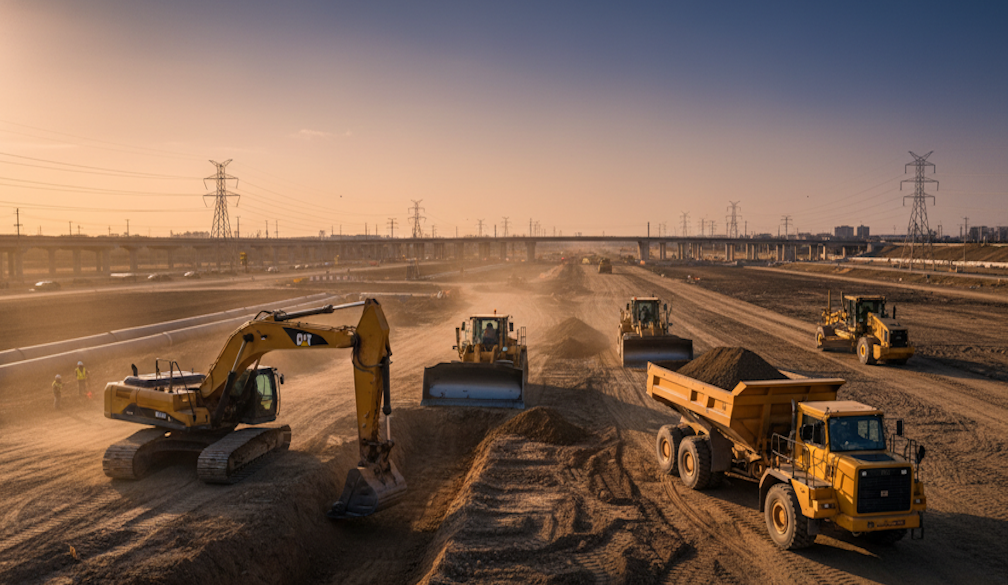
Heavy machinery is core to civil construction to clear, shape and prepare land for roads, buildings and infrastructure. Whether it’s residential subdivisions or road upgrades, the choice of equipment in Toowoomba and throughout Queensland’s Darling Downs has a direct impact on the speed, cost and quality of projects.
Equally important is the access to well-maintained plants. With services such as dozer hire in Toowoomba, contractors are able to bring in the right machines for each phase without the capital cost of ownership. Here’s a breakdown of the most commonly used earthmoving equipment on civil construction sites in Australia.
Excavators, Bulldozers, and Loaders
Excavators are the most adaptable machines on any construction site. Available in mini, wheeled and crawler formats, they cover everything from trenching and bulk excavation to pipe-laying and demolition. Attachments extend their capability across a wide range of tasks. They are the backbone of most earthworks operations. Attachments include buckets, hydraulic hammers, augers, grabs, etc.
Bulldozers are specifically designed to push large amounts of soil, sand, rubble, etc. The tracked undercarriage gives excellent traction on loose or uneven ground and they are vital for initial site clearing, rough grading and major earthmoving.
Wheel loaders or front-end loaders move large amounts of material. They load excavated soil, gravel or sand into dump trucks or haul bulk supplies around a site. They are fast and have a large bucket capacity, making them practical for stockpile management on busy civil projects.
Graders, Dump Trucks, and Compactors
Motor graders are essential for road building, subdivision works and any project requiring exactly levelled surfaces. Their long blade is used to create flat planes or slopes as required before asphalt or concrete is laid. Graders are also used extensively in regional areas to maintain unsealed roads and access tracks.
WorkSafe Victoria says earthmoving equipment is a major cause of workplace injuries on construction sites, and operators of certain types of plant must hold a valid work licence before operating.
Dump trucks, articulated and rigid, are one of the most used machines on civil sites. Articulated trucks are more common in Australia, where the pivot joint improves handling on rough or uneven terrain. They transfer bulk earth between excavation zones, stockpiles and disposal areas.
Earthworks are finished off with the help of compactors and rollers, which press down soil, gravel, or asphalt to make firm, load-bearing surfaces. If the compaction is not good, the foundation may move, the road may crack and the drainage system may fail. Smooth drum, padfoot and pneumatic rollers are suited for various materials and degrees of compaction.
Compact Plant and Specialist Attachments
You don’t need a full-sized heavy plant for every civil project. For tight lots in urban areas, tight builds for residential, and environmentally sensitive sites, compact equipment provides the precision and access larger equipment just can’t.
In Australia, skid-steer loaders are often known as posi-tracks. They are very agile and perform well on loose or muddy ground. Because they are small, they can work around existing structures, underground services and landscaped areas with minimal ground disturbance.
The backhoe loader is a versatile machine used for civil works and utility maintenance projects of a smaller scale that features a front bucket and rear digging arm. They can be utilised for trenching, backfilling and material handling on projects where it would be impractical to have several larger machines.
Specialist attachments add to the versatility of the standard plant, allowing contractors to modify their existing plant to overcome site-specific problems without having to hire new equipment. Typical examples are:
- Rock breakers and rippers for hard ground or embedded rock breaking.
- Drains and angled surfaces, tilting buckets for shaping batters.
- The GPS machine control system is used to automate blade positioning for accurate grading while requiring little surveying.
The additions allow contractors to gain more from every machine and to have fewer machines on site.
Conclusion
There are a variety of earthmoving types of equipment used in civil construction, and each has a set of capabilities that is unique to the project. Whether it's heavy digging machinery like excavators and bulldozers or compact plant and GPS-controlled graders for precision finishes, the right machine can make all the difference on any site. Being able to hire these machines flexibly is an essential component in getting jobs finished on time and to specification for contractors in Toowoomba and beyond.









