


Routing the Render: How Content Teams Orchestrate Multi-Model Workflows
- Written by: Times Media
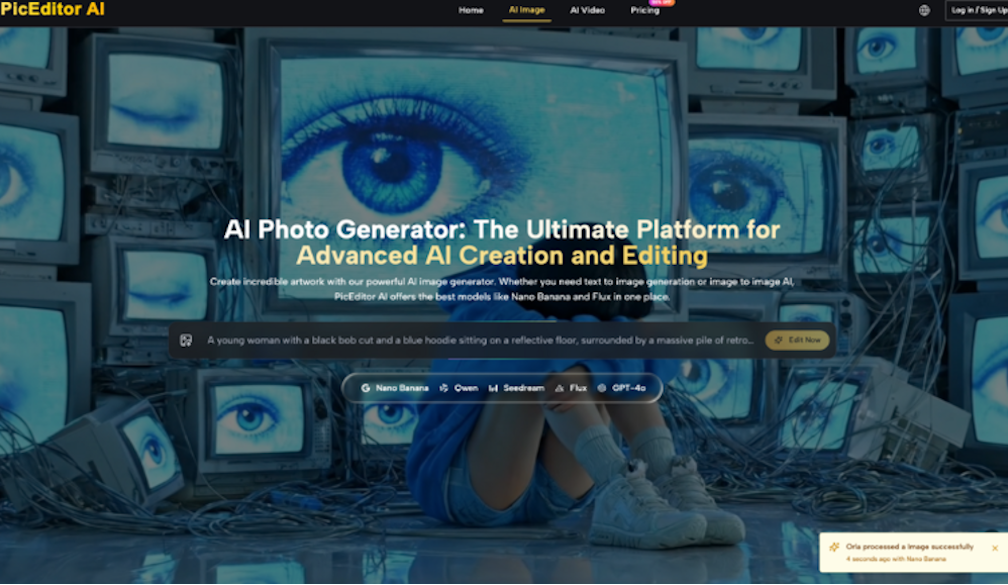
The industry is moving past the "magic box" era of AI, where a single prompt was expected to yield a finished asset. Today’s high-volume content teams are realizing that the most efficient output doesn't come from a better prompt, but from a strategic routing protocol that assigns specific models to specific production stages. The dream of the "one-shot" masterpiece has largely been replaced by the reality of the multi-stage pipeline. Operators who once spent hours fine-tuning a 200-word prompt for a single image generator are now decoupling their workflows, treating initial generation as a raw material rather than a final product.
The Prompt-Refine Paradox: Why Single-Model Outputs Fail
The primary friction point for content teams today is the "infinite re-roll" loop. This occurs when an operator attempts to fix a minor flaw—a distorted hand, a stray background element, or a slightly off-brand color palette—by adjusting the prompt and generating a brand-new image. Because of the probabilistic nature of diffusion models, changing a single word to fix a hand can inadvertently change the lighting, the subject’s clothing, or the entire composition. This is what we call "compositional drift."
As prompt engineering reaches diminishing returns in base models like Flux or Nano Banana, the cost of these re-rolls scales linearly in both compute time and creative frustration. Professional operators are beginning to adopt the "70/30 Rule." The goal is to get 70% of the way toward the desired result using a base generator and then immediately pivot to a dedicated AI Photo Editor for the final 30% of precision work. By stopping the generation phase early, teams avoid the "over-prompting" trap where the model begins to flatten textures or produce "plastic" skin tones in an attempt to satisfy too many conflicting semantic constraints.
Strategic Routing: Matching Model Strengths to Asset Tiers
Not all models are created equal, and a sophisticated workflow routes assets based on the specific requirements of the tier. For high-fidelity assets where prompt adherence is the highest priority—such as product placements or specific architectural layouts—routing toward Flux is often the logical first step. Flux excels at maintaining structural integrity across complex requests. However, this comes at the cost of higher latency.
Conversely, for high-volume social media content or rapid aesthetic exploration, models like Seedream offer a faster path to a "vibe." These models are often more forgiving with artistic styles but may struggle with "semantic density"—the ability to correctly render multiple distinct objects in a single frame without them bleeding into one another.
The decision of when to exit the generator is a learned skill. It requires an operator to look at a "failed" generation and identify whether its flaws are fundamental (bad composition, wrong lighting) or superficial (extra finger, incorrect background object). If the flaws are superficial, the asset should be moved to an editing environment. If the flaws are fundamental, it warrants another generation. This distinction saves thousands of GPU hours across a standard campaign lifecycle.
The Refinement Hub: Post-Gen Surgery and Semantic Editing
Once an asset has been routed out of the generation phase, it enters the refinement hub. This is where specialized tools take over from general-purpose generators. Using a dedicated AI Photo Editor allows for what we call "semantic editing"—the ability to manipulate specific parts of an image without affecting the global parameters.
For example, a common hallucination in modern models is the creation of "ghost artifacts" in the background of portrait shots. In a traditional workflow, an editor might try to "inpainting" these out using the same model that created them. However, a specialized AI Photo Editor with a dedicated object eraser or face swap tool is often more reliable. It maintains the character consistency across a campaign without the need to train a custom LoRA (Low-Rank Adaptation) for every new subject.
From an economic perspective, five minutes spent in a precision editing tool is significantly cheaper than thirty minutes of prompt iteration. It also provides a level of creative control that generators lack. If a creative director asks for a blue dress to be changed to a slightly darker shade of navy, a generator might change the model’s pose or the room’s lighting to accommodate the request. An AI Photo Editor performs the change surgically, preserving the approved elements of the frame.
Static to Kinetic: Preparing Assets for Video Synthesis
The importance of the editing stage becomes even more apparent when moving from static images to kinetic video. Tools like Kling, Seedance, or Veo are highly sensitive to the quality of the seed image. A common mistake among content teams is passing "raw" AI generations directly into an image-to-video engine.
Raw generations often contain micro-hallucinations—areas of low contrast, cluttered backgrounds, or ambiguous boundaries—that are barely noticeable in a still image but become glaring "motion artifacts" once animated. When a video model tries to interpret a cluttered background, it often results in flickering or temporal instability.
The pre-processing workflow involves using an AI Photo Editor to clean the "Hero Image" before it ever touches a video model. This includes sharpening edges, removing distracting background noise, and ensuring the lighting is logically consistent. By presenting a "clean" source, operators give the video model a much simpler map to follow, resulting in smoother motion and more predictable outputs. It is important to note, however, that while this pre-processing reduces errors, it cannot entirely eliminate the stochastic nature of video synthesis; a perfectly clean seed image can still result in a distorted video if the motion prompt is poorly defined.
Uncertainty in the Pipeline: Where Automation Still Stalls
Despite the advancements in model routing and surgical editing, there are significant areas where the pipeline remains fragile. One of the most persistent challenges is global light-source consistency. Even the most advanced AI Photo Editor struggles to fix fundamentally flawed illumination. If a base model generates a subject with light coming from the left, but the background highlights suggest a light source from the right, "fixing" this in post-production often requires manual digital painting skills that exceed the current capabilities of automated tools.
There is also the "uncanny valley" threshold. In hyper-realistic workflows, there is a point where the more you edit, the less human the subject looks. Over-refining skin textures or eyes can lead to a loss of the "soul" of the image, making it appear synthetic in a way that viewers find off-putting. Identifying this threshold is currently a subjective human task; we do not yet have a metric for "human-likeness" that can be reliably automated.
Finally, the industry lacks a standardized "model-neutral" file format. Currently, metadata from a Flux generation doesn't necessarily translate into an editing tool's layer system, and the "knowledge" of what was an object and what was background is often lost the moment the image is exported as a flat PNG. Until we have a workflow that preserves the semantic layers of a generation throughout the entire routing process, operators will still be forced to perform a certain amount of manual "re-selection" at every stage. We can observe the trend toward integrated platforms that house all these models in one place, but the underlying data remains siloed between the different architectures.
In the current landscape, the most successful content teams are those who treat AI not as a magic wand, but as a modular assembly line. By understanding the specific limits of each model and knowing exactly when to hand off an asset from a generator to an editor, they can maintain both the speed of AI and the precision of professional design.









