Lee Kuan Yew School of Public Policy Releases Strategic Roadmap for ASEAN's 5G-AI Transformation
New Research Reveals US$130 Billion Economic Opportunity and Outlines Policy Framework to Accelerate Regional Digital Leadership by 2030
SINGAPORE - Media OutReach Newswire - 22 July 2025 - The Lee Kuan Yew School of Public Policy (LKYSPP) today released a comprehensive research report outlining how ASEAN can harness 5G and artificial intelligence convergence for transformative economic growth.The study, "Leveraging 5G to Accelerate AI-Driven Transformation in ASEAN: Imperatives, Policy Insights, and Recommendations," provides policymakers with actionable strategies to unlock the region's digital potential.
ASEAN faces a critical window of opportunity. The research shows 5G alone is projected to contribute US$130 billion to Asia Pacific's economy by 2030. However, adoption remains uneven across the region — ranging from 48.3% penetration in Singapore to less than 1% in several ASEAN member states. Without coordinated action, these disparities risk deepening digital divides and weakening regional competitiveness. ASEAN may be left behind as other regions accelerate their digital transformation.
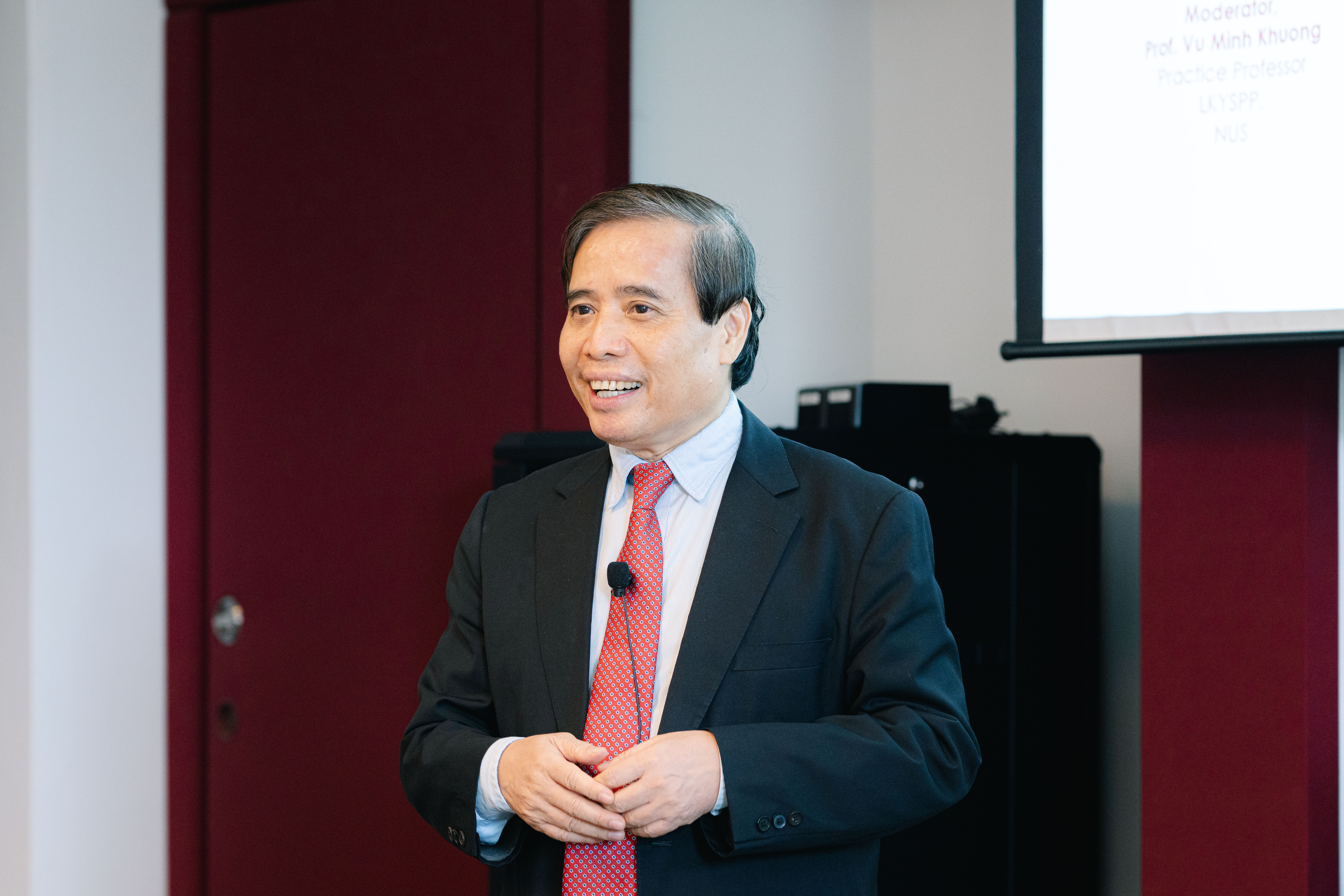
"The convergence of 5G and AI represents the infrastructure of innovation, powering smart manufacturing, precision agriculture, and autonomous mobility. But ASEAN cannot afford to wait. The window for establishing regional leadership in intelligent connectivity is rapidly closing," said Professor Vu Minh Khuong from LKYSPP. "Our report provides ASEAN policymakers with a blueprint to navigate the complex intersection of 5G and AI integration, and now policymakers must act decisively. Coordinated strategies that can accelerate regional leadership in intelligent connectivity must be established to help the region move beyond incremental improvements toward transformative digital leadership."
The LKYSPP study, drawing from extensive stakeholder interviews and survey responses from over 400 professionals across eight ASEAN countries, identifies ten critical imperatives for accelerating 5G-AI transformation, beginning with establishing coordinated digital leadership to address fragmentation that is currently slowing regional progress. ASEAN governments should treat 5G as a strategic AI enabler — not merely a telecom upgrade — while addressing the widening skills gaps that are impeding enterprise adoption across the region.
To secure ASEAN's digital future, the report recommends implementing five strategic priorities:
- Establishing national 5G-AI development strategies with clear 2025-2030 roadmaps;
- Creating empowered coordination agencies in ASEAN member countries;
- Deploying forward-looking spectrum policies that promote accessibility and innovation;
- Fostering vibrant AI-driven ecosystems through public-private collaboration; and
- Implementing robust monitoring frameworks to track progress and enable course corrections.
The LKYSPP report emphasises that enterprise adoption should be prioritised as the primary driver of 5G's economic impact. Looking across the region, there is much potential and notable examples of success: Singapore's 5G-powered smart ports have achieved 50% latency reduction, Thailand has deployed AI-enhanced disaster management systems, and Malaysia's wholesale network model has reached 82% population coverage. These examples illustrate the potential for transformative impacts when coordinated strategies are effectively implemented.
According to the LKYSPP research report, private 5G networks are essential for Industry 4.0 transformation, while Fixed Wireless Access offers a compelling solution for bridging connectivity gaps in underserved areas. The report also positions current 5G deployment as critical infrastructure for 6G evolution expected by 2030, making today's strategic decisions particularly important for future competitiveness.
Looking ahead, the study envisions ASEAN leading a 5G-AI powered future where enterprises scale globally through intelligent manufacturing, farmers optimise yields using AI-driven analytics, and students in remote areas access immersive education platforms. Realizing this vision requires bold coordinated action, strategic coordination and planning, and sustained commitment to digital transformation.
The comprehensive 148-page report and executive summary are now available for download. The findings serve as both a strategic guide for policymakers and a call to action for regional institutions to seize the 5G-AI moment and shape a digitally empowered future for ASEAN's 700 million citizens.
Hashtag: #LeeKuanYewSchoolofPublicPolicy #LKYSPP
The issuer is solely responsible for the content of this announcement.
About Professor Vu Minh Khuong
Prof Vu Minh Khuong is a Practice Professor at the Lee Kuan Yew School of Public Policy, National University of Singapore. His research and teaching concentrate on economic development and policy analysis. He has published three books and over 50 papers in prestigious academic journals, including Technological Forecasting and Social Change, Information Economics and Policy, Journal of Policy Analysis and Management, Scandinavian Journal of Economics, Telematics and Informatics, Telecommunication Policy, Journal of Structural Change and Economic Dynamics, Energy Policy. He is among the top 2% of most-cited scholars worldwide. Prof Vu earned his PhD from Harvard University. He is a member of the Editorial Board of the Journal of Telecommunications Policy and the Journal of East Asian Policy.
About the Lee Kuan Yew School of Public Policy
The Lee Kuan Yew School of Public Policy (LKYSPP) is an autonomous, professional graduate school of the National University of Singapore. Its mission is to be a leading global public policy school, with its faculty and alumni shaping thought leadership, improving standards of governance, and transforming lives for a more sustainable world. In addition to its Masters and PhD programmes, LKYSPP offers high quality Executive Programmes for civil servants, corporate executives, and non-profit professionals to equip them with insights and skills to transform their organisations and the world.