CSIRO and Space Machines partner to test Australian flexible solar cells in space
- Written by: a contributor
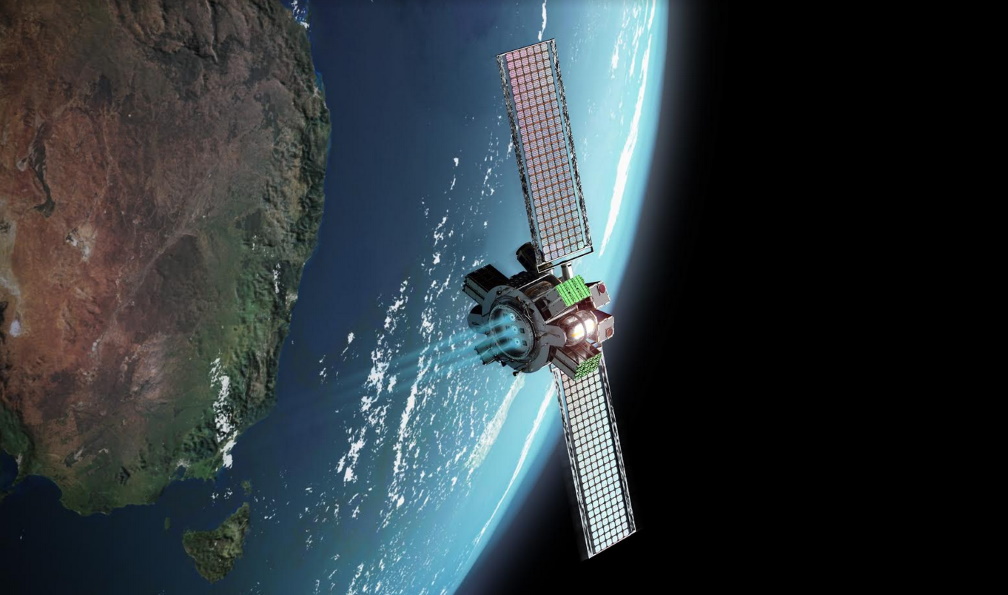
Space Machines and CSIRO partner to test Australian flexible solar cells in space
SYDNEY, Australia - Thursday 5th August 2021 - Australian in-space transportation provider Space Machines Company (SMC) and CSIRO, Australia's national science agency, are partnering to test an Australian flexible solar cell technology in space.
It will be the first time CSIRO’s printable solar cells have been tested in space. The agency will test its next gen solar cells on SMC's spacecraft Optimus-1, to be launched next year by Gilmour Space Technologies.
"We will collect data from this mission to explore new applications of our technology", said CSIRO Principal Research Scientist, Dr Mei Gao. "Solar films are about making solar energy more accessible, on earth and in space."
Developing Australian in-space solar technology is crucial for the country's sovereign space capability and the growth of the local space industry. Solar is the primary energy source in space, but space-graded rigid and foldable solar panels, the main alternatives today, are heavy and extremely expensive.
In addition to the cost, the current space solar technology is dominated by countries with a well-developed space industry, such as the USA, China and a small group of European nations. This means Australian space companies depend on suppliers that are thousands of kilometres away and are largely committed to the demands of their local markets.
Printable solar cells are usually less efficient than the rigid versions but in the future they could be an order of magnitude cheaper than traditional space-grade solar cells and exceptionally volume efficient.
“This is a fantastic example of collaboration between a privately funded space company and a government agency to develop the Australian sovereign capability in space,” said Rajat Kulshrestha, CEO and Co-founder of SMC.
Although the initial test will use static printed cells that are fixed to the space craft’s surface, the goal is to use solar films that are deployed with light and compact dispensers, which will minimise stowage volume on satellites.
Space Machines is creating what has been dubbed the "Space Courier”. SMC’s spacecraft will move satellites already in space to the desired orbits around the earth and deep space to provide a more cost-effective way to place satellites into their final orbits.
"SMC is committed to servicing the Australian space industry's growing needs,” Mr Kulshrestha said.
About Space Machines Space Machines Company is an Australian start-up that is developing in-space transportation capabilities to cost-effectively insert small satellites into desired low earth orbits (LEO), geostationary earth orbits (GEO) and lunar orbits. Space Machines Company has contracted Gilmour Space Technologies to launch the largest commercial satellite built in Australia next year to test their platform.
About CSIRO
CSIRO is Australia’s national science agency and innovation catalyst. We solve the greatest challenges through innovative science and technology. Our collaborative research turns science into solutions for food security and quality; clean energy and resources; health and wellbeing; resilient and valuable environments; innovative industries; and a secure Australia and region.