
US$20 million to move one oil cargo through Hormuz — why Australians are still paying dearly for fuel
- Written by: The Times
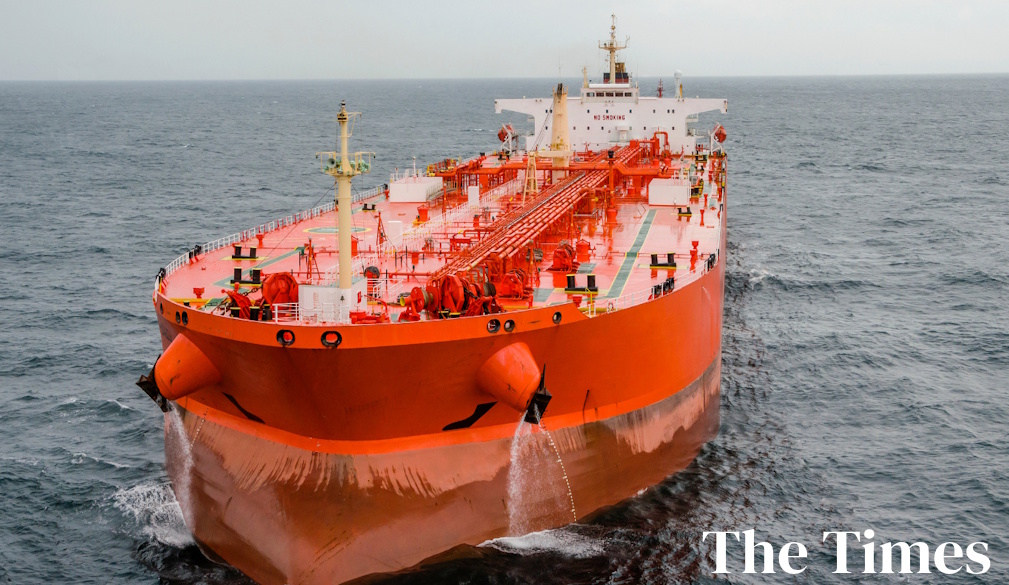
There is a remarkable number that helps explain Australia's continuing fuel-price problem.
US$20 million.
That is approximately what it now costs to send a very large crude carrier through the Strait of Hormuz and back, according to TotalEnergies chief executive Patrick Pouyanné.
Translated into the oil inside the tanker, the extraordinary shipping bill adds approximately US$10 to every barrel.
Yet crude oil is still moving.
The reason reveals something important about the strange petroleum market created by the Iran war.
Oil producers trapped inside the Persian Gulf are reportedly so eager to move crude that some barrels can be purchased for only US$50 to US$60, far below international Brent prices above US$90.
That discount can be large enough to compensate traders for the extraordinary cost and risk of getting a tanker through Hormuz.
But there is a problem.
The same economics do not work nearly as well for petrol, diesel and aviation fuel.
And those are the products Australia actually needs.
That helps explain one of the great contradictions confronting Australian motorists.
Crude oil prices can fall.
Oil can continue moving through Hormuz.
Australia can have adequate fuel supplies.
And the price at the service station can still remain painfully high.
Crude is finding a way through
The international petroleum industry has proved extraordinarily adaptable throughout the Iran conflict.
Hormuz has been severely disrupted, but crude has not stopped moving completely.
Pouyanné says TotalEnergies has continued transporting oil from Gulf producers despite the danger and enormous shipping costs.
The company is a major trader of Iraqi and Qatari crude.
The economics can work because Gulf producers need to sell.
They may accept US$50 or US$60 a barrel for crude that can ultimately compete in a world where Brent remains above US$90.
Pay another US$10 a barrel to transport it through Hormuz and there can still be a commercially attractive transaction.
It is an extraordinary form of wartime arbitrage.
And it is helping prevent crude prices from moving considerably higher.
But Australia doesn't put crude oil into cars
This is where the Australian story begins.
Australia does not need crude oil merely to exist somewhere in the world.
We need:
Petrol;
Diesel;
Aviation fuel.
Those products require refining.
And the international market for refined petroleum is behaving very differently from the crude market.
Pouyanné described the situation as a split market: crude supply is comparatively bearish while finished fuels remain extremely tight.
That distinction matters enormously to Australia.
US$50 a barrel just to transport refined fuel
The economics become extraordinary when finished petroleum products are considered.
Crude can be transported economically in enormous very large crude carriers.
Refined petroleum products commonly travel in smaller vessels.
That means the enormous cost and risk associated with Hormuz has to be divided among fewer barrels.
According to Pouyanné, the resulting transportation cost for refined petroleum can approach US$50 a barrel.
Consider the significance.
The additional transport cost on crude might be around US$10 a barrel.
For refined fuel, it can be several times greater.
That is one reason the world can simultaneously have:
adequate crude oil and expensive diesel.
And Australia is living with the consequences.
Australian wholesale prices are still rising
The numbers at home demonstrate the disconnect.
Australian Institute of Petroleum terminal-gate data show wholesale petrol prices continued rising through last week and into Monday.
Sydney unleaded rose from 194.3 cents a litre on August 18 to 197.4 cents on August 24.
Brisbane increased from 194.7 to 197.8 cents.
Melbourne rose from 192.6 to 196.1 cents.
Diesel was considerably more expensive.
Sydney diesel increased from 239.1 cents a litre to 244.9 cents over the same period.
Melbourne moved from 238.7 cents to 245.0 cents.
So while international attention concentrates on movements in Brent crude, the Australian wholesale market is telling motorists something different.
The cost of the fuel we actually consume remains under substantial pressure.
Australians are seeing it at the bowser
National petrol prices have also been moving higher.
FuelRadar reported the national average for U91 at 207.9 cents a litre on August 25, up from 200.8 cents on August 18.
Reported prices ranged from approximately 200.9 cents to 226.9 cents a litre across Australia.
Retail fuel cycles mean individual cities and service stations can behave very differently, so those numbers should not be interpreted as the price every Australian is paying.
But the direction is unmistakable.
The crude market has softened.
Australian petrol has not necessarily followed.
Now we have a better explanation for why.
Diesel is the bigger economic story
Petrol is highly visible because Australians see the price displayed on enormous signs beside the road.
Diesel can be more economically important.
Australia runs on it.
Trucks.
Farms.
Mining equipment.
Construction machinery.
Commercial vehicles.
Generators.
Regional transport.
When diesel costs around $2.40 or $2.50 a litre at wholesale or retail levels, the consequences extend far beyond motorists.
A truck operator pays more.
That truck delivers food.
The supermarket receives a higher freight bill.
Eventually some of the additional cost reaches the consumer.
Fuel inflation does not stay at the service station
Consider how many times an ordinary product moves before an Australian buys it.
Raw materials travel to a manufacturer.
Packaging arrives.
The finished product moves to a warehouse.
It travels to a distribution centre.
Another truck delivers it to a retailer.
Every journey consumes energy.
Higher diesel costs therefore become embedded in the price of goods.
That is why the Iran war can influence Australian inflation without Australia being directly involved in the conflict.
We import the economic consequences.
Regional Australia feels it particularly strongly
Australia's geography magnifies the problem.
A container arriving in Sydney, Melbourne or Brisbane may still have hundreds or thousands of kilometres to travel.
Regional supermarkets require deliveries.
Farms need fertiliser, chemicals, machinery and parts.
Produce needs to reach processors and markets.
Mining operations require enormous quantities of diesel.
Remote communities have fewer transport alternatives.
Distance turns fuel into an unavoidable economic input.
Aviation faces the same problem
Then there is aviation fuel.
Australia is unusually dependent upon aircraft because of our geography.
Tourism depends upon aviation.
Regional communities depend upon it.
Business travel depends upon it.
Air freight depends upon it.
Jet fuel is another refined petroleum product.
The difficulty transporting finished fuel through and around the Gulf therefore has consequences extending well beyond motorists.
Airlines ultimately have to recover persistent fuel increases somehow.
That can eventually mean higher fares or reduced margins.
Australia's fuel security can be good while prices remain bad
This distinction has become central to understanding the Iran crisis.
Australia does not presently appear to be confronting a nationwide physical fuel shortage.
Cargoes continue arriving.
The international market continues supplying us.
That is good news.
But supply security and price security are different things.
Australia is a wealthy economy.
We can compete internationally for scarce petroleum products.
That makes it more likely that Australia obtains the cargo.
It does not make the cargo cheap.
Indeed, Reuters' latest analysis finds Australia has maintained refined-fuel supply relatively well while some poorer Asian economies have suffered much larger reductions in imports.
The market is effectively rationing scarce fuel partly through price.
Australia can pay.
So Australia gets supplied.
Australians then pay.
Asia has a refined-fuel problem
This is the larger development.
Asian imports of light and middle distillates are running around 21 per cent below pre-conflict levels, according to Reuters analysis.
These include the fuels economies actually consume.
Diesel.
Jet fuel.
Petrol.
At the same time, refining margins remain extremely elevated.
That tells us the bottleneck is no longer simply whether sufficient crude oil exists.
The problem is transforming crude into the particular products the world requires and then transporting those products to customers.
Russia has made the problem worse
The Middle East is not the only source of disruption.
Russian refineries have also been damaged by Ukrainian attacks.
Pouyanné estimates refined-product supply has been reduced by about 3 million barrels a day from the Hormuz disruption and potentially another 3 million barrels a day through attacks on Russian refining.
That creates a remarkable global mismatch.
The world can find crude.
It is having much greater difficulty producing and moving enough finished fuel.
Australia therefore needs to watch a different number
For years, Australians have been conditioned to ask:
What is Brent doing?
That remains useful.
But during this crisis it is insufficient.
We should increasingly ask:
What are Asian diesel and petrol prices doing?
What are refining margins doing?
What does it cost to charter a product tanker?
What is the Australian dollar doing?
What are Australian terminal-gate prices doing?
Those numbers may tell us considerably more about what happens at the Australian bowser than a daily movement in Brent.
A cheaper barrel can still produce expensive diesel
That is the paradox at the heart of today's petroleum market.
Imagine Gulf crude being sold for US$55.
At first glance that sounds extraordinarily cheap.
But the crude then has to be transported through a war zone.
Perhaps another US$10 a barrel disappears into shipping.
Then it has to be refined.
Refining capacity is scarce and margins are high.
Then the finished fuel has to be transported again.
Product tankers are smaller and expensive.
Insurance remains elevated.
Then the fuel reaches Australia.
It must be stored and distributed.
Currency conversion matters.
Taxes apply.
By the time the finished litre reaches an Australian vehicle, the original crude price tells only part of the story.
There is another warning in the US$20 million figure
The figure also tells us something about the international shipping industry.
A commercial operator is prepared to charge approximately US$20 million because taking a tanker through Hormuz carries extraordinary risk.
The vessel itself can be worth an enormous amount of money.
So can its cargo.
The crew must be protected.
Insurance must be obtained.
And attacks continue.
Another tanker was disabled off Oman on August 25 after being struck by an unidentified projectile. The crew was reported safe, but the incident provides another reminder that the risk being priced into Gulf shipping is not theoretical.
Attribution for individual attacks should not be assumed without evidence.
The economic consequence of the danger, however, is visible.
The market is adapting rather than normalising
This distinction is important.
A tanker getting through Hormuz does not mean Hormuz is normal.
It means somebody found a price at which taking the risk became worthwhile.
That is very different.
The petroleum system has adapted magnificently.
But adaptation costs money.
Alternative routes cost money.
War-risk insurance costs money.
Longer tanker voyages cost money.
Ship-to-ship transfers cost money.
Strategic reserves cost money.
Extra refining capacity costs money.
And ultimately consumers finance the system.
Could Australian fuel prices eventually fall?
Certainly.
If the conflict eases, Hormuz normalises, damaged refining capacity returns and tanker costs decline, refined-product prices should eventually respond.
More crude supply would help.
More refinery output would help more.
Restored Russian refinery production would also increase global product availability.
A stronger Australian dollar could provide additional relief locally.
But there may be a considerable lag.
The international petroleum system has spent months rearranging itself around a war.
It cannot rearrange itself back overnight.
The Australian Government faces a different question
The crisis also strengthens the case for examining Australia's long-term fuel resilience.
The question is not whether Australia can become completely independent of international petroleum markets.
That would be unrealistic in the short term and potentially extraordinarily expensive.
The better question is:
How much resilience should Australia be prepared to pay for?
Strategic stocks.
Domestic refining capability.
Multiple suppliers.
Adequate storage.
Alternative fuels.
Electrification where practical.
Every additional layer of resilience has a cost.
The Iran war has demonstrated that dependence has a cost too.
Australia's remaining refineries look different today
The extraordinary profitability of refining during the crisis illustrates the point.
Ampol recently reported underlying first-half net profit after tax of about A$857 million, with its Lytton refinery margin more than tripling to US$28.26 a barrel amid exceptional international refining conditions.
That does not mean Australia can refine its way out of every international crisis.
Domestic refineries still require crude and other inputs.
But the strategic value of retaining refining capability becomes much easier to see when the international market for finished fuel is severely constrained.
The Times View
Sometimes one number explains an enormously complicated story.
Today that number is:
US$20 million.
That is approximately what TotalEnergies says it costs to move a very large crude-oil tanker through the Strait of Hormuz and back.
Around US$10 for every barrel aboard.
Remarkably, the economics can still work.
Gulf producers desperate to move crude are discounting their oil sufficiently to compensate traders for the enormous transportation bill.
That is helping crude reach international markets.
It is helping prevent Brent from exploding higher.
It demonstrates the extraordinary adaptability of international commerce.
But Australia does not consume crude.
We consume petrol, diesel and aviation fuel.
And transporting those refined products can cost dramatically more per barrel because they generally travel aboard smaller vessels. Pouyanné puts that cost as high as approximately US$50 a barrel in present conditions.
That helps explain Australia's apparent contradiction.
Oil is getting through.
Brent has fallen from recent highs.
Australia remains adequately supplied.
Yet wholesale petrol and diesel remain expensive, and national petrol prices have recently moved higher.
There is no contradiction.
The crude-oil market and the finished-fuel market have separated.
For Australians, the second one matters most.
The world has found a way to move oil through the Iran war.
Now it has to find a cheaper way to turn that oil into diesel, petrol and jet fuel—and get those products to Australia.
Until it does, a falling Brent price provides only part of the good news we need.
And the US$20 million tanker voyage through Hormuz tells us just how expensive keeping the global fuel system functioning has become.