Rich kids and poor kids face different rules when it comes to bringing personal items to school
- Written by: Casey Stocksill, Assistant Professor of Sociology, University of Denver
The Research Brief[1] is a short take about interesting academic work.
The big idea
Poor preschoolers get fewer chances than wealthier children to bring their prized personal possessions to school. That’s what I found in my two-year comparative ethnographic study[2] of two preschools in Madison, Wisconsin. One of the preschools primarily serves middle-class white children and the other primarily serves poor children of color.
In the preschool that served mostly poor kids, the teachers made a rule that kids could not bring toys, games, stuffed animals or other personal items to school. The stakes felt too high to these teachers. Some students’ families were recently evicted and had few toys. Other students’ families did buy them toys but at great financial cost, and families didn’t want these items broken. Teachers also worried about toys being stolen. The items that I observed children try to bring in ranged from expensive action figures to random board game pieces to sparkly ponytail holders.
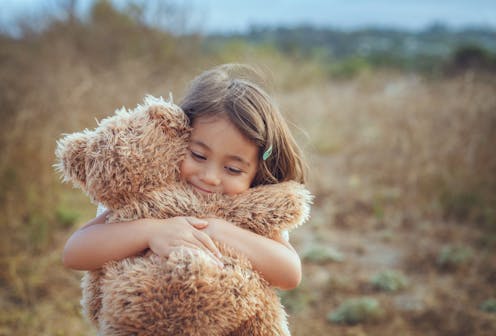
I then observed an affluent school and found that teachers actually encouraged children to bring their personal items to school. The teachers hosted a weekly show and tell. Kids could bring toys, objects from nature or anything else to show and tell. Teachers also encouraged kids to bring books to read with their peers and stuffed animals to cuddle at nap time any day of the week. Because these teachers knew their students’ families were financially well-off, they made classroom rules that allowed children to celebrate their personal property.
Why it matters
This gulf in how kids experience classroom rules about property matters for three reasons.
First, I observed that when children brought personal stuff to school, they used the items to connect with friends or just to hold and enjoy by themselves throughout the day. This was true whether they were encouraged to bring the items in or they successfully sneaked them in.
Bringing special personal objects to school provided the kids with a form of what sociologists call substantive dignity[3] – the sense that one belongs in a wider community but is still respected as a unique individual. My research suggests that preschool segregation[4] creates pressures for teachers of poor children to forbid personal property at school, closing off a pathway to substantive dignity for these children.
Second, the disparity in children’s degree of control over property connects to other researchers’ findings that affluent children have more control over their experience within schools. From school uniform rules[5] to how much of their teacher’s help[6] they get when working on assignments, affluent children grow up expecting more special attention from authority figures. They are more comfortable asking for accommodations[7], and this matters in college and as they transition to adulthood[8]. In contrast, poor and working-class children experience more encouragement to defer to the rules of an institution[9]. My research suggests that affluent children’s comfortable access to personal property in preschool is an additional mechanism by which they come to feel entitled to individualized attention in workplaces and other institutions.
Third, one consequence of the no-personal-items rule at the poor preschool was that a handful of students – all boys of color – sneaked toys in anyway. Sometimes these children were caught and were disciplined by having their items taken and being sent to the quiet area. As a result, property rules contributed to differences in discipline on race and gender lines. This aligns with other scholars’ findings that boys of color experience more punishment[10] as early as preschool, and this pattern continues through K-12 schooling[11].
What still isn’t known
My research observed broad, social experiences that children had over time. However, social scientists will need to do more research to determine how teachers’ rules about controlling children’s personal property use differ across a wider range of preschools. Another question is how teachers manage kids’ access to personal items in mixed-income preschools.
References
- ^ Research Brief (theconversation.com)
- ^ two-year comparative ethnographic study (academic.oup.com)
- ^ substantive dignity (doi.org)
- ^ preschool segregation (www.urban.org)
- ^ school uniform rules (nces.ed.gov)
- ^ teacher’s help (doi.org)
- ^ more comfortable asking for accommodations (doi.org)
- ^ transition to adulthood (www.doi.org)
- ^ defer to the rules of an institution (doi.org)
- ^ experience more punishment (doi.org)
- ^ K-12 schooling (safesupportivelearning.ed.gov)