Biden taps the Strategic Petroleum Reserve – What is it? Where did it come from? And does the US still need it?
- Written by: Scott L. Montgomery, Lecturer, Jackson School of International Studies, University of Washington
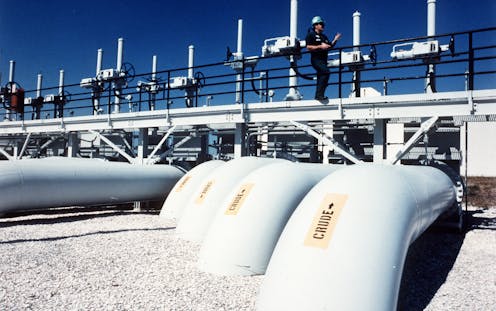
President Joe Biden ordered[1] a release of oil from its Strategic Petroleum Reserve on Nov. 23, 2021, as a part of a coordinated effort with five other countries to tamp down rising fuel prices. The U.S. plans to tap 50 million barrels of crude oil[2] in the coming months, while the other nations – the U.K., India, Japan, Korea and China – are said to be releasing about 11 million barrels in total.
But what is the Strategic Petroleum Reserve[3], why was it created and when has it been used? And does it still serve a purpose, given that the U.S. exports more oil and other petroleum products than it imports[4]?
As an energy researcher[5], I believe considering the reserve’s history can help answer these questions.
Origins of the reserve
Congress created the Strategic Petroleum Reserve as part of the Energy Policy and Conservation Act[6] of 1975 in response to a global oil crisis.
Arab oil-exporting states led by Saudi Arabia had cut supply to the world market[7] because of Western support for Israel in the 1973 Yom Kippur War. Oil prices quadrupled[8], resulting in major economic damage to the U.S. and other countries. This also shook the average American, who had grown used to cheap oil.
The oil crisis caused the U.S., Japan and 15 other advanced countries to form the International Energy Agency[9] in 1974 to recommend policies that would forestall such events in the future. One of the agency’s key ideas was to create emergency petroleum reserves[10] that could be drawn on in case of a severe supply disruption.
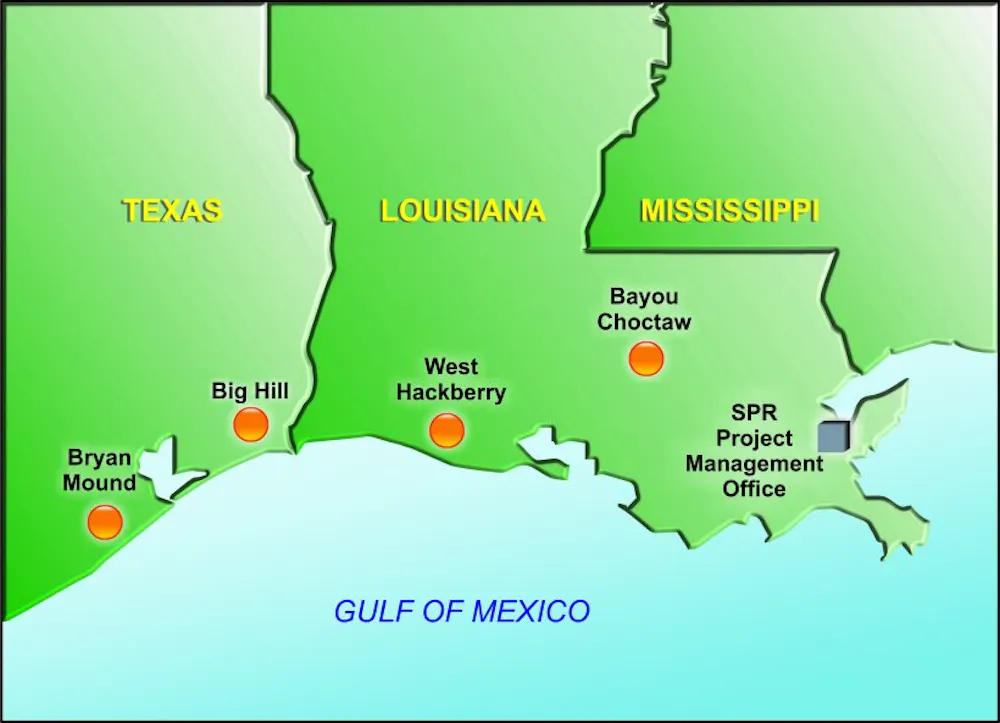
The Energy Policy and Conservation Act originally stipulated the reserve should hold up to 1 billion barrels of crude and refined petroleum products. Though it has never reached that size, the U.S. reserve is the largest in the world, with a maximum volume of 713.5 million barrels. It currently holds a little over 600 million barrels[12] of crude oil.
Oil in the reserve is stored underground[13] in a series of large underground salt domes in four locations along the Gulf Coast of Texas and Louisiana and is linked to major supply pipelines in the region.
Salt domes, formed when a mass of salt is forced upward, are a good choice for storage[14] since salt is impermeable and has low solubility in crude oil. Most of the storage sites were acquired by the federal government in 1977 and became fully operational[15] in the 1980s.
History of drawdowns
In the 1975 act, Congress specified that the reserve was intended to prevent “severe supply interruptions” – that is, actual oil shortages.
Over time, as the oil market has changed, Congress expanded the list of reasons for which the SPR could be tapped, such as domestic supply interruptions due to extreme weather.
Before the latest drawdown, more than 230 million barrels of crude oil had been released since the reserve’s creation. The amount of the November 2021 release, 50 million barrels, is the largest so far.
There have only been three emergency releases[16] in the reserve’s history. The first was in 1991 after Iraq invaded Kuwait the year before, which resulted in a sharp drop[17] in oil supply to the world market. The U.S. released 33.75 million barrels.
The second release, of 30 million barrels, came in 2005 after Hurricanes Rita and Katrina knocked out Gulf of Mexico production[18], which then comprised about 25% of U.S. domestic supply.
The third was a coordinated release by the International Energy Agency in 2011 as a result of supply disruptions from several oil-producing countries[19] including Libya, then facing civil unrest during the Arab Spring. In all, the IEA coordinated a release of 60 million barrels of crude, half of which came from the U.S.
In addition, there have been 11 planned sales of oil from the reserve[20], mainly to generate federal revenue. One of these – in particular the 1996-1997 sale to reduce the federal budget deficit – seemed to serve political ends[21] rather than supply-related ones.
Biden’s decision to tap the reserve was similarly seen as political[22] by Republicans because there’s no emergency shortage of supply. The White House said[23] part of the release is an acceleration of planned sales approved by Congress, while the rest is an exchange that will return to the reserve over time.
Is the reserve still necessary?
Because the U.S. is today a net petroleum exporter[25], the Strategic Petroleum Reserve has entered a new era. Some of its original rationale and function – to be used in emergencies to ensure the U.S. has a steady supply of oil – are gone.
And efforts to reduce global carbon emissions and the use of oil – for example, with more electric cars[26] and other vehicles on the road – will likely only reduce the need for such a reserve.
Indeed, Congress has recognized the reality that oil exports have been declining. It mandated annual sales from the reserve[27] beginning in 2017 and extending through 2028 – for a total of 271 million barrels.
But as long as the reserve is available, Biden’s use of it primarily in hopes of reducing gas prices – which will take time to have any effect, if any[28] – suggests Americans will see many more similar releases in the years to come.
[Get the best of The Conversation, every weekend. Sign up for our weekly newsletter[29].]
References
- ^ President Joe Biden ordered (www.whitehouse.gov)
- ^ U.S. plans to tap 50 million barrels of crude oil (www.nytimes.com)
- ^ Strategic Petroleum Reserve (www.energy.gov)
- ^ U.S. exports more oil and other petroleum products than it imports (www.eia.gov)
- ^ energy researcher (scholar.google.com)
- ^ Energy Policy and Conservation Act (www.govtrack.us)
- ^ cut supply to the world market (history.state.gov)
- ^ prices quadrupled (www.federalreservehistory.org)
- ^ International Energy Agency (www.iea.org)
- ^ emergency petroleum reserves (www.iea.org)
- ^ Department of Energy (www.energy.gov)
- ^ currently holds a little over 600 million barrels (www.spr.doe.gov)
- ^ stored underground (www.energy.gov)
- ^ are a good choice for storage (cvmidstream.com)
- ^ became fully operational (www.energy.gov)
- ^ There have only been three emergency releases (www.energy.gov)
- ^ resulted in a sharp drop (www.econlib.org)
- ^ Hurricanes Rita and Katrina knocked out Gulf of Mexico production (www.oe.netl.doe.gov)
- ^ supply disruptions from several oil-producing countries (www.bakerinstitute.org)
- ^ 11 planned sales of oil from the reserve (www.energy.gov)
- ^ seemed to serve political ends (www.nytimes.com)
- ^ was similarly seen as political (www.politico.com)
- ^ White House said (www.whitehouse.gov)
- ^ AP Photo/Noah Berger (newsroom.ap.org)
- ^ is today a net petroleum exporter (www.eia.gov)
- ^ more electric cars (theicct.org)
- ^ annual sales from the reserve (www.energy.gov)
- ^ which will take time to have any effect, if any (www.cnn.com)
- ^ Sign up for our weekly newsletter (memberservices.theconversation.com)