Don't care about the Build Back Better Act? Hearing people's personal stories might change that
- Written by: Angela Bradbery, Frank Karel Endowed Chair in Public Interest Communications, University of Florida
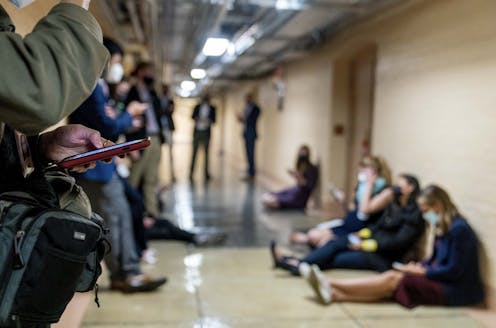
When U.S. Sen. Joe Manchin, D-W.Va., said[1] that he wouldn’t support President Joe Biden’s signature Build Back Better Act, he set off a wave of breaking news alerts[2].
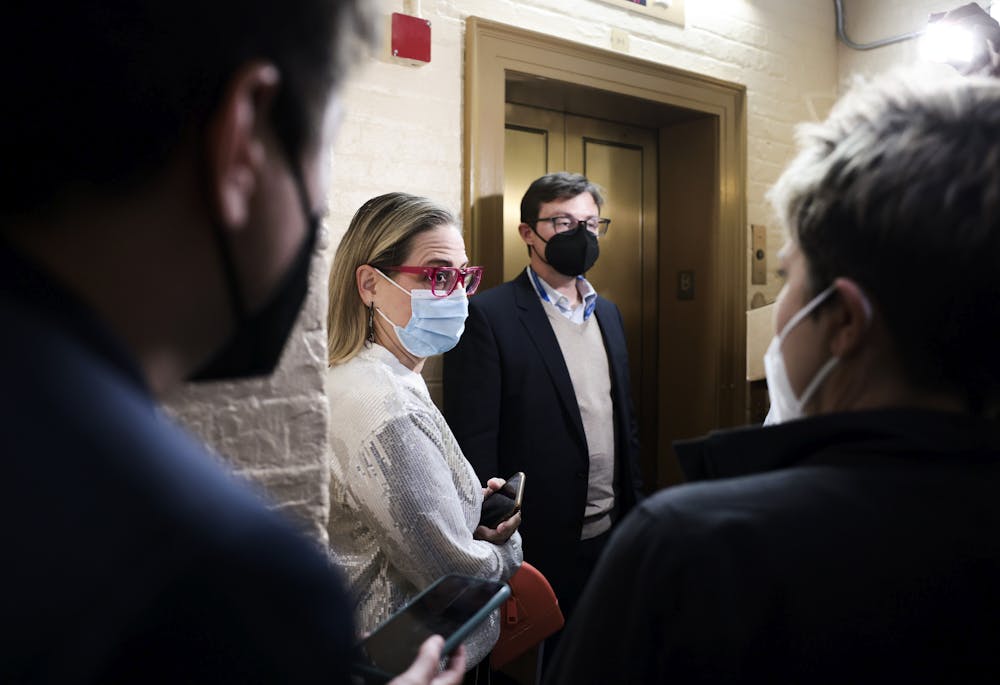
It was fitting. For months, media coverage[3] has breathlessly focused on the behind-the-scenes wrangling and hour-by-hour negotiations around the legislation. How much has been slashed from the bill today? What does it mean for the future of the Democratic and Republican parties?
The roughly US$2 trillion proposal[4] is designed to bolster what is widely seen as a frayed social safety net. But most Americans don’t think it will benefit people like them, a recent NPR/Marist poll[5] shows. And a quarter of Americans can’t even say whether they like or dislike the legislation.
It’s no wonder the nation is so indifferent about the sweeping bill, which would change[6] the country’s tax system, increase social services and ramp up efforts to combat climate change.
Largely omitted from news coverage – and consequently, from the national conversation – are the voices and stories of individuals who would be affected by the legislation.
Focusing outside D.C.
What if daily media coverage instead featured those voices? What if reporters and talk show hosts ditched the pundits and issue experts and instead explored the problems that led to the proposed policies – through the eyes and voices of those living with those problems?
That means we would hear from parents who need help paying for child care[8] and elderly people who can’t afford medicines[9] or hearing aids[10].
We would hear from people who can’t afford health care[11], people living in their cars or on the streets[12], and yes, those who earn more than $400,000 a year. Multimillionaires, billionaires and corporations would pay more under the new tax plan.
What if news stories shined a spotlight on these voices, rather than just throwing in an occasional anecdote? Would people tune in? Would they engage in conversations or take action around the legislation?
Research shows that they likely would. And that would be good for democracy.
Real stories can spark real engagement
It’s well documented that horse-race journalism[13] – which treats politics as a sport, focusing on who’s ahead or behind, rather than the substance of issues – is associated with an uninformed electorate and elevates public cynicism[14] about politics. Such coverage doesn’t help people understand what proposals could mean to them.
Policy overviews filled with large numbers don’t engage people, either. When discussing the Build Back Better Act, proponents understandably focus on the scope of the problem: 2.2 million[15] low-income Americans couldn’t get health insurance subsidies in 2019 but also weren’t eligible for Medicaid.
Just 23%[16] of civilian workers can take paid family leave, and more than 800,000 seniors and disabled[17] people seeking home health care are on state Medicaid waiting lists.
But science tells us that discussing large-scale suffering makes people turn away. The phenomenon is called psychic numbing[18]. It means the problem is so big that people disengage, because they feel powerless to help. And individuals find it hard to understand the scale of large numbers[19].
The way to combat this? Journalists can tell stories about real people[20]. Personal stories quickly bring big issues into focus and make them relatable. They make people care.
In 2015, for example, the Syrian refugee crisis had been raging for four years. But it took a picture of 3-year-old Alan Kurdi[21], whose corpse washed up on a Turkish beach after his family fled Syria by boat, to generate international horror.
After the photo of the young Syrian boy went viral, donations to refugee organizations skyrocketed[22]. The story and photo engaged people who had not yet paid attention to the crisis.
Research backs up the notion that including real people in news stories can spark reader engagement.
A 2012 study[23] compared people’s reactions after they read two versions of a news story detailing how the lack of health care affected one of three groups: immigrants, prisoners or the elderly.
[Understand what’s going on in Washington. Sign up for The Conversation’s Politics Weekly[24].]
One version presented the issue using quotes from experts. The other version included a story about a specific person’s experiences dealing with that health care issue.
The news pieces that featured people’s stories elicited emotions in readers that the policy pieces did not. That led the participants to be more willing to help the people they read about.
Including real people in news stories doesn’t mean that engaged readers will only feel sympathy for the characters profiled. Engagement could produce support or opposition to proposed policies.
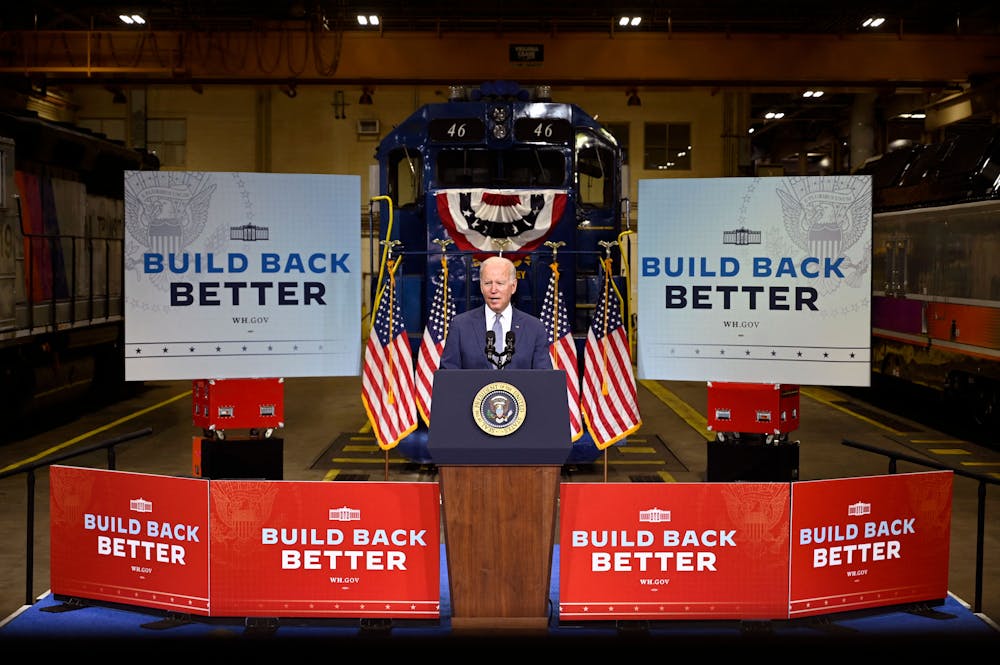 The Build Back Better bill has been a top priority of the Biden administration. But most Americans have not closely followed the legislation.
Photo by Andrew Caballero-Reynolds/AFP via Getty Images[25]
The Build Back Better bill has been a top priority of the Biden administration. But most Americans have not closely followed the legislation.
Photo by Andrew Caballero-Reynolds/AFP via Getty Images[25]
Looking beyond the political play-by-play
The Build Back Better Act – which the U.S. House of Representatives passed[26] in November – comes as civic engagement in the U.S. is low[27].
Considering the scope and potential impact of this bill, it’s a disservice to the country for news coverage to focus on the play-by-play in Washington, D.C.
If the press eases up on the machinations occurring in the marble halls of Washington, D.C., and instead focuses on real people, the U.S. could perhaps build back something else: civic engagement, a necessary part of our democratic system.
References
- ^ said (www.cnn.com)
- ^ news alerts (www.sfgate.com)
- ^ media coverage (www.cnn.com)
- ^ US$2 trillion proposal (apnews.com)
- ^ NPR/Marist poll (maristpoll.marist.edu)
- ^ sweeping bill, which would change (www.vox.com)
- ^ Anna Moneymaker/Getty Images (www.gettyimages.com)
- ^ child care (www.ffyf.org)
- ^ medicines (www.marketwatch.com)
- ^ hearing aids (www.kff.org)
- ^ health care (www.cbpp.org)
- ^ on the streets (time.com)
- ^ horse-race journalism (methods.sagepub.com)
- ^ public cynicism (journalistsresource.org)
- ^ 2.2 million (www.cbpp.org)
- ^ Just 23% (time.com)
- ^ more than 800,000 seniors and disabled (time.com)
- ^ psychic numbing (www.arithmeticofcompassion.org)
- ^ hard to understand the scale of large numbers (theconversation.com)
- ^ stories about real people (www.youtube.com)
- ^ Alan Kurdi (time.com)
- ^ skyrocketed (www.kgw.com)
- ^ A 2012 study (journals.sagepub.com)
- ^ Sign up for The Conversation’s Politics Weekly (memberservices.theconversation.com)
- ^ Photo by Andrew Caballero-Reynolds/AFP via Getty Images (media.gettyimages.com)
- ^ passed (time.com)
- ^ is low (www.prri.org)