Record 10 women in Albanese cabinet, and surprise move for Plibersek to environment
- Written by: Michelle Grattan, Professorial Fellow, University of Canberra
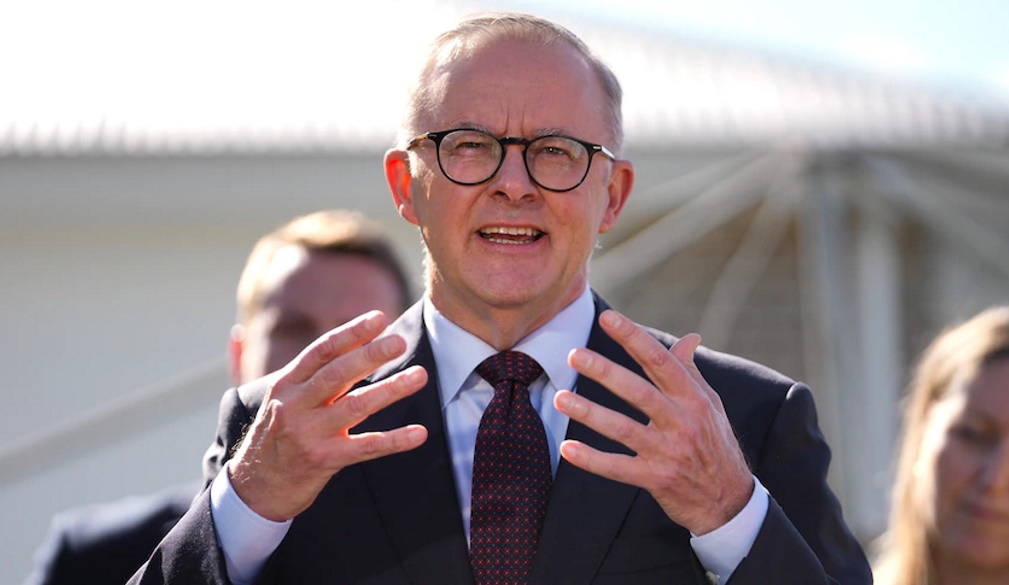
Anthony Albanese has switched Tanya Plibersek from education to environment and promoted Clare O'Neil into the plum home affairs ministry in a 23-member cabinet that contains a record 10 women.
There are 13 women in the ministry overall, and 19 across the total frontbench (including assistant ministers), which has seen a more extensive shakeup of Labor’s team than Albanese flagged before the election.
Announcing his line-up on Tuesday night, Albanese declared Labor would hold the NSW regional seat of Gilmore – which the Liberals had hoped to win with former NSW minister Andrew Constance – giving his government 77 seats in the House of Representatives. This is one more than the 76 required for a majority.
“What this means is that the Coalition failed to take a single seat from the Australian Labor Party at the election,” Albanese said.
Earlier, at the first meeting of the new caucus, Albanese set his troops’ sights on a second term with a bigger majority.
In the campaign Albanese suggested most of his shadow ministers would have the same portfolio in government.
Asked why the changes are more substantial he pointed to the election loss of two frontbenchers, Kristina Keneally, who was shadow for home affairs, and Terri Butler, the shadow environment minister.
But he has taken the opportunity to go further.
Plibersek’s move to environment and water is a surprise, and there will be some disappointment in the education sector, where she was respected by stakeholders.
She has lost responsibility for women, which has recently increased in importance and prominence as a policy area. This goes to the finance minister, Katy Gallagher, adding to the heavy load she will carry as a key minister in budget preparation.
The fact Albanese did not have Plibersek, who is popular with the public, campaigning with him much was widely commented upon in the run-up to the election.
Labor sources said Plibersek had not wanted or asked to be moved. But she said on Facebook on Tuesday night she was “delighted” to be appointed a cabinet minister with responsibility for the environment and water and “I look forward to the challenge”.
Jason Clare, who received extensive praise for his performance as a campaign spokesman, has been given education.
As anticipated, Deputy Prime Minister Richard Marles takes defence. He was defence spokesman for a substantial time in opposition but moved to national reconstruction to boost Labor’s pre-election firepower.
Brendan O'Connor, shadow defence minister before the election, becomes minister for skills and training.
Read more: Labor likely to get a friendly Senate and secures House of Representatives majority[1]
A number of senior ministers continue in their opposition areas. Chris Bowen is minister for climate change and energy. Mark Butler has health and aged care. Tony Burke adds employment to workplace relations and the arts, which he held in opposition.
Mark Dreyfus will be attorney-general, a position he held in the last Labor government, and now has the urgent task of preparing the blueprint for the national integrity commission Labor has promised to legislate by year’s end.
Bill Shorten also has continuity, becoming minister for the NDIS as well as minister for government services. Catherine King remains in infrastructure and Michelle Rowland in communications.
Don Farrell, who had to make way for Keneally’s ambition to be Labor’s deputy senate leader, has regained that position and becomes trade minister. He retains special minister of state.
Amanda Rishworth takes on social services. Julie Collins, who struggled in agriculture in opposition, will have housing, homelessness and small business.
Linda Burney is minister for Indigenous Australians, with Patrick Dodson, who will not be on the frontbench, appointed special envoy for reconciliation and the implementation of the Uluru Statement from the Heart.
Albanese stressed this was a priority for his government, particularly its plan for a constitutional referendum to enshrine a Voice to Parliament.
O'Neil and Murray Watt fill the cabinet vacancies left by Keneally and Butler.
O'Neil, from Victoria, has been shadow for senior Australia’s and aged care services in the outer shadow ministry in opposition. Her promotion to the sprawling home affairs portfolio will see her in the inner circle of national security ministers.
Watt, who was high profile during the floods, becomes minister for agriculture, fisheries and forestry. He continues in emergency management, after being opposition spokesman.
Read more: Albanese appoints former University of Melbourne vice-chancellor Glyn Davis to head PM&C[2]
Three women join the outer ministry.
Kristy McBain, who won the vital Eden-Monaro byelection during the last term, has regional development, local government and territories. Anne Aly, from Western Australia, becomes minister for early childhood education and minister for youth. Anika Wells, from Queensland, becomes minister for aged care and minister for sport.
Under Labor’s system the factions choose who is in the ministry, which is ratified by caucus, and the prime minister allocates the portfolios.
Albanese said the new parliament would sit in the last fortnight in July.
Several ministers, including Foreign Minister Penny Wong, Treasurer Jim Chalmers, Gallagher and Marles were sworn in last week. The full ministry will be sworn in Wednesday morning.
Albanese told the caucus meeting he wanted to “grow” the numbers in the government at the next election.
“If we can keep our discipline, implement the program which is there, there is no reason why we can’t continue to be even more successful,” he said.
He told his news conference the government was determined “to not waste a single day in office”.
On the promotion of Kristy McBain ahead of people who had been in caucus longer, Albanese recalled he had personally approached her to run for the by-election. “If we hadn’t have won that seat of Eden-Monaro, politics might have been a bit different,” he said.
Asked about the move of Plibersek he highlighted the Murray Darling Basis plan. “It’s very important that that actually get delivered. Tanya is someone who can get things done. She’s an experienced former minister as well as a former shadow minister.”
Noting that many of his ministers had served in the previous Labor government, Albanese said his was “the most experienced incoming Labor government in our history since federation”.
References
- ^ Labor likely to get a friendly Senate and secures House of Representatives majority (theconversation.com)
- ^ Albanese appoints former University of Melbourne vice-chancellor Glyn Davis to head PM&C (theconversation.com)