Where do all the mosquitoes go in the winter?
- Written by: Cameron Webb, Clinical Associate Professor and Principal Hospital Scientist, University of Sydney
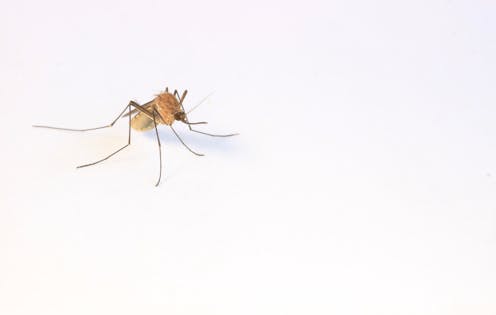
Summer evenings by the pool, lake or BBQ mean mosquitoes. But what about during winter when we’re mostly indoors? As the weather cools, these bloodsucking pests are rarely seen.
But where do they go?
Warm, wet conditions suit mosquitoes
Mosquitoes have complex life cycles that rely on water brought to wetlands, flood plains, and water-holding containers[1] by seasonal rainfall. Depending on whether we’re experiencing a summer under the influence of El Niño[2] or La Niña[3], mosquito populations will change in different ways.
During warmer months, their life cycle lasts about a month. Eggs laid around water hatch and the immature mosquitoes go through four developmental stages. Larvae then change to pupae, from which an adult mosquito emerges, sits briefly on the water surface, and then flies off to buzz and bite and continue the cycle.
Read more: The worst year for mosquitoes ever? Here's how we find out[4]
Water is crucial but temperature is really important too. Unlike warm-blooded animals, mosquitoes can’t control their own body temperatures. The warmer it is, the more active mosquitoes will be. There’s usually more of them about too.
But once cold weather arrives, their activity slows. They fly less, they don’t bite as often, they reproduce less, and their life cycle takes longer to complete.
Temperature also plays a role in determining the ability of mosquitoes to spread viruses[5].
Cold weather isn’t great for mosquitoes but millions of years of evolution[6] have given them a few tricks to survive[7].
Mosquitoes don’t disappear completely
On a sunny afternoon in winter, you may notice the occasional mosquito buzzing about in your backyard. Not as many as in summer but they’re still around.
Some mosquitoes do disappear. For example, the activity of the pest mosquito Culex annulirostris, thought to play an important role in the spread of Japanese encephalitis virus[10] in Australia, dramatically declines when temperatures start dropping below 17.5℃[11].
Studies in Sydney[12] have shown some mosquitoes, such as Culex annulirostris, disappear. Others, such as Culex quinquefasciatus and Culex molestus, remain active throughout the winter. You just may not notice them (unless they enter your home to buzz about your ears).
Mosquitoes can disappear into diapause
We’re familiar with the idea of mammals hibernating through winter but mosquitoes, like many other insects, can enter a phase of inactivity called diapause[13].
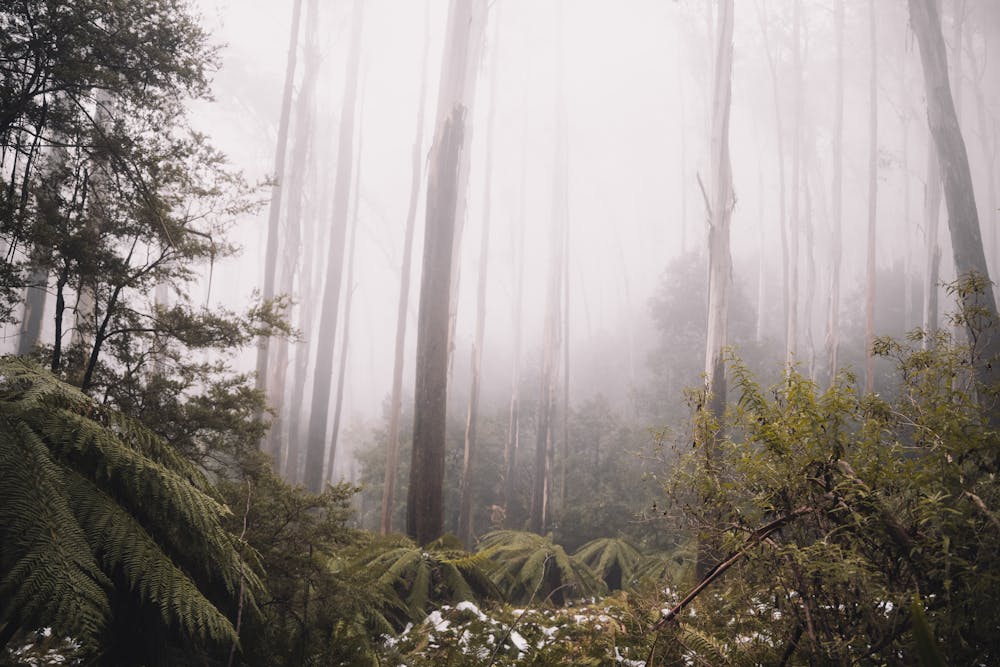
Once cold weather arrives, adult mosquitoes find hiding places such as tree hollows and animal burrows, within the cracks and crevices of bushland environments, or in garages, basements or other structures around our homes, suburbs and cities. These mosquitoes may only live a few weeks during summer but going into diapause allows them to survive many months through winter.
Mosquitoes can also be found in frozen bodies of water, whether it is a bucket of water in your backyard or a near freezing wetland. For example, there is a group of mosquitoes that belong to the genus Coquillettidia whose larvae attach[14] to the submerged parts of aquatic plants and can survive the cold winter temperatures. Their development dramatically slows and they’ll stay in the water until spring arrives.
Read more: How can the bite of a backyard mozzie in Australia make you sick?[17]
All their eggs in one winter basket
Some mosquitoes make it through the winter thanks to their eggs. Mosquito eggs can be incredibly resilient. They survive being dried out in hot and salty coastal wetlands during summer but also frozen in snow-covered creeks in winter.
In coastal regions of Australia, eggs of the saltmarsh mosquito (Aedes vigilax), sit perfectly safely on soil. Once the weather warms and tides bring in water to the wetlands, these eggs will be ready to hatch.
There is also a special mosquito in Australia known as the “snow melt mosquito” (Aedes nivalis) whose eggs survive under snow[18] and hatch once that snow melts and fills ponds, creeks and wetlands throughout alpine regions.
Does it matter where mosquitoes go in the winter?
It also isn’t just the mosquitoes that survive the cold months. Viruses, such as Japanese encephalitis virus[19] or Ross River virus[20], can survive from summer to summer[21] in mosquito eggs, immature stages, or diapausing adults.
Knowing the seasonal spread of mosquitoes helps health authorities design surveillance and control programs. It may help understand how invasive mosquitoes survive[22] conditions in Australia outside their native ranges by hiding out from the cold[23], such as in rainwater tanks.
Even mosquitoes typically found in tropical locations can even adapt to cooler climates[24].
This knowledge may even expose the chilly chink in mosquito’s armour that we can use to better control mosquito populations and reduce the risks of disease outbreaks.
References
- ^ wetlands, flood plains, and water-holding containers (theconversation.com)
- ^ El Niño (theconversation.com)
- ^ La Niña (theconversation.com)
- ^ The worst year for mosquitoes ever? Here's how we find out (theconversation.com)
- ^ spread viruses (www.frontiersin.org)
- ^ millions of years of evolution (www.annualreviews.org)
- ^ few tricks to survive (link.springer.com)
- ^ Tom Keldenich/Unsplash (unsplash.com)
- ^ CC BY (creativecommons.org)
- ^ spread of Japanese encephalitis virus (theconversation.com)
- ^ below 17.5℃ (onlinelibrary.wiley.com)
- ^ Studies in Sydney (onlinelibrary.wiley.com)
- ^ diapause (onlinelibrary.wiley.com)
- ^ larvae attach (onlinelibrary.wiley.com)
- ^ Unsplash/Pat Whelan (images.unsplash.com)
- ^ CC BY (creativecommons.org)
- ^ How can the bite of a backyard mozzie in Australia make you sick? (theconversation.com)
- ^ eggs survive under snow (onlinelibrary.wiley.com)
- ^ Japanese encephalitis virus (theconversation.com)
- ^ Ross River virus (theconversation.com)
- ^ summer to summer (www.ncbi.nlm.nih.gov)
- ^ invasive mosquitoes survive (entomologytoday.org)
- ^ hiding out from the cold (journals.plos.org)
- ^ adapt to cooler climates (besjournals.onlinelibrary.wiley.com)
Read more https://theconversation.com/where-do-all-the-mosquitoes-go-in-the-winter-185021