Taking the pill may change your behaviour – but exactly how is still uncertain
- Written by: Lindsie Arthur, PhD Candidate, Melbourne School of Psychological Sciences, The University of Melbourne
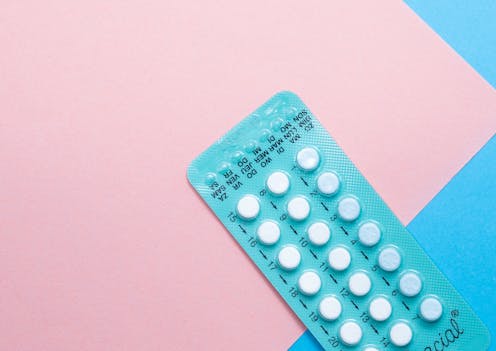
The first hormonal contraceptive (the “pill”) was approved by the US Food and Drug Administration in 1960. Hormonal contraceptives have since become one of the most prescribed drugs in the world, used daily by more than 100 million people worldwide[1].
These drugs prevent pregnancy by delivering synthetic hormones into the bloodstream. Synthetic hormones stop the body’s own hormones from stimulating ovulation, so no eggs are released, no fertilisation can occur, and pregnancy is prevented.
Research has shown naturally occurring hormones have a strong influence on behaviour[2] in humans and other animals. But less is known about the behavioural effects of synthetic hormones – like those in the pill.
Some of the hormones affected by the pill are linked to competitive behaviour. We wanted to find out more about how hormonal contraceptives change this behaviour, so we reviewed[3] all the research we could find about hormonal contraceptives and competitive behaviour.
Hormones and competition
Competition is part of life. We compete for a variety of resources, such as money, food, mates and allies, to fulfil our needs and improve our chances of survival and flourishing.
These resources may also be intangible things, such as social status, that give us access to more direct goods. A high-status individual may have better opportunities for education and jobs, for example.
Read more: There's convincing evidence the pill can cause depression, and some types are worse than others[4]
Hormonal contraceptives directly affect three hormones that have been linked to competitive behaviour: testosterene[5], progesterone[6], and a type of estrogen called estradiol[7].
To understand the role of hormonal contraceptives on competition, we reviewed 46 studies, with a total of 16,290 participants. This was all the available published research that included a measure of competition.
Status and motivation
One finding from our review was that hormonal contraceptives may have an impact on women’s motivation and ability to achieve higher status.
One study shows an effect of lower achievement motivation[8].
Another study shows lower performance on tasks requiring persistence[9]. This is concerning because people often achieve higher status by demonstrating skill or mastery.
Mating choices
The pill may also affect competition around mating. Recent research shows naturally cycling women feel more sexually desirable[10] and attractive[11] mid-cycle, but hormonal contraceptive users do not.
This suggests hormonal contraceptives diminish a fertility-induced increase in feelings of desirability that likely motivate sexual behaviour.
Read more: Freer sex and family planning: a short history of the contraceptive pill[12]
We did not find robust evidence that hormonal contraceptive users differ from non-users in the type of men they are attracted to. There was also a lack of evidence that users behave differently when competing for financial resources compared to non-users.
Interestingly, the effect of hormonal contraceptives on mating and status-based competitiveness depended on the participants’ relationship status. For example, one study[13] revealed that hormonal contraceptive use diminished self-reported competitiveness for women in relationships but not single women.
This could mean synthetic hormones influence single and partnered women differently. On the other hand, it could also mean single and partnered women have other differences that influence these behaviours.
Small effect sizes and methodological limitations
It’s important to note that the behavioural differences between those who use hormonal contraceptives and those who don’t were generally quite small.
Another discovery from our review was that much of the existing research on the effect of hormonal contraceptives is plagued by important methodological limitations.
Only one of the studies[14] we reviewed used randomised controlled trials[15], the gold standard for determining the effect of a particular drug or treatment.
Read more: How to choose the right contraceptive pill for you[16]
Many studies we reviewed also did not account for other differences between hormonal contraceptive users and non-users, such as age. These are factors that could explain behaviour differences independent of hormones and hormonal contraceptives.
The small sample sizes in much of the research make it difficult to generalise to a wider population. Non-white women in particular were largely underrepresented in this research.
Many of the studies also did not report the types of hormonal contraceptives that people were using. This makes it impossible to determine whether all types of contraceptives are associated with similar outcomes.
Because of these limitations, the findings in our review are only preliminary.
Where to from here?
Despite 60 years of widespread use, the effects of hormonal contraceptives are still poorly understood. They are also used for many purposes[17] other than birth control, such as to reduce premenstrual symptoms, resolve hormone imbalances, or lessen the symptoms of acne and endometriosis.
Access to reliable contraception has huge benefits for individuals and society. It is associated with increased female participation in higher education[18], a smaller gender gap in wages[19], and reduced female poverty[20].
To ensure women can make informed decisions about their own bodies, we need reliable and robust evidence about the full effects of hormonal contraceptives. To paraphrase American filmmaker Sindha Agha[21], we have the right to birth control, but we also have the right to better birth control. It’s going to take a lot more research.
References
- ^ 100 million people worldwide (doi.org)
- ^ strong influence on behaviour (psycnet.apa.org)
- ^ we reviewed (authors.elsevier.com)
- ^ There's convincing evidence the pill can cause depression, and some types are worse than others (theconversation.com)
- ^ testosterene (www.sciencedirect.com)
- ^ progesterone (psyarxiv.com)
- ^ estradiol (pubmed.ncbi.nlm.nih.gov)
- ^ achievement motivation (www.sciencedirect.com)
- ^ tasks requiring persistence (www.sciencedirect.com)
- ^ sexually desirable (psycnet.apa.org)
- ^ attractive (www.cambridge.org)
- ^ Freer sex and family planning: a short history of the contraceptive pill (theconversation.com)
- ^ one study (doi.org)
- ^ one of the studies (pubsonline.informs.org)
- ^ randomised controlled trials (www.ncbi.nlm.nih.gov)
- ^ How to choose the right contraceptive pill for you (theconversation.com)
- ^ many purposes (www.guttmacher.org)
- ^ higher education (dash.harvard.edu)
- ^ gender gap in wages (www.ncbi.nlm.nih.gov)
- ^ reduced female poverty (pubmed.ncbi.nlm.nih.gov)
- ^ Sindha Agha (www.nytimes.com)