stingrays are underrated sharks we don't know enough about
- Written by: Jaelen Nicole Myers, PhD Candidate, James Cook University
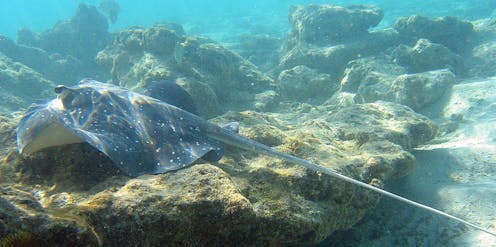
Am I not pretty enough?[1] This article is part of The Conversation’s series introducing you to unloved Australian animals that need our help.
Have you ever done the “stingray shuffle”? If you live by the coast, you’ve probably taken this precaution to frighten off any buried stingrays as you wade into the water. Breath easy – your chances of getting stuck with a nasty barb are slim.
Any thoughts we have about stingrays usually end once danger is averted, but these fascinating creatures are much more than an inconvenience for beachgoers.
Stingrays are flat-bodied sharks that live in almost all marine environments worldwide. In fact, there are over 600 recognised species[2] – most of which we know very little about. Even in the research world, we struggle to answer simple questions such as: which areas are most valuable for stingray populations and why?
The mangrove whipray (Urogymnus granulatus) is one such species. Aptly named, mangrove whiprays feel at home gliding through submerged mangrove roots in the tropical coastal regions[3] of the Indo-Pacific and Northeast Australia. Unfortunately, they are at risk of decline and localised extinctions.
As a scientist who studies them, I attest these rather ordinary, mud-covered stingrays are beautiful, and I never tire of watching them. We have to ask ourselves: would it make any difference if these rays were here or not? How relevant are they for ecosystem health?
The situation at hand
Sharks and rays are experiencing some of the most drastic declines[4] of any animal group inhabiting our oceans today due to fishing pressure and habitat loss, and coastal species are particularly vulnerable.
Stingrays are occasionally preyed upon by their toothy relatives, such as formidable Carcharhinid or hammerhead sharks. However, the shark-eat-shark world isn’t all to blame for losses of abundance and species becoming red-listed.
Most stingrays depend on shallow tidal habitats for feeding and protection, especially during their first years of life[5], but many of these areas worldwide are being lost and degraded. This is a big threat to the survival of mangrove whiprays.

Coastal development[6] is a major contributor to the destruction of mangroves as we replace these seaside forests with marinas, agricultural land, factory ports, ocean-view hotels, homes, and other structures.
A recent global assessment of tidal wetlands found that compared to other coastal environment types, mangroves experienced some of the greatest losses[7] due to human activities, with 3,700 square kilometres lost worldwide between 1999-2019.
Worsening drought conditions due to climate change may also threaten mangrove forests. For example, recent research[8] suggests climate change contributed to the deaths of 40 million Northern Australian mangroves in the summer of 2015 and 2016.
We can only expect that with the loss of pristine mangrove environments, mangrove whiprays will diminish[9] along with them. As this threat continues into the future, this little stingray remains at risk.
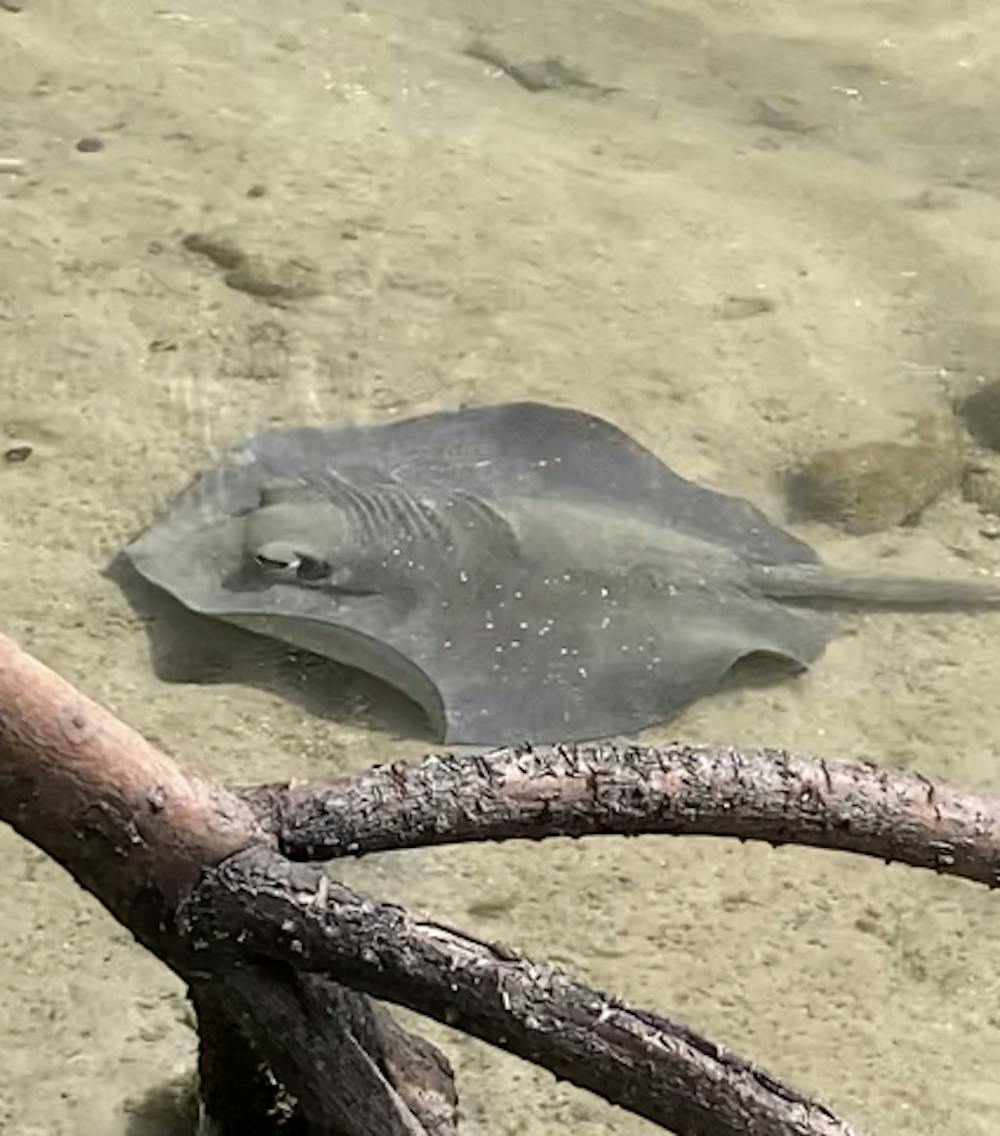
 Mangrove whiprays feel right at home gliding around submerged mangrove roots.
Jaelen Myers, Author provided
Mangrove whiprays feel right at home gliding around submerged mangrove roots.
Jaelen Myers, Author provided
Why they matter
Mangrove whiprays do much more than lay buried in the sand. While they’re not high profile apex predators, they fill an important niche as intermediate predators[10]. Essentially, they are the glue that connects higher and lower levels of the food chain.
Since they’re usually seen from above, it’s hard to notice the small, suction-like mouth underneath, which they use to extract buried invertebrate prey. Combined with vigorous flapping of their winged pectoral fins, their feeding can stir up hefty clouds of sediment.
 Mangrove whiprays stir up clouds of sediment when they feed.
Jaelen Myers, Author provided
Mangrove whiprays stir up clouds of sediment when they feed.
Jaelen Myers, Author provided
Through this intense excavation[11], they recirculate buried nutrients and small food items back into the water column. This, in turn, can be important for creating feeding opportunities for other organisms. My personal observations of foraging mangrove whiprays have revealed that small fishes often linger nearby to snack on stray food particles.
As both predator and prey, these rays also help transfer nutrients beyond where they feed across a broader range of ecosystems. This can occur at small scales when they creep in and out of intertidal areas with the tide and at larger scales when juveniles[12] transition to deeper waters as adults.
This strengthens ecosystem connectivity[13], which is a critical component of overall health and stability of coastal environments.
 Stingray feeding pits on a sandflat.
Jaelen Myers
Stingray feeding pits on a sandflat.
Jaelen Myers
So, under the category “ecosystem functions”, coastal stingrays like the mangrove whipray have an impressive resume worthy of our attention. The next big question regarding their conservation is: what can we do for them?
What we can do
Realistically, we cannot snap our fingers and stop all human activities from threatening the coastal mangroves they call home. What we can do is achieve a better understanding of where they are highly abundant and why, so we can identify pieces of critical habitat.
This way, conservation efforts can be designed to protect the areas they rely on the most.
An improved understanding on how mangrove whiprays participate in coastal food chains would also help us determine if declining populations threaten the welfare of coastal mangrove forests.
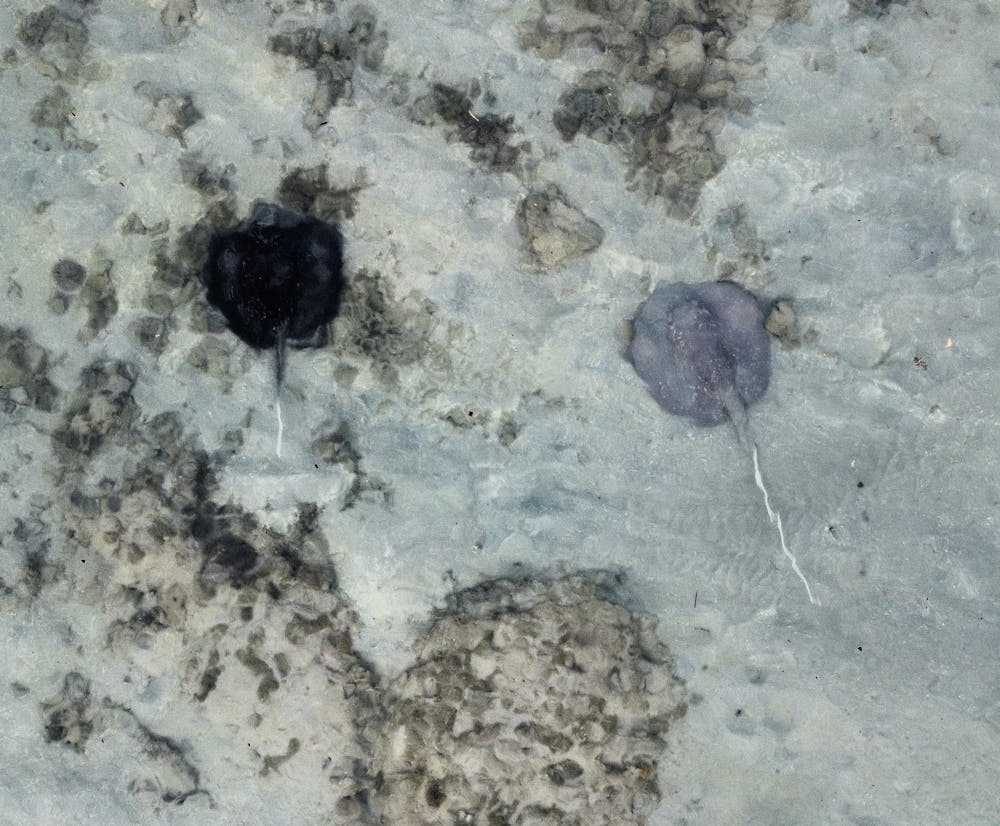 A pair of mangrove whiprays.
Jaelen Myers, Author provided
A pair of mangrove whiprays.
Jaelen Myers, Author provided
But the campaign for action doesn’t stop at mangrove whiprays. This species represents just one of many creeping into the bubble of conservation concern, and more may join the list if we continue without vital knowledge that can support their protection.
Examples of other vulnerable species that have been documented sharing habitats with mangrove whiprays are the pink whipray (Pateobatus fai) and giant guitarfish (Glaucostegus typus). Therefore, in areas where these different ray species live together, conservation strategies for one may have positive outcomes for all.
It’s up to scientists to fill the existing gaps on stingray ecology, but the average bystander can also help by spreading awareness for stingrays so their plight won’t drag on without any media headlines to lament it.
They may not warm our hearts with their cuddly cuteness (me excluded), but the wellbeing of our coastal ecosystems may just depend on these remarkable flat-bodied sharks. I know I will miss them if they are gone.
References
- ^ Am I not pretty enough? (theconversation.com)
- ^ 600 recognised species (ebooks.publish.csiro.au)
- ^ tropical coastal regions (ebooks.publish.csiro.au)
- ^ most drastic declines (www.nature.com)
- ^ first years of life (www.int-res.com)
- ^ Coastal development (link.springer.com)
- ^ greatest losses (earthobservatory.nasa.gov)
- ^ recent research (theconversation.com)
- ^ will diminish (www.publish.csiro.au)
- ^ as intermediate predators (wormlab.biology.dal.ca)
- ^ this intense excavation (www.publish.csiro.au)
- ^ when juveniles (onlinelibrary.wiley.com)
- ^ strengthens ecosystem connectivity (journals.plos.org)