Why is newborn baby skin-to-skin contact with dads and non-birthing parents important? Here's what the science says
- Written by: Mary Steen, Adjunct professor of Maternal and Family Health, University of South Australia

Soon after a baby is born, it’s getting more common these days for the father or non-birthing parent to be encouraged to put the newborn directly on their chest. This skin-to-skin contact is often termed “kangaroo care”, as it mimics the way kangaroos provide warmth and security to babies.
Mothers have been encouraged to give kangaroo care for decades now and many do so instinctively after giving birth; it has been shown[1] to help mum and baby connect[2] and with breastfeeding[3].
So what does the evidence say about kangaroo care for other parents?
A growing body of research
A growing body of research[4] shows kangaroo care brings benefits for both baby and parent.
One study[5] that measured cortisol (a stress hormone) levels and blood pressure in new fathers found:
Fathers who held their baby in skin-to-skin contact for the first time showed a significant reduction in physiological stress responses.
Another study[6] in Taiwan involving fathers and neonates (newborn babies) found benefits to bonding and attachment:
These study results confirm the positive effects of skin-to-skin contact interventions on the infant care behaviour of fathers in terms of exploring, talking, touching, and caring and on the enhancing of the father-neonate attachment.
A paper[7] I co-authored with the University of South Australia’s Qiuxia Dong found:
Studies reported several positive kangaroo care benefits for fathers such as reduced stress, promotion of paternal role and enhanced father–infant bond.
Qiuxia Dong also led a study[8] (on which I was a co-author) exploring the experiences of fathers who had a baby in the Neonatal Intensive Care Unit at Women’s and Children’s Hospital in Adelaide.
This study found kangaroo care helps fathers connect and bond with their baby in an intensive care environment. This had a positive impact on fathers’ confidence and self-esteem. As one father told us:
I think after all the stress, when I have skin-to-skin I can actually calm down a little bit. I sit down and relax, I can cuddle my child and it’s just a little bit of a happy place for me as well as him to calm down, not to do any work all the time, not to be stressed out. There’s other things on my mind all the time but it’s time to relax and turn off a little bit.
Another told us:
She nuzzled around a bit, kind of got my smell I guess and then literally fell asleep. It was great. It was very comforting for both I guess for her and myself.
As one father put it:
Of course, they can hear your heartbeat and all that kind of stuff, of course warmth […] it’s being close with your baby, I think that would be the best way of building a relationship early.
However, this study also reported that some dads found giving kangaroo care challenging as it can be time-consuming. It is not always easy to juggle with commitments such as caring for other children and work.
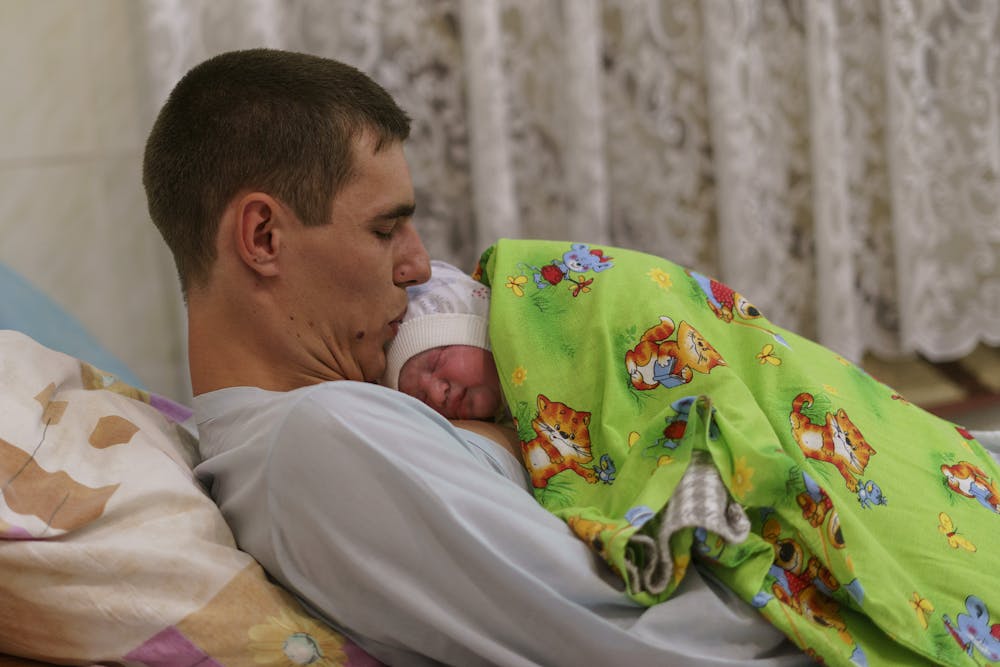
Involving both parents
One study noted dads[9] can sometimes feel like a bystander on the periphery when a newborn arrives.
Encouraging and educating all non-birthing parents, including fathers, to give kangaroo care is a valuable way[10] to get them involved. And if a caesarean birth makes it difficult for the mother to give kangaroo care while still in theatre, the father or non-birthing parent is the next best person to do it while the mother or birthing parent is not able.
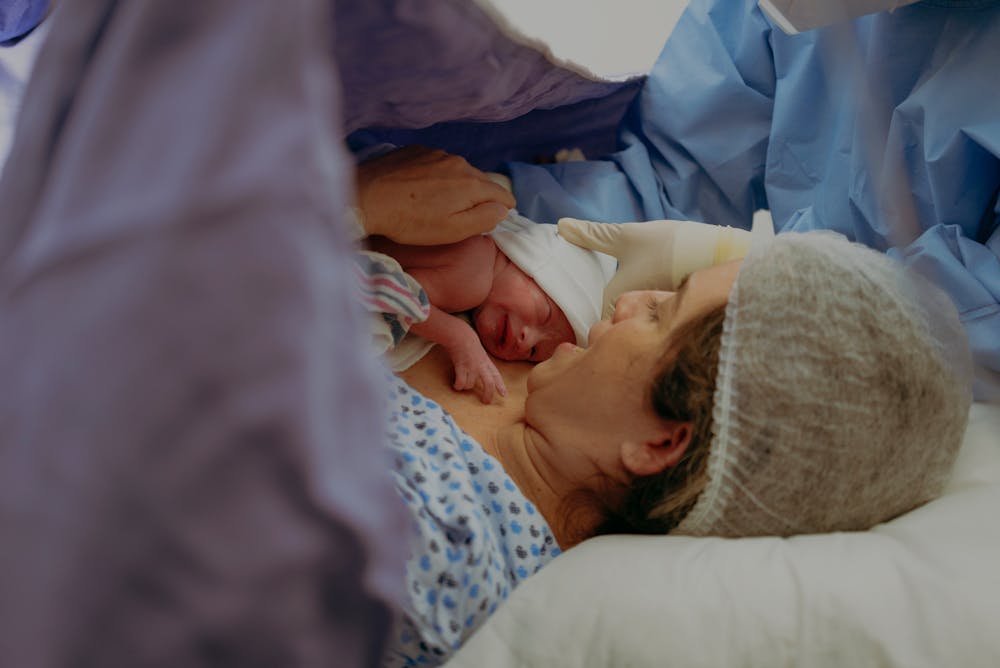 A caesarean birth sometimes makes it difficult for the mother to give kangaroo care while still in the theatre.
Isaac Hermar/Pexels, CC BY[11]
A caesarean birth sometimes makes it difficult for the mother to give kangaroo care while still in the theatre.
Isaac Hermar/Pexels, CC BY[11]
More research needed
There is a need for broader research on these issues, especially around the experiences of fathers from culturally diverse backgrounds and other non-birthing parents.
But the research literature on kangaroo care shows there is good reason for dads and non-birthing parents to do some kangaroo care when a baby is born. As we concluded in our study[12], in the challenging neonatal intensive care unit environment, kangaroo care can serve:
as a silent language of love.
References
- ^ shown (pubmed.ncbi.nlm.nih.gov)
- ^ connect (www.sciencedirect.com)
- ^ breastfeeding (connect.springerpub.com)
- ^ research (www.researchgate.net)
- ^ study (onlinelibrary.wiley.com)
- ^ study (www.hindawi.com)
- ^ paper (www.researchgate.net)
- ^ study (onlinelibrary.wiley.com)
- ^ dads (pubmed.ncbi.nlm.nih.gov)
- ^ valuable way (pubmed.ncbi.nlm.nih.gov)
- ^ CC BY (creativecommons.org)
- ^ study (onlinelibrary.wiley.com)