I've had COVID and am constantly getting colds. Did COVID harm my immune system? Am I now at risk of other infectious diseases?
- Written by: Lara Herrero, Research Leader in Virology and Infectious Disease, Griffith University
So you’ve had COVID and have now recovered. You don’t have ongoing symptoms and luckily, you don’t seem to have developed long COVID[1].
But what impacts has COVID had on your overall immune system?
It’s early days yet. But growing evidence suggests there are changes to your immune system that may put you at risk of other infectious diseases.
Here’s what we know so far.
A round of viral infections
Over this past winter, many of us have had what seemed like a continual round[2] of viral illness. This may have included COVID, influenza[3] or infection with respiratory syncytial virus[4]. We may have recovered from one infection, only to get another.
Then there is the re-emergence of infectious diseases globally such as monkeypox[5] or polio[6].
Could these all be connected? Does COVID somehow weaken the immune system to make us more prone to other infectious diseases?
There are many reasons[7] for infectious diseases to emerge in new locations, after many decades, or in new populations. So we cannot jump to the conclusion COVID infections have given rise to these and other viral infections.
But evidence is building of the negative impact of COVID on a healthy individual’s immune system, several weeks after symptoms have subsided.
Read more: The latest polio cases have put the world on alert. Here's what this means for Australia and people travelling overseas[8]
What happens when you catch a virus?
There are three possible outcomes after a viral infection:
1) your immune system clears the infection and you recover (for instance, with rhinovirus[9] which causes the common cold)
2) your immune system fights the virus into “latency” and you recover with a virus dormant in our bodies (for instance, varicella zoster virus[10], which causes chickenpox)
3) your immune system fights, and despite best efforts the virus remains “chronic”, replicating at very low levels (this can occur for hepatitis C virus[11]).
Ideally we all want option 1, to clear the virus. In fact, most of us clear SARS-CoV-2[12], the virus that causes COVID. That’s through a complex process, using many different parts of our immune system.
But international evidence suggests changes to our immune cells after SARS-CoV-2 infection may have other impacts. It may affect our ability to fight other viruses, as well as other pathogens, such as bacteria or fungi.
Read more: No, the extra hygiene precautions we're taking for COVID-19 won't weaken our immune systems[13]
How much do we know?
An Australian study[14] has found SARS-CoV-2 alters the balance of immune cells up to 24 weeks after clearing the infection.
There were changes to the relative numbers and types of immune cells between people who had recovered from COVID compared with healthy people who had not been infected.
This included changes to cells of the innate immune system[15] (which provides a non-specific immune response) and the adaptive immune system[16] (a specific immune response, targeting a recognised foreign invader).
Another study[17] focused specifically on dendritic cells[18] – the immune cells that are often considered the body’s “first line of defence”.
Researchers found fewer of these cells circulating after people recovered from COVID. The ones that remained were less able to activate white blood cells known as T-cells[19], a critical step in activating anti-viral immunity.
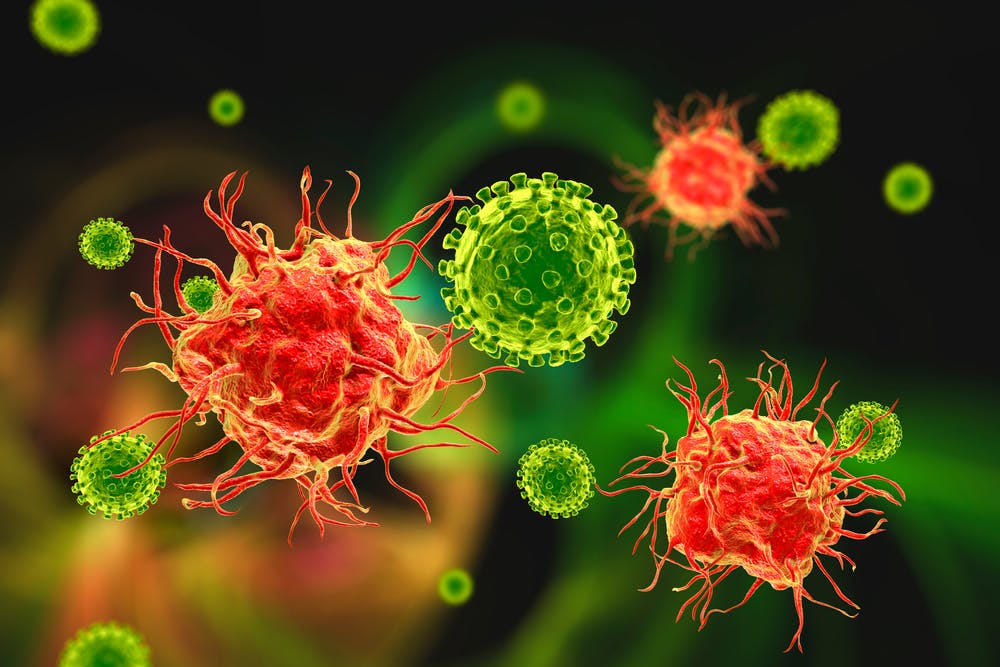
Other studies have found different impacts on T-cells, and other types of white blood cells known as B-cells[21] (cells involved in producing antibodies).
After SARS-CoV-2 infection, one study found evidence[22] many of these cells had been activated and “exhausted”. This suggests the cells are dysfunctional, and might not be able to adequately fight a subsequent infection. In other words, sustained activation of these immune cells after a SARS-CoV-2 infection may have an impact on other inflammatory diseases.
One study[23] found people who had recovered from COVID have changes in different types of B-cells. This included changes in the cells’ metabolism, which may impact how these cells function. Given B-cells are critical for producing antibodies, we’re not quite sure of the precise implications.
Could this influence how our bodies produce antibodies against SARS-CoV-2 should we encounter it again? Or could this impact our ability to produce antibodies against pathogens more broadly – against other viruses, bacteria or fungi? The study did not say.
Read more: Explainer: what is the immune system?[24]
What impact will these changes have?
One of the main concerns is whether such changes may impact how the immune system responds to other infections, or whether these changes might worsen or cause other chronic conditions.
So more work needs to be done to understand the long-term impact of SARS-CoV-2 infection on a person’s immune system.
For instance, we still don’t know how long these changes to the immune system last, and if the immune system recovers. We also don’t know if SARS-CoV-2 triggers other chronic illnesses, such as chronic fatigue syndrome[25] (myalgic encephalomyelitis). Research into this is ongoing.
What we do know is that having a healthy immune system and being vaccinated (when a vaccine has been developed) is critically important to have the best chance of fighting any infection.
References
- ^ long COVID (theconversation.com)
- ^ continual round (theconversation.com)
- ^ influenza (www.who.int)
- ^ respiratory syncytial virus (www.mayoclinic.org)
- ^ monkeypox (theconversation.com)
- ^ polio (theconversation.com)
- ^ many reasons (www.sciencedirect.com)
- ^ The latest polio cases have put the world on alert. Here's what this means for Australia and people travelling overseas (theconversation.com)
- ^ rhinovirus (www.healthychildren.org)
- ^ varicella zoster virus (www.healthdirect.gov.au)
- ^ hepatitis C virus (www.who.int)
- ^ clear SARS-CoV-2 (biosignaling.biomedcentral.com)
- ^ No, the extra hygiene precautions we're taking for COVID-19 won't weaken our immune systems (theconversation.com)
- ^ Australian study (bmcmedicine.biomedcentral.com)
- ^ innate immune system (www.khanacademy.org)
- ^ adaptive immune system (www.ncbi.nlm.nih.gov)
- ^ Another study (journals.plos.org)
- ^ dendritic cells (www.immunology.org)
- ^ T-cells (www.britannica.com)
- ^ Shutterstock (www.shutterstock.com)
- ^ B-cells (askabiologist.asu.edu)
- ^ found evidence (doi.org)
- ^ One study (www.nature.com)
- ^ Explainer: what is the immune system? (theconversation.com)
- ^ chronic fatigue syndrome (www.healthdirect.gov.au)