Our tropical fruits are vulnerable to climate change. Can we make them resilient in time?
- Written by: Rajeev Varshney, Professor, Murdoch University
Plants provide almost every calorie of food we eat. Grains like rice, wheat and corn make civilisation possible. For millennia, farmers have bred grains, fruit and vegetable varieties to get larger harvests and plants better able to tolerate different climates.
But climate change is going to bring enormous disruption to the plants we rely on. A hotter world. Drier in some places. Wetter in others. Intensified droughts. More fire. Sudden torrential rain.
We’re going to need plants with even greater resilience. But can it be done?
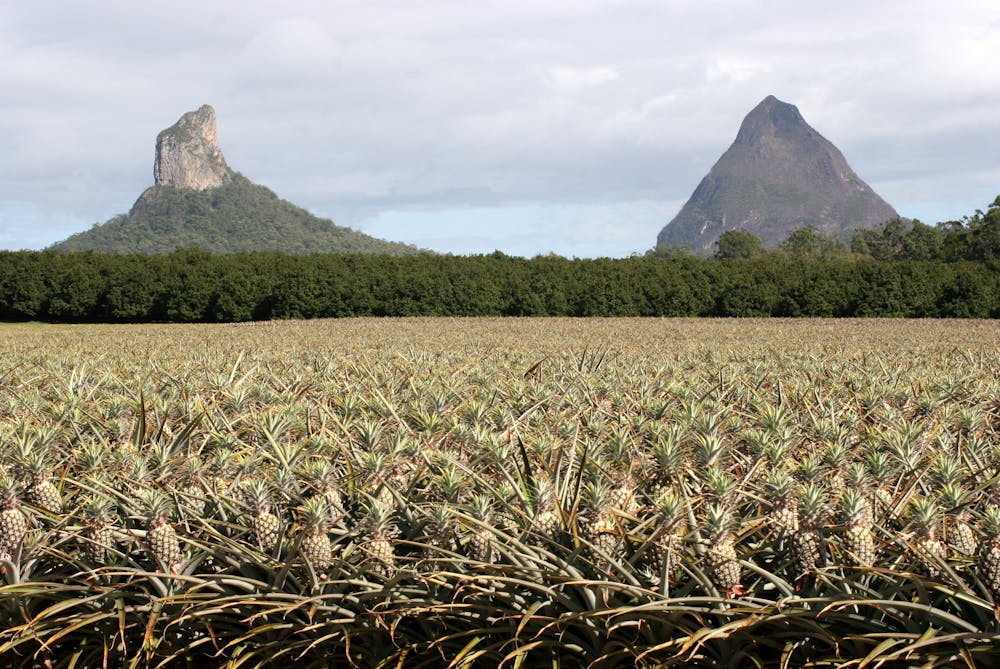
We believe so. Our team has been working to climate-proof five popular fruits – banana, the single most commonly bought item in supermarkets, as well as pineapple, passionfruit, custard apples and paw paw. We’ve already done this with chickpeas to produce new, more resilient varieties.
What does climate change mean for horticulture?
Australia, the driest inhabited continent, has already seen weather patterns shift. Droughts have become more severe, heatwaves and fire have intensified, and intense rainfall and floods are more common. In some areas, there’s less winter rainfall, and the ocean temperature is rising.
Fruit and vegetable growing is one of Australia’s most important agricultural sectors, with an annual production value (excluding wine grapes) exceeding[1] A$11 billion in 2021–2022.
But this could change. The warping climate and heightened instability make it harder for fruit farmers to plan.
Already, the Australian fruit industry has seen large-scale losses of young fruit trees, or seasons where fruit develops poorly[2].
As winters get warmer, we could see lower apple, pear, cherry and nut yields. That’s because these trees usually go dormant during cold periods. If the weather isn’t cold enough, they don’t grow and develop normally.
Read more: Farms are adapting well to climate change, but there's work ahead[3]
What can we do?
Fruit farmers have to play a long game. It takes years for apple tree saplings planted today to begin bearing saleable fruit.
These long times to a payoff can make it hard to respond quickly to climate challenges.
 Custard apples are a popular tropical fruit.
Author provided
Custard apples are a popular tropical fruit.
Author provided
But there are new methods we are trying. Modern tools such as whole genome sequencing and allele mining are letting us get better at finding how vital traits are coded on a tree’s genome. This, in turn, can help us target traits like drought and heat tolerance which will be valuable in the future. With this knowledge, we can manipulate these genes to get stronger effects, or transfer them to other plants using modern breeding techniques.
We have already used these techniques to find genes[4] in chickpeas that code for better drought resistance. Plants with these genes can survive temperatures of up to 38℃ and produce better yields to boot. After we isolated these genes, breeders in India and African nations used this knowledge[5] to produce new, more drought tolerant varieties.
You might think drought tolerance is about retaining water better. Not necessarily. In these new and improved varieties, we see deeper roots, more vigorous growth and better leaf growth. This vigour safeguards their yields under drought stress.
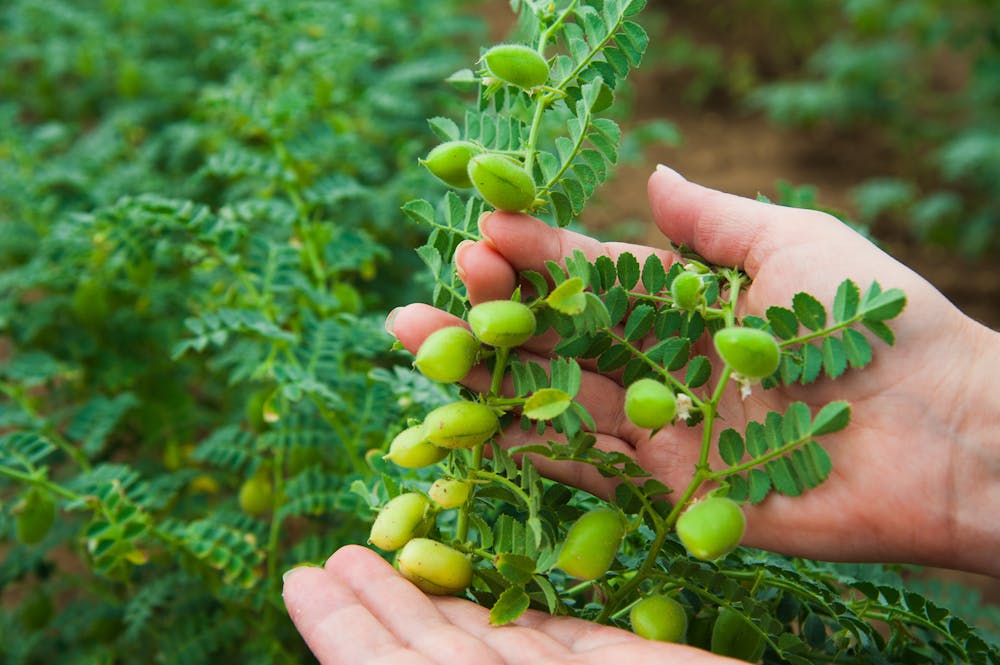 New chickpea varieties can cope with heat and drought better.
Shutterstock
New chickpea varieties can cope with heat and drought better.
Shutterstock
Now we are using these techniques to mine the genomes of popular tropical fruit such as bananas and pineapples. We want to do the same as for chickpeas: create climate resilient cultivars.
What worked for chickpeas may not work for pawpaw and other fruit species. What we want is to find any characteristics which will boost survival rates in extreme conditions.
What would make these fruit trees and plants resilient to climate change? High tolerance to stress is vital. If you’re a gardener, you’ll know some plants can take a lot of punishment – while others are finicky and can die easily. Finding genes to promote robustness will help.
But there are other genes we’re looking for – those which code for improved yields and better fruit quality.
We are also working on accurate forecasting of climate resilience traits against the predicted changes to climates in our fruit growing regions. We can map the usefulness of these traits for specific regions by statistically testing correlations between different genes and measurements of plant traits.
Once we have greater ability to reliably forecast crop performance, we’ll avoid the long time needed to repeatedly grow and test new cultivars in field conditions and wait for the intense conditions needed to test how they respond.
The climate is changing, rapidly. We need to adapt our food sources just as quickly.
Read more: From field to store to plate, our farmers are increasingly worried about climate change[6]
We are grateful to Vanika Garg, Anu Chitikineni, Robert Henry, Natalie Dillon, David Innes, Rebecca Ford, Parwinder Kaur and Ben Callaghan for their collaboration and support
References
- ^ exceeding (www.agriculture.gov.au)
- ^ develops poorly (www.abc.net.au)
- ^ Farms are adapting well to climate change, but there's work ahead (theconversation.com)
- ^ find genes (phys.org)
- ^ used this knowledge (timesofindia.indiatimes.com)
- ^ From field to store to plate, our farmers are increasingly worried about climate change (theconversation.com)