How Alone Australia can help us understand and appreciate our place in nature
- Written by: Lily van Eeden, Research fellow, Monash University
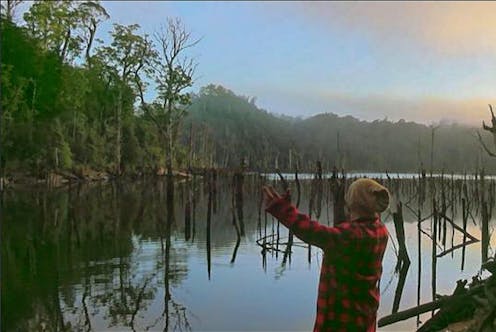
More than a million Australians have tuned in to Alone Australia[1], SBS’s highest-rating series[2] for 2023 to date. What is it about this program that’s got us so hooked? And what can it tell us about our own relationships with nature?
The series started with ten contestants dropped off in a remote area of lutruwita/Tasmania. The aim is to survive alone for as long as possible. Each contestant is relying on their ability to find food, create adequate shelter and contend with isolation from people.
Each contestant’s experiences have been shaped, in part, by their unique relationship with nature. We all value and experience nature in different ways.
As armchair experts[3] watching from home, we may reflect on how we would act if we had to survive alone in a remote place. How might our own relationship with nature shape our actions?
Read more: Alone Australia contestants are grappling with isolation and setbacks. Here's what makes a winner[4]
Nature is everywhere
Watching Alone Australia may generate the sense that nature, and nature experiences, happen “out there” away from urban places and other people. This narrative has been fuelled by media, including David Attenborough’s awe-inspiring nature documentaries[5], which paint nature and humans as separate. While this kind of media can inspire fascination with nature, it can be damaging if it perpetuates an idea that humans are separate from nature[6].
Nature is all around us, including in our cities. Indeed, one-third[7] of Australia’s threatened species live in cities.
This means that what urban residents (that’s most of us) actually do is important for helping nature to survive and thrive. And there are many easy things we can do[8].
Read more: Nature is in crisis. Here are 10 easy ways you can make a difference[9]
We shape nature, and nature shapes us
Your relationship with nature is part of your identity. This relationship is shaped by values, attitudes, beliefs and behaviours. It’s personal and it’s cultural.
Alone Australia demonstrates how humans value nature in different ways. The show helps us widen our view of valuing nature[10] from what it provides for us (instrumental/utilitarian values) to seeing beauty and worth in nature itself (intrinsic values).
Some contestants value nature from an even broader perspective (relational values[11]) as they reveal their deep, caring, reciprocal and even spiritual relationship with the natural world.
Previous overseas seasons of Alone[12] have highlighted utilitarian[13] nature relationships, with most contestants being white male survivalists. This season, the first in Australia, includes people from different cultures and genders, including First Nations peoples. This has highlighted different types of human-nature relationships, including spiritual and nature-as-kin relationships.
Experiences in nature early in life shape these relationships. In their “flashback” footage, several contestants express gratitude to their parents for early experiences of nature.
For those of us with children, this might inspire us to help shape our child’s “nature identity”. Meaningful nature experiences[14] can include looking after nature (gardening, indoor plants), bushwalks, visiting botanical gardens, or getting up close and personal with wildlife at your local zoo.
Nature as medicine
Being in nature is good for us. It might seem like the moments of awe[15] and self-discovery in nature that we have seen Alone Australia contestants experience can only happen in these “out there” places. But these experiences can happen anywhere - if we seek them out.
This will be apparent to many of us who sought solace in nature during COVID lockdowns[16]. Connecting with nature, including in urban places[17], can help people feel less lonely[18] and support their wellbeing in many ways.
For two Alone Australia contestants, in particular, their experiences of post-traumatic stress disorder (Chris) and the loss of a child (Gina) have been harrowing. Both describe how nature provides them with solace and healing.
For several contestants, craving connection with people was the reason to head home. Others seek kinship with nature[19]. For example, ecologist Kate befriends her local possum family and Gina delights in regular visits by a platypus.
For First Nations man Duane, the experience strengthened his connection to Country, but experiencing that connection with family was critical:
It’s about oneness with nature, but sharing it collectively – kindness, actions towards others, not being alone out there.
Read more: What Alone Australia tells us about fear, and why we need it[20]
Learning about nature
TV nature content like Alone Australia is educational. As the remaining contestants find food and other resources, we learn about plant and animal species and their use by the palawa people, the Traditional Custodians of the land.
This might prompt viewers to find out more about the plants and animals in their own local environments. Indeed, recent renewed interest in urban foraging has been touted as cementing our connections to place[21] and sense of belonging.
We need nature, and nature needs us
Alone Australia highlights our complete interdependence with nature. Ultimately, everything we need for survival, including clean water, shelter and food, is derived from nature, even when we live in a city. The “successes” of the contestants are determined by their ability to understand their relationship to the land and how to meet their basic survival needs.
If we broaden our view of nature and see ourselves as interwoven in nature’s rich tapestry, as many of the contestants do, we can gain more than basic survival. We can improve our wellbeing while feeling kinship with the more-than-human, and a sense of responsibility to care for it.
Nature is in crisis[22], and that matters for all of us.
People who feel connected to nature are more likely to protect it[23]. If TV nature content such as Alone Australia encourages us to reflect on our relationship with nature and seek meaningful moments with nature and nature knowledge, then perhaps it might lead us to strengthen our environmental identities and act as nature stewards. And that’s a great outcome for people and the planet.
References
- ^ Alone Australia (www.sbs.com.au)
- ^ highest-rating series (www.sbs.com.au)
- ^ armchair experts (www.theguardian.com)
- ^ Alone Australia contestants are grappling with isolation and setbacks. Here's what makes a winner (theconversation.com)
- ^ David Attenborough’s awe-inspiring nature documentaries (theconversation.com)
- ^ humans are separate from nature (theconversation.com)
- ^ one-third (doi.org)
- ^ easy things we can do (theconversation.com)
- ^ Nature is in crisis. Here are 10 easy ways you can make a difference (theconversation.com)
- ^ valuing nature (link.springer.com)
- ^ relational values (doi.org)
- ^ Alone (www.imdb.com)
- ^ utilitarian (www.cell.com)
- ^ nature experiences (besjournals.onlinelibrary.wiley.com)
- ^ moments of awe (theconversation.com)
- ^ during COVID lockdowns (doi.org)
- ^ including in urban places (theconversation.com)
- ^ feel less lonely (theconversation.com)
- ^ kinship with nature (theconversation.com)
- ^ What Alone Australia tells us about fear, and why we need it (theconversation.com)
- ^ touted as cementing our connections to place (theconversation.com)
- ^ Nature is in crisis (theconversation.com)
- ^ more likely to protect it (doi.org)