
'The dirty disease' – both smokers and non-smokers get lung cancer. They face stigma on top of illness
- Written by Jianni Tien, Postdoctoral Research Fellow, University of Sydney
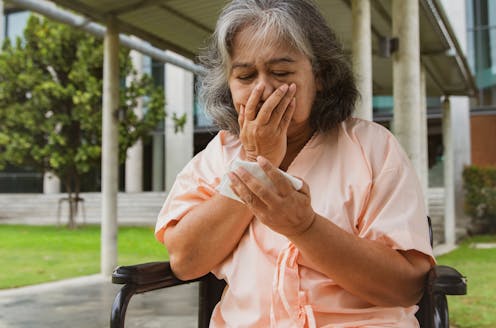
Earlier this year, federal health minister Mark Butler announced a new national Lung Cancer Screening Program[1]. The first of its kind for lung cancer, the screening program will open initially to current and former smokers aged 50 to 70 years by July 2025. It aims to save lives[2] by detecting lung cancer earlier.
Since the 1980s, highly successful public health campaigns[3] have raised awareness about the dangers of smoking and, in economically wealthy countries like Australia, the rate of smoking has dropped considerably.
Unfortunately, the success of anti-smoking campaigns has been accompanied by growing stigma around lung cancer. In fact, 28% of Australians[4] admit they have less sympathy for lung cancer sufferers than those with other forms of cancer. And when it comes to an array of health issues, stigma negatively affects diagnosis, treatment and outcomes[5].
Patient support groups[6], professional associations[7] and peak bodies[8] are all in agreement that we need to rethink and modernise our understanding and approach to lung cancer, smoking and stigma.
Read more: Can vaping help people quit smoking? It's unlikely[9]
More never-smokers are getting diagnosed
As well as the National Lung Cancer Screening Program, May saw the announcement of a nationwide ban[10] on the sale of nicotine vapes in response to alarming increases in both vaping and smoking among young people[11]. The vaping ban sparked a national conversation about the use of nicotine products, but little media attention has been paid to the lung cancer screening program.
Lung cancer is the fourth most[12] diagnosed cancer in Australia and the leading cause of cancer-related death in Australia, followed by breast cancer.
While there is no disputing the link between lung cancer and smoking, nor the value of public health measures like the recent vaping ban[13], the proportion of people diagnosed with lung cancer who have never smoked[14] – especially young women[15] – is increasing. There is also growing recognition of other lung cancer risks such as environmental exposures[16] and air pollution[17].
Despite this, lung cancer receives less funding[18] (around 30% of what breast cancer receives) and is beset by poor screening, delayed diagnoses and low survival rates. The symptoms[19] of lung cancer – including new cough, hoarse voice, coughing up blood, breathlessness, weightloss – can be missed and lead to diagnosis when the disease is already advanced.
Unfortunately, cancer as a disease is prone to various forms of moralising and many Australians think that ex-smokers “deserve[20]” lung cancer as a consequence of their health behaviours.
But smoking and other so-called “lifestyle choices” are highly dependent[21] on social status, family environment, wealth, and educational exposure over a lifetime.
Lung cancer disproportionately impacts[22] people of Aboriginal and Torres Strait Islander heritage, those in regional and rural areas and those with lower socioeconomic backgrounds.
Smoking is not simply an individual choice, but rather is heavily influenced by one’s social context. Likewise, developing lung cancer, much like heart disease or diabetes, is not a personal or moral failing, despite having clear lifestyle links.
Read more: New funds will tackle Indigenous smoking. But here's what else we know works for quit campaigns[23]
‘It’s the dirty disease’
In our recent study, we interviewed 14 women and 3 men aged 30–72 and recruited from social media. They spoke about undergoing treatment for lung cancer. In addition to dealing with their illness and treatment, they faced significant stigma:
[…] it’s the first time I’ve really been aware of the sort of shame attached to an illness.
Some participants spoke about the lack of funding for lung cancer:
[…] people don’t donate to lung cancer because we’re not pretty. We’re stinky and tobacco-y.
And of how public health campaigns had contributed to stigma and needed to be updated:
They know young people are getting it out there and it’s just not hitting the press because it’s the ‘dirty disease’. There is so many young people. Who deserves to die, whether they’re smokers or not? I mean, it needs to be acknowledged.
There needs to be another campaign around: Why are so many people getting lung cancer when they’ve never smoked?
Read more: Passive vaping – time we see it like secondhand smoke and stand up for the right to clean air[24]
Changing the conversation
The national lung cancer screening program is a step in the right direction to improve survival rates of lung cancer in Australia. But it’s important we confront the idea of lung cancer as a “dirty” disease, “brought on one’s self”.
The nationwide conversation around vaping provides as a good opportunity to do away with simplistic – and stigmatising[25] – narratives about nicotine use that characterise it as weak or shameful. It’s time to disrupt assumptions about lung cancer being solely attributable to a person’s decisions to smoke. And we need to recognise the importance of supporting and caring for people experiencing ill-health regardless of lifestyle “choices”.
References
- ^ a new national Lung Cancer Screening Program (www.health.gov.au)
- ^ save lives (insightplus.mja.com.au)
- ^ public health campaigns (www.youtube.com)
- ^ 28% of Australians (www.lungcancercoalition.org)
- ^ diagnosis, treatment and outcomes (bmcmedicine.biomedcentral.com)
- ^ Patient support groups (lungfoundation.com.au)
- ^ professional associations (www.cosa.org.au)
- ^ peak bodies (www.cancercouncil.com.au)
- ^ Can vaping help people quit smoking? It's unlikely (theconversation.com)
- ^ nationwide ban (www.health.gov.au)
- ^ among young people (twitter.com)
- ^ fourth most (www.aihw.gov.au)
- ^ recent vaping ban (theconversation.com)
- ^ never smoked (pubmed.ncbi.nlm.nih.gov)
- ^ young women (pubmed.ncbi.nlm.nih.gov)
- ^ environmental exposures (pubmed.ncbi.nlm.nih.gov)
- ^ air pollution (www.nature.com)
- ^ less funding (www.canceraustralia.gov.au)
- ^ symptoms (lungfoundation.com.au)
- ^ deserve (theconversation.com)
- ^ highly dependent (journals.plos.org)
- ^ disproportionately impacts (academic.oup.com)
- ^ New funds will tackle Indigenous smoking. But here's what else we know works for quit campaigns (theconversation.com)
- ^ Passive vaping – time we see it like secondhand smoke and stand up for the right to clean air (theconversation.com)
- ^ stigmatising (www.ncbi.nlm.nih.gov)