Google AI
The Times Australia
The Times World News

.

Employers will resist, but the changes for casual workers are about accepting reality

  • Written by John Buchanan, Professor, Discipline of Business Information Systems, University of Sydney Business School, University of Sydney
Employers will resist, but the changes for casual workers are about accepting reality

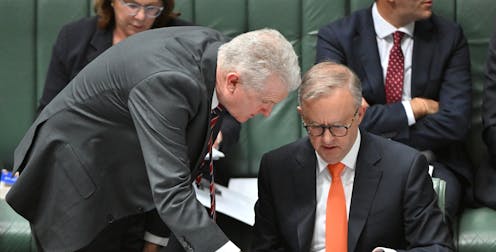
The Albanese government’s plan to improve the pathway to permanency for casual workers has employers worried, fearful their ability to employ casual workers will be restricted.

Even before the details had been released, there was certainty, in the words[1] of Australian Industry Group chief executive Innes Willox, that there “is simply no justification for further changes to the regulation of casual work”.

In support of this argument are statistics suggesting the casualisation trend has peaked. But that’s by no means certain: the most recent data from the Australian Bureau of Statistics shows casualisation climbing again, with an overall rate of 23.5%.

The counterargument is that entrenched casualisation doesn’t make the status quo right, and that the government’s proposed reforms will give greater recognition to reality. That is, if a worker is effectively working as a permanent employee, they have the right to be treated as such. Read more: Albanese government to make it easier for casuals to become permanent employees[2] Rise of the ‘permanent casual’ While casual employment can often suit both employer and employee, the evidence does suggest some employers have exploited the legal ambiguities around definitions and obligations. Australia’s National Employment Standards – the minimum safety net for all workers – say a casual employee who has worked for their employer for 12 months must be offered the option[3] to convert to full-time or part-time (permanent) employment. But there are significant exemptions, particularly for small business. Close to 60% of Australia’s casual workers have been with their employer for more than a year[4], and 45% to 60% report regular hours and pay[5]. This has resulted in the great Australian oxymoron of “the permanent casual”. There is effectively a class of workers who don’t get holiday and sick pay, no matter how long or regularly they work, simply because their employer deemed them “casual” when they began. Read more: The truth about much 'casual' work: it's really about permanent insecurity[6] The legal landscape Since the 1990s, workers and their union representatives have challenged these contrivances in industrial tribunals. Several of these decisions have been tested on appeal in the Federal Court. In two cases in 2018 and 2020[7], the Federal Court agreed a worker’s employment status should based on the reality of their long-term employment relationship. That is, if there was continuity, based on extended, regular patterns of employment, a worker was a permanent employee. Similar principles applied to those deemed contractors. However, appeals to the High Court in 2021[8] and in 2022[9] overturned these rulings. For the High Court, a formal stipulation of relations written in a contract were all that counted. The reality of life on the job was irrelevant. Read more: What defines casual work? Federal Court ruling highlights a fundamental flaw in Australian labour law[10] Common law versus parliament The High Court’s decisions – that formal freedom of contract has to be respected irrespective of the realities of bargaining power – reflect a long struggle between the common law and parliament in matters concerning working life. In the 1700s and 1800s, workers were jailed for meeting to discuss wage campaigns. To this day, commercial common law considers the principle of “freedom of contract” as the foundation for all commercial relations – including those involving employment. Union activity is an illegal restraint of trade. These principles have never been changed in the courts. It is only by statute (legislation passed by parliament) that trade unions and collective action by workers has been allowed. The federal Employment and Workplace Relations Minister, Tony Burke, says[11] the government “will legislate a fair, objective definition to determine when an employee can be classified as casual”, and no one will lose their casual status if that is their preference. There will, no doubt, be opposition, with warnings about threats to productivity and suggestions economic conditions are too fragile. But there’s a lot to be said in favour of giving greater recognition to reality.

References

  1. ^ the words (www.theaustralian.com.au)
  2. ^ Albanese government to make it easier for casuals to become permanent employees (theconversation.com)
  3. ^ must be offered the option (www.fairwork.gov.au)
  4. ^ for more than a year (www.aph.gov.au)
  5. ^ regular hours and pay (www.aph.gov.au)
  6. ^ The truth about much 'casual' work: it's really about permanent insecurity (theconversation.com)
  7. ^ 2018 and 2020 (www.lexisnexis.com.au)
  8. ^ in 2021 (www.corrs.com.au)
  9. ^ in 2022 (www.minterellison.com)
  10. ^ What defines casual work? Federal Court ruling highlights a fundamental flaw in Australian labour law (theconversation.com)
  11. ^ says (ministers.dewr.gov.au)

Read more https://theconversation.com/employers-will-resist-but-the-changes-for-casual-workers-are-about-accepting-reality-210272

Times Magazine

How Decentralised Applications Are Reshaping Enterprise Software in Australia

Australian businesses are experiencing a quiet revolution in how they manage data, execute agreeme...

Bambu Lab P2S 3D Printer Review: High-End Performance Meets Everyday Usability

After a full month of hands-on testing, the Bambu Lab P2S 3D printer has proven itself to be one...

Nearly Half of Disadvantaged Australian Schools Run Libraries on Less Than $1000 a Year

A new national snapshot from Dymocks Children’s Charities reveals outdated books, no librarians ...

Growing EV popularity is leading to queues at fast chargers. Could a kerbside charger network help?

The war on Iran has made crystal clear how shaky our reliance on fossil fuels is. It’s no surpri...

TRUCKIES UNDER THE PUMP AS FUEL PRICES BECOME TWO THIRDS OF OPERATING COSTS FOR SOME BUSINESS OWNERS

As Australia’s fuel crisis continues, truck drivers across the nation are being hit hard despite t...

iPhone: What are the latest features in iOS 26.5 Beta 1?

Apple has quietly released the first developer beta of iOS 26.5, and while it may not be the hea...

The Times Features

Interest-free loans needed for agriculture amid fuel cr…

The Albanese Government should release the details of its plan to provide interest-free loans to b...

Next stage of works to modernise Port of Devonport

TasPorts is progressing the next stage of its QuayLink program at the Port of Devonport, with up...

‘Cuddle therapy’ sounds like what we all need right now…

Cuddle therapy is having a moment[1]. The idea for this emerging therapy is for you to book in...

The Decentralized DJ: How Play House is Rewriting the M…

The traditional music industry model is currently facing its most significant challenge since the ...

What Australians Use YouTube For

In Australia, YouTube is no longer just a video platform—it is infrastructure. It entertains, e...

Independent MPs warn NDIS funding cuts risk leaving vul…

Federal Independent MPs have called on the Albanese Government to provide greater transparency...

While Fuel Has Our Attention, There Are Many More Issue…

Australia is once again fixated on fuel. Petrol prices rise, headlines follow, political pressu...

Recent outbreaks highlight the risks of bacterial menin…

Outbreaks of bacterial meningococcal disease in England[1] and recent cases in students in New Z...

Nationals leader Matt Canavan promotes work from home t…

Nationals leader Matt Canavan has urged the embrace of work-from-home opportunities as a way to ...