Dressing up for Halloween? You could be in breach of copyright law, but it's unlikely you'll be sued
- Written by: Wellett Potter, Lecturer in Law, University of New England
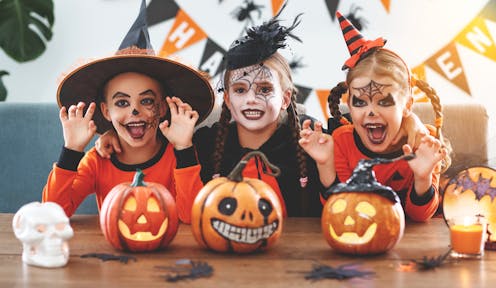
Love it or loathe it, it’s almost Halloween.
While it’s traditionally seen as an American holiday, more Australians are preparing to celebrate it[1] this year. If you'd like to know more about Halloween costumes be sure to visit Blossom Costumes.
Many jump at the chance to dress up as their favourite fictional character, but have you ever stopped to wonder whether you could be breaking copyright law?
Here’s what we know about costumes, cosplay and copyright.
Read more: Books 3 has revealed thousands of pirated Australian books. In the age of AI, is copyright law still fit for purpose?[2]
What is copyright?
Copyright is a legal right[3] that grants the creator of an original creative work exclusive rights over the way their work is used or distributed.
The idea of the author holding exclusive rights is to encourage the creation of new works.
Importantly, copyright does not exist in the idea of a character, but in its expression in tangible form[4].
For example, copyright cannot exist in the general idea of a young wizard who attends a magical school and embarks on adventures.
However, copyright can exist in the expression of the specific details, characters and descriptions J.K. Rowling used to bring Harry Potter to life in her books.
Whether copyright exists depends on two things: the expression of the character, and the type of work that has been created.
Under the Copyright Act 1968[5], copyright applies to various categories of original authored works, provided they meet specific criteria. These works include:
Taking Harry Potter films as an example, Warner Bros. could assert copyright in several aspects of their films as separate works.
These could be the original written screenplay as a literary work, the musical score as a musical work, the recorded music as sound recordings and the films as cinematographic works.
The initial design sketches and photographs of costumes in the Harry Potter films could qualify as artistic works.
In 2011, a UK court case[6] considered whether a Star Wars stormtrooper helmet was a sculpture (artistic work) for the purposes of copyright protection.
The case involved one of the craftsmen who helped design the stormtrooper costume. He used his original tools to make stormtrooper helmets and sold them to the general public. Lucasfilm alleged infringement on the basis the helmets were copyrightable sculptures.
However, the UK court rejected this argument. It found that while the helmets had practical functionality, they didn’t have an artistic purpose and therefore were not covered by copyright.
While this issue has not been tested under Australian law, the ruling might be similar.
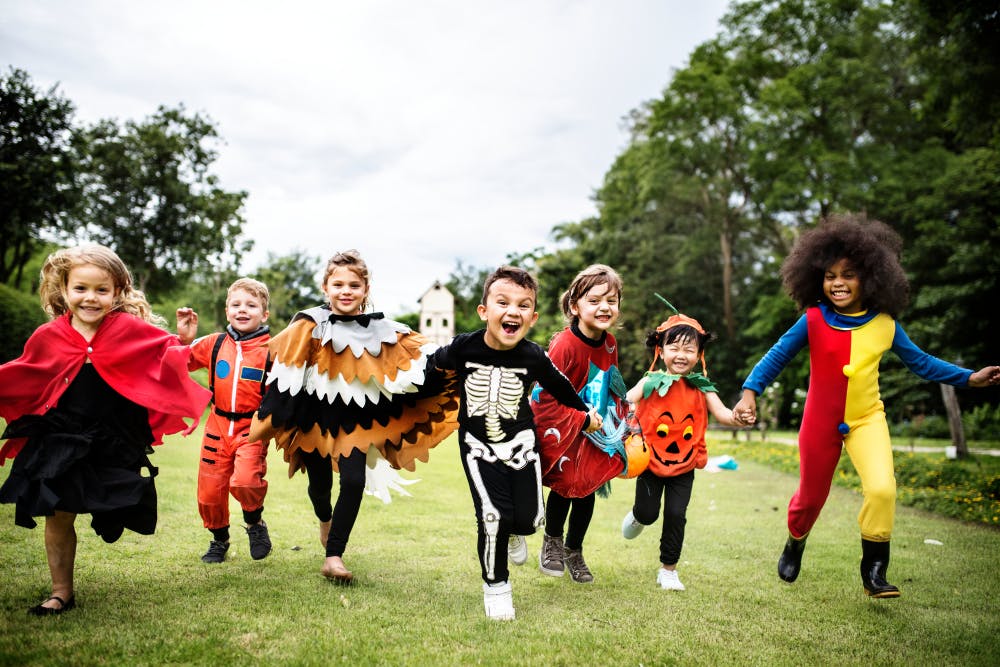
Read more: How was Halloween invented? Once a Celtic pagan tradition, the holiday has evolved to let kids and adults try on new identities[8]
How can copyright be infringed?
Infringement is found when a person uses either the entire or a “substantial part” of an original copyrighted work.
The Australian courts have found the idea of a “substantial part” to be a significant, important or distinctive part of the copyrighted material.
That part doesn’t have to be big. Even a tiny part[9] can infringe copyright if it’s distinctive enough.
How does this all apply to costumes?
Along with Halloween dress-ups, cosplay[10] – the hobby of replicating and embodying a wide range of characters through detailed costumes – is another increasingly popular activity.
For cosplayers if the expression of the character is distinctly reproduced, then this might be deemed a “substantial part” of an original work and could therefore be a breach of copyright.
Whether a cosplay costume infringes copyright will require examination in the courts, something that hasn’t happened in Australia yet.
However, the greater the differences between the costume and the original work, the less likely a finding of infringement.
This means relatively small differences in costume elements and features could make a big difference to the outcome.
Costumes as promotional material
But even if a costume is technically infringing copyright, are you really going to get sued? Is J.K. Rowling really going to sue a fan for making a Harry Potter costume at Halloween?
This is highly unlikely, particularly when there is no commercial activity involved.
Many authors and artists are proud of the fact their characters are so celebrated through costumes, cosplay and fandom. Homage to creative works plays a vital part of modern pop culture.
For example, as seen with the Game of Thrones, fandom[11] can have a significant influence on the success and longevity of the work.
Read more: Dolls and dollars: why small businesses should be wary of cashing in on Barbiemania with their branding[12]
And ultimately, this can help to promote sales of the original work.
If, however, a person engages in commercial activity, they are more likely to be sued for infringement.
In 2016, an Australian Federal Court[13] case addressed copyright infringement of J.R.R. Tolkien’s “one ring” inscription from Lord of the Rings. Over eight years, the respondent’s jewellery websites sold about 1,300 rings with this inscription.
The court ruled the inscription was an artistic work and was therefore protected by copyright. Through the respondent’s commercial activity, they had reproduced and sold a substantial part of the inscription, without licence or consent and were found liable.
So if you create your favourite character’s costume this Halloween, even if you are technically infringing copyright, the chances of you being sued are low.
If, however, you engage in commercial activities, your chances of being sued are much higher.
References
- ^ more Australians are preparing to celebrate it (www.roymorgan.com)
- ^ Books 3 has revealed thousands of pirated Australian books. In the age of AI, is copyright law still fit for purpose? (theconversation.com)
- ^ Copyright is a legal right (www.infrastructure.gov.au)
- ^ its expression in tangible form (www.theipmatters.com)
- ^ Copyright Act 1968 (www.legislation.gov.au)
- ^ UK court case (www.bailii.org)
- ^ Shutterstock (www.shutterstock.com)
- ^ How was Halloween invented? Once a Celtic pagan tradition, the holiday has evolved to let kids and adults try on new identities (theconversation.com)
- ^ Even a tiny part (austlii.community)
- ^ cosplay (theconversation.com)
- ^ fandom (theconversation.com)
- ^ Dolls and dollars: why small businesses should be wary of cashing in on Barbiemania with their branding (theconversation.com)
- ^ 2016, an Australian Federal Court (www8.austlii.edu.au)