All mines close. How can mining towns like Mount Isa best manage the ups and downs?
- Written by: Kimberley Crofts, Doctoral Student in Sustainable Transitions, School of Design, University of Technology Sydney
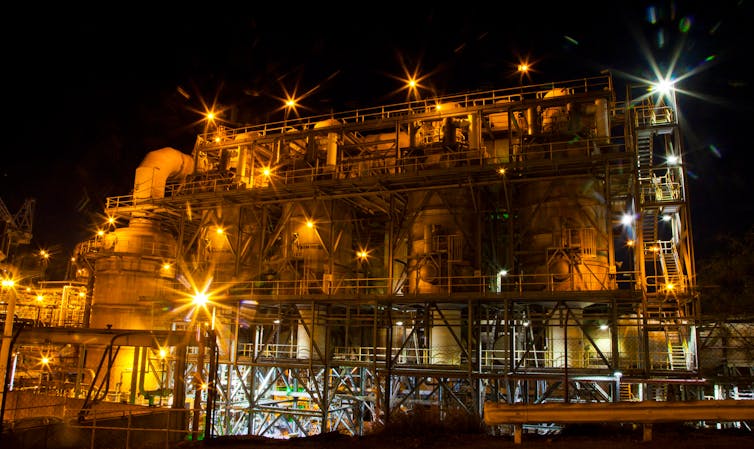
The announcement[1] by Glencore last week that its Mount Isa copper mines will close in 2025 is significant for the town[2].
The closures affect at least 1,200 jobs[3] in the Queensland outback community of 21,000 people. Those affected include mine workers, contractors, suppliers and businesses.
Questions raised by the closures have wider relevance for how other towns and regions across Australia manage mines as they come and go.
Read more: Cleaning up Australia's 80,000 disused mines is a huge job – but the payoffs can outweigh the costs[4]
Plan the end from the beginning
All mines close. However, the impact of future closures on communities is rarely front of mind when mines open. This means the issue of how towns effectively manage a mine’s closure can be treated as an afterthought.
One important way to ensure towns and regions can manage mining and its impacts is for community perspectives to inform public policymaking and planning. The period before a mine opens is the ideal time to openly discuss how its life – and its end of life – will play out for the community. This includes any Indigenous people[5] on whose land mining is to take place.
Swiss multinational Glencore now owns Mount Isa Mines, which has been in international hands almost since inception.
The early owners brought international ideas of industrial relations and town planning to the region. This encompassed a financial guarantee to deliver a railway to the town and strategic planning of infrastructure to attract the right type of miner[6] – a family man who was more likely to establish roots in the town.
Townspeople’s voices were not heard in this early planning. While the original owners wished to create a “business with a soul[7]”, this may have been less benevolent than it seems. It appears this was just an early forebear of the concept of a social licence to operate[8].
The ability for mining companies to “buy” a social licence to operate can been seen by communities as problematic. As noted in previous research[9], “measures taken by extractive industries to build support or ‘social licence’ for their developments are in fact experienced by these participants as destructive of community life”.
Read more: Afterlife of the mine: lessons in how towns remake challenging sites[10]
Invest in the future during operations
Once a mine is established, the focus is very much on ongoing operations. Mines seek to present themselves as part of local communities, but they typically remain very large, multinational businesses. That is, they are in the local community but not part of it.
Government support for mines typically continues through this period, through financial and other measures[11]. But financial benefits rarely accrue to communities, with mining royalties significantly less[12] than they could be.
Queensland recently changed coal royalties[13] so the rate increases as coal prices increase. It’s an important step for the state to secure the funds needed for the transition away from coal.
But this sort of forward thinking isn’t common. Mines typically deliver short-term financial gains to mine owners and wages for mine workers.
Set against these benefits, the costs tend to be social and environmental.
One obvious example is the inevitable environmental destruction that comes with mining.
Another can be the impacts on people’s health. For example, the effect of lead pollution on children[14] is a well-known problem[15] in Mount Isa.
Read more: Mount Isa contamination 'within guidelines' but residents told to clean their homes[16]
While those involved in mining receive financial benefits, the rest of the community can often find itself at an economic disadvantage. “Two-speed economies” can be seen in such mining towns. In Muswellbrook in the Hunter Valley, New South Wales, for example, housing disadvantage is rising[18] among those who aren’t benefiting from a mining wage.
Read more: 'We need to restore the land': as coal mines close, here's a community blueprint to sustain the Hunter Valley[19]
Involve locals in planning transitions
Looking ahead, the people of Mount Isa undoubtedly face significant challenges, including a far less stable climate[20]. Ensuring community voices are heard in planning mine closure is key to ensuring towns and regions benefit during and after mining.
After the Mount Isa mine closures were announced, the Queensland government pledged[21] up to A$20 million for an “economic structural adjustment package” to support affected workers. Glencore is expected to match that funding.
On a local level, the Mount Isa City Council has actively worked towards securing the city’s future. In 2019 the council released a prospectus[22] aimed at attracting investment “to diversify the city’s economy to reduce the impact of this minerals boom-bust cycle”.
While funding is available and the council is committed to forward planning, what does structural adjustment really mean for the community?
Managing all of the intersecting issues requires the hand of a co-ordinating authority[23]. Yet if all planning is done at arm’s length, it will not be able to draw on the community’s deep insights about place.
A wider problem
As the energy transition continues[24], Australia can expect to see many more mines close. These include coal mines in the Hunter Valley and Victoria’s Latrobe Valley.
And as the transition accelerates, we might expect to see other mines open, as renewable energy industries seek the critical minerals[25] they need. This week, for example, the federal government announced[26] $2 billion in funding to support the critical minerals industry.
While all government support will be welcomed, it’s time to bring planning back down to the local level. Residents know their towns intimately. They should be involved in actively shaping their towns’ futures.
Read more: We could need 6 times more of the minerals used for renewables and batteries. How can we avoid a huge increase in mining impacts?[27]
References
- ^ announcement (www.glencore.com.au)
- ^ significant for the town (www.abc.net.au)
- ^ at least 1,200 jobs (www.abc.net.au)
- ^ Cleaning up Australia's 80,000 disused mines is a huge job – but the payoffs can outweigh the costs (theconversation.com)
- ^ Indigenous people (www.kalkadoonpbc.com.au)
- ^ right type of miner (researchonline.jcu.edu.au)
- ^ business with a soul (researchonline.jcu.edu.au)
- ^ social licence to operate (www.investopedia.com)
- ^ noted in previous research (journals.sagepub.com)
- ^ Afterlife of the mine: lessons in how towns remake challenging sites (theconversation.com)
- ^ other measures (www.imf.org)
- ^ significantly less (australiainstitute.org.au)
- ^ changed coal royalties (www.treasury.qld.gov.au)
- ^ lead pollution on children (theconversation.com)
- ^ well-known problem (www.sciencedirect.com)
- ^ Mount Isa contamination 'within guidelines' but residents told to clean their homes (theconversation.com)
- ^ Jason Benz Bennee/Shutterstock (www.shutterstock.com)
- ^ housing disadvantage is rising (www.abc.net.au)
- ^ 'We need to restore the land': as coal mines close, here's a community blueprint to sustain the Hunter Valley (theconversation.com)
- ^ far less stable climate (www.longpaddock.qld.gov.au)
- ^ pledged (statements.qld.gov.au)
- ^ released a prospectus (www.mountisa.qld.gov.au)
- ^ co-ordinating authority (nexteconomy.com.au)
- ^ continues (theconversation.com)
- ^ critical minerals (theconversation.com)
- ^ announced (www.abc.net.au)
- ^ We could need 6 times more of the minerals used for renewables and batteries. How can we avoid a huge increase in mining impacts? (theconversation.com)