Why The Conversation lifted the (eye) mask on insomnia
- Written by: Anna Evangeli, Deputy Health Editor, The Conversation
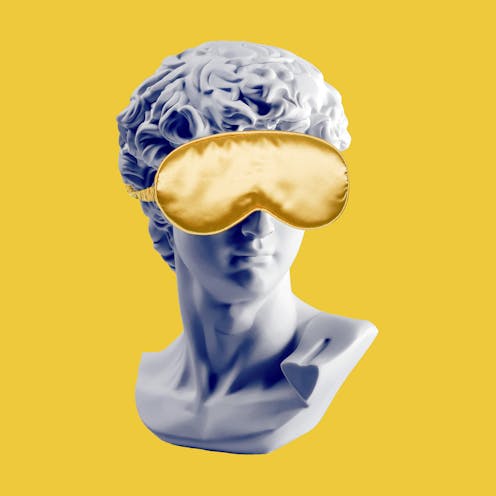
Insomnia is an ancient preoccupation and modern obsession. Its effect on our mental health and wellbeing can be dramatic[1].
In Australia, the financial cost of poor sleep is an estimated A$26 billion a year[2], mainly through lost productivity or accidents.
The pursuit of sleep is also a multibillion-dollar[3] global business which is still getting bigger. Think sleep apps, sleep therapy, sleep influencers, sleeping pills, medicinal cannabis, and on it goes.
That’s why The Conversation commissioned a six-part series[4] to explore insomnia. We hear from sleep researchers, psychologists, a historian and a sociologist. Each has a unique take on sleep, the lack of it, and what it’s costing us.
How we became obsessed with sleep
The series begins with a short history[5] of insomnia, charting its rise as nations industrialised. Philippa Martyr, a historian from the University of Western Australia, writes that’s when things we now associate with insomnia became part of people’s lives – artificial lighting and clocks, more ambient noise, changes in diet and housing. So our sleep habits shifted as a result of this new way of living and working.
Sleeping pills followed, as did our obsession with caffeine. Now we go to bed with handheld devices – with their bright lights and constant dopamine hits that stimulate us and stop us sleeping.
Read more: A short history of insomnia and how we became obsessed with sleep[6]
Insomnia in the movies, and why it’s a problem
Next, we look at how fictional portrayals of insomnia in the movies can be misleading. Most movies tend either to minimise or, more commonly, to exaggerate symptoms. Psychological thrillers are among the biggest offenders.
Insomnia is rarely depicted as a treatable illness, write[7] Aaron Schokman and Nick Glozier from the University of Sydney.
Why are they concerned? These portrayals have implications for the estimated one in three[8] of us with at least one insomnia symptom. These portrayals can perpetuate stereotypes about insomnia and who’s at risk, making it harder for people to seek care.
How dangerous is insomnia really?
Insomnia has been linked to developing conditions such as dementia, obesity, diabetes and high blood pressure. No wonder people are concerned about their lack of sleep and its impacts. This concern, in turn, can worsen sleep.
But how bad is insomnia on your body, really? Leon Lack and Nicole Lovato from Flinders University show[9] how the evidence is less robust than we might think. Yet the scary headlines continue, making people worry even more.
Even if people don’t have insomnia to start with, all this unnecessary worry may lead them to develop it.
How about mental disorders?
The evidence for insomnia’s link with mental disorders is much stronger, which we explore in the next article[10] in the series.
As Ben Bullock from Swinburne University of Technology writes, the relationship between insomnia and mental disorders is complex. It’s not just a case of “which comes first, the insomnia or the mental disorder?” Insomnia and mental disorders are interrelated in ways we don’t fully understand.
And treating one often treats the other.
Which treatments actually work?
Next, we look at treatments for insomnia – what works, what doesn’t, and what we might expect.
It turns out the most effective treatment isn’t a sleeping pill, write[11] Alexander Sweetman and Nicole Grivell from Flinders University, and Jen Walsh from the University of Western Australia.
It’s a type of psychological therapy known as cognitive behavioural therapy for insomnia, or CBTi. About 70-80%[12] of people with insomnia sleep better after CBTi, with improvements lasting at least a year[13].
If that doesn’t work, there are sleeping pills, and newer drug therapies on the horizon.
There’s an app for that
Insomnia is not just a personal issue that affects an individual’s health and wellbeing. It’s a public health issue, affecting public safety. It’s a socioeconomic issue, as poorer sleep is linked to a lower education and income. And, increasingly, it’s a commercial issue, writes[14] Deborah Lupton from the University of New South Wales, in the final article in the series.
The global insomnia market is expected to reach US$6.3 billion[15] by 2030, driven by increased diagnoses and therapy, as well as sleep aids, including sleep apps.
But not all sleep apps are accurate or useful. And fixating on the sleep data these apps generate won’t necessarily help you sleep.
Then there are social media “sleep influencers” who share their take on sleep and how to get more of it. Can any of this help us?
If you can’t sleep
We hope the series helps pull back the (eye) mask on insomnia – what it is, what it is not, and how to access treatment. But the series is also a reminder that not everyone can buy the latest technologies or can change their environment or lifestyle to help them sleep.
As Lupton concludes[16], a good night’s sleep shouldn’t be the preserve of the privileged.
References
- ^ can be dramatic (theconversation.com)
- ^ A$26 billion a year (treasury.gov.au)
- ^ multibillion-dollar (www.alliedmarketresearch.com)
- ^ six-part series (theconversation.com)
- ^ short history (theconversation.com)
- ^ A short history of insomnia and how we became obsessed with sleep (theconversation.com)
- ^ write (theconversation.com)
- ^ one in three (www.sleep.theclinics.com)
- ^ show (theconversation.com)
- ^ next article (theconversation.com)
- ^ write (theconversation.com)
- ^ 70-80% (connect.h1.co)
- ^ at least a year (www.sciencedirect.com)
- ^ writes (theconversation.com)
- ^ US$6.3 billion (www.alliedmarketresearch.com)
- ^ concludes (theconversation.com)
Read more https://theconversation.com/why-the-conversation-lifted-the-eye-mask-on-insomnia-217268
-mask-on-insomnia&media=https://www.thetimes.com.au/https://images.theconversation.com/files/558256/original/file-20231108-21-nr1728.jpg?ixlib=rb-1.1.0&rect=5%2C5%2C992%2C992&q=45&auto=format&w=496&fit=clip&description=Why%20The%20Conversation%20lifted%20the%20(eye)%20mask%20on%20insomnia "Pin It")