The UN’s top court didn’t call for a ceasefire in Gaza – how does NZ respond now?
- Written by: Alexander Gillespie, Professor of Law, University of Waikato
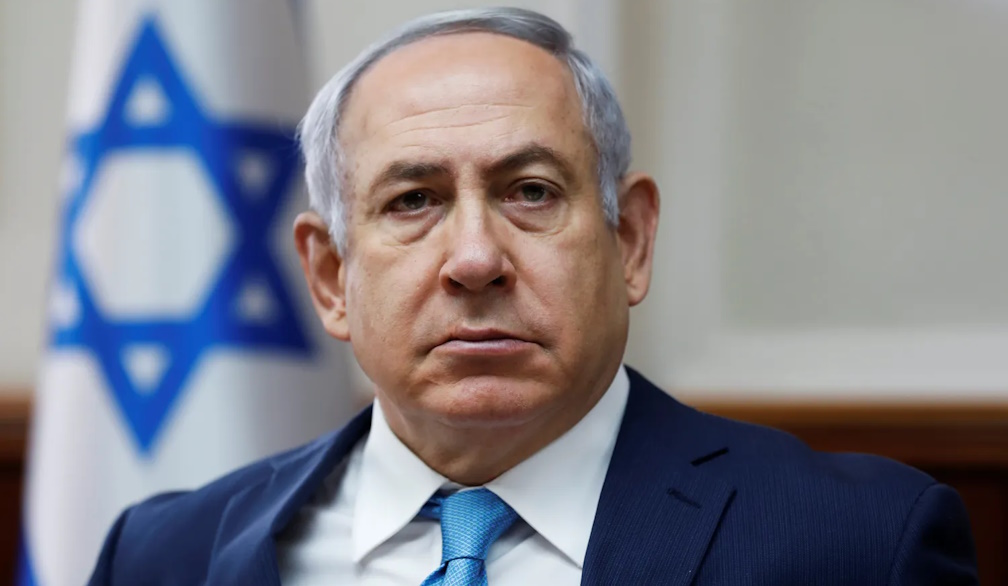
The provisional measures issued by International Court of Justice (ICJ) in South Africa’s case against Israel[1] under the Genocide Convention was, on balance, a victory for Israel.
While South Africa’s application was not thrown out, and the ICJ accepted it could rule on what is happening in Gaza, there was no provisional order for an immediate ceasefire.
This leaves New Zealand’s options less clear than in the case of Russia and Ukraine[2]. In that instance, the ICJ urged that “the Russian Federation shall immediately suspend the military operations that it commenced” when it invaded.
Russia simply ignored the court, of course. But New Zealand will now have to take stock of what the ICJ has ordered in the case of Gaza.
This goes beyond the Genocide Convention. While the court found some of the assertions by South Africa were “plausible”, at this point it did not find that genocide was occurring. However, the ICJ was clearly disturbed by some of the rhetoric that has emerged from Israel during the conflict, which is also a humanitarian disaster.
It has ordered that Israel must carefully abide by the Genocide Convention, control its military, and “prevent and punish the direct and public incitement to commit genocide in relation to members of the Palestinian group in the Gaza Strip”.
Significantly, Israel must report back to the court on what measures it has taken in a month’s time. So, even though the full case will now proceed in a process that could take years, the ICJ is watching matters closely. If Israel is not respecting the court’s provisional measures, the matter may quickly escalate.
Push for humanitarian aid
New Zealand will need to watch these next steps closely. The previous government focused on the “good faith” application of the Genocide Convention rules when it joined the proceedings[3] in the Russia-Ukraine case.
As New Zealand highlighted then, the Genocide Convention was originally adopted with a dual purpose: to safeguard the very existence of human communities, and to confirm and endorse the most elementary principles of morality.
There is scope to expand New Zealand’s thinking on this further if it joins the next stage of the ICJ process over Gaza. This would need to focus not only on explicit acts of genocide, but also on the preconditions and context surrounding this most horrendous of all crimes, and the importance of a precautionary approach.
Read more: UN's top court puts Israel on notice over its war in Gaza. Here's what its judgement could mean[4]
New Zealand also needs to focus on the ICJ’s ruling that “the State of Israel shall take immediate and effective measures to enable the provision of urgently needed basic services and humanitarian assistance to address the adverse conditions of life faced by Palestinians in the Gaza Strip”.
This is a direct reflection of recent demands by the UN Security Council[5]: the parties to the conflict must allow safe and unhindered delivery of humanitarian assistance, at scale, directly to the civilian population of Gaza.
The importance of supporting such humanitarian assistance has been a standard New Zealand demand[6] since this latest conflict began. How the government reconciles support for this principle at the same time as pausing funding[7] for the UN Relief and Works Agency for Palestine Refugees (UNRWA) presents an awkward conundrum, however.
Uphold international law
The ICJ went one step further than ruling on the Genocide Convention by emphasising that “all parties to the conflict in the Gaza Strip are bound by international humanitarian law”.
This includes the court’s “grave concern about the fate of the hostages abducted during the attack in Israel on 7 October 2023 and held since then by Hamas and other armed groups”, and its call for their “immediate and unconditional release”.
This is where New Zealand can provide the most support. One of the shortcomings of South Africa’s case was that it focused on the most significant issue of all – genocide – but risked eclipsing dozens or hundreds of other possible violations of international humanitarian law.
Read more: Gaza: high numbers of journalists are being killed but it's hard to prove they're being targeted[8]
Taking hostages, murder, sexual violence, restricting humanitarian assistance, attacking hospitals, schools and places of worship, and collective punishment of civilians are all crimes. As such they are regulated by the 1949 Geneva Convention on the Protection of Civilians in Times of War[9].
Furthermore, the ICJ has already ruled[10] that Israel is bound by these treaty obligations within its occupied territories on the West Bank. The next step at the ICJ should be to focus on the applicability and accountability required by all sides in the conflict under the Geneva Conventions.
Just as individuals should be held accountable for war crimes and crimes against humanity at the International Criminal Court, states should be held accountable under international humanitarian law at the ICJ, as much as they are for allegations of genocide.
If New Zealand wants to help bring justice to this terrible conflict, these are the main areas where it should now plan to contribute.
Read more: Drone attack on American troops risks widening Middle East conflict – and drawing in Iran-US tensions[11]
References
- ^ case against Israel (www.icj-cij.org)
- ^ case of Russia and Ukraine (www.icj-cij.org)
- ^ joined the proceedings (www.icj-cij.org)
- ^ UN's top court puts Israel on notice over its war in Gaza. Here's what its judgement could mean (theconversation.com)
- ^ recent demands by the UN Security Council (documents-dds-ny.un.org)
- ^ standard New Zealand demand (www.mfat.govt.nz)
- ^ pausing funding (www.rnz.co.nz)
- ^ Gaza: high numbers of journalists are being killed but it's hard to prove they're being targeted (theconversation.com)
- ^ Protection of Civilians in Times of War (ihl-databases.icrc.org)
- ^ ICJ has already ruled (www.icj-cij.org)
- ^ Drone attack on American troops risks widening Middle East conflict – and drawing in Iran-US tensions (theconversation.com)